The Literate Chef

Archive for the ‘General Articles’ Category

In General Articles on June 16, 2012 at 10:46 AM

Update form October, with a new picture.

The Literate Chef's avatarThe Literate Chef

preparation time: active – 20 minutes; passive – several hours

Ingredients:

6 oz. each of blueberries, raspberries and blackberries
10 oz. strawberries
1 tbsp. of sugar
¼ cup of sweet Marsala wine
Heavy cream to taste

Preparation:

1.    Rinse and drain the blueberries, raspberries and blackberries, place them in a mixing bowl.
2.    Hull the strawberries, rinse and drain them, slice them widthwise and add to the mixing bowl.
3.    Add the sugar and mix well.
4.    Add the Marsala and mix well.
5.    Cover the bowl with plastic wrap and let the berries macerate at room temperature for several hours prior to serving.
6.    Serve with heavy cream as desired.

Please see: Sunday Chicken Dinner – No Leftovers!

View original post

Clam Shucking

In General Articles on June 16, 2012 at 9:15 AM

Summer is fast approaching and it is time to make one of our favorite pasta meals, Linguine with White Clam Sauce. This is a quick and easy meal to prepare, with most of the work centered on opening the clams. Fortunately, Big Mike’s best friend, my ‘Uncle’ Joe, was a master clam shucker and taught me the technique, at the many clambake/cookouts he hosted in his Long island backyard in the 1950s.

Uncle Joe moved with his family from the Bronx to Long Island in the early 50s as the potato farms in Nassau County were being sold to real estate developers and constructing tract housing for the returning WWII GIs was a booming business. We still lived in Inwood, without a car. But at least once a month, Uncle Joe drove all the way in from Franklin Square on a Saturday morning to pick up our family, drive us out to his house, and return us to our one-bedroom apartment on Sunday night.

Besides learning how to shuck clams and eat them on the half-shell, Uncle Joe taught me how to pour a beer, build a charcoal fire and grill sausages, skills that have served me well in life. He loved life and lived it to the fullest. I wish our daughters could have known him, but he died much too young. Those weekend outings to ‘the country’ were a real treat, and I remember them and Uncle Joe’s generosity with great fondness.

Dorothea, who did not learn how to shuck clams, taught me how to make a clam sauce the easy way: sauté some chopped garlic in olive oil, toss in some chopped fresh parsley, add a bottle of clam juice and a can of minced clams and voila, homemade clam sauce. It was darn good as far as I was concerned and I didn’t know any better, so that recipe sufficed until I began to experiment on my own.

At first, I merely substituted fresh clams for the canned ones, a significant improvement. Then later, after comparing notes with Tommy T, he convinced me to add butter to the olive oil to finish the sauce. Finally, after reading a few cookbooks, I decided that a little bit of dry white wine would round it out perfectly. So here it is, Chef Scar’s own Linguine with White Clam Sauce. And, if like me, you enjoy cheese with your pasta, don’t listen to the so-called purists who will admonish you for adding cheese to seafood, go ahead and liberally heap several  tablespoons of grated Pecorino-Romano, preferably Locatelli brand on your Linguine. Mangia!

The secret to opening clams is to get them ice cold so that they relax, and use a good thin-bladed clam knife, don’t try to use a kitchen knife or an oyster knife.

On Tour with The Literate Chef – Bermuda, Part II

In General Articles on May 22, 2012 at 8:08 PM

Continued from Part I

Day Two greeted us with sunshine, a light breeze and cheerful birdsong at the complimentary Royal Palms breakfast. However, our high expectations for the day, which included a round of golf at The Mid-Ocean Club for Colin, Bernadette and Bob, a ferry ride to St. George’s and getting swizzled at the Swizzle Inn for Betty, Cathie and me, as well as dinner for all at Tom Moore’s Tavern, were to be quickly dashed by the onset of what would turn out to be a 12 hour storm.

Our first inkling of the need for flexibility was an e-mail, warning of impending thunderstorms and the recommendation that golf be postponed for two days. That ruled out the idea of a ferry ride to St. George as well. We held an emergency committee meeting in Ascots bar and over a round of Bloody Mary’s, it was decided that we would walk down to Front St., instead, do some shopping and then have lunch.

There’s Nothing I Like Better Than the Taste of a Bloody Mary in the Morning

Gifts for the grandchildren, linens for the table, and assorted dry goods having been acquired, Cathie, our Bermuda guru, after some quick research, suggested Bolero for lunch. Here is where serendipity stepped in and changed the rest of the trip.

Bermuda Harbor before the Rains Came

We arrived at Bolero Brasserie fairly well soaked, the rain having begun in earnest about 20 minutes earlier. As we were being seated, the wind out of the southwest increased in intensity, sheets of rain pounded the windows and the view of the harbor across the street was completely obscured. But, we settled in at our table, ordered several bottles of well-chilled Sancerre, and studied the fantastic menu.

The Starters included: Mouclade, (mussels steamed with leeks shallots, garlic, Vermouth, cream, a hint of curry), it sounded, looked and was delicious and The Literate Chef has placed this on his ‘to-do’ list; Posh Egg Benedict (poached egg, Parma ham, truffle Hollandaise, toasted baguette) was well received by those who ordered it; and the special that day, a small Cassoulet (which has been on The Literate Chef’s ‘to-do’ list ever since a trip to southwestern France and the Canal du Midi) that I could not resist. Suffice it to say, it was an interesting menu and deserves many more visits.

The Mains were equally interesting, but the choice here was much more daunting. Choices! Choices!! Choices!!! I opted for the Pan-Roasted Bermuda Rockfish and was not disappointed. I decided to try to replicate this at home, but since Bermuda Rockfish is presumably only available in Bermuda, I used locally caught (off of Martha’s Vineyard according to our local fishmonger) Black Sea Bass. Since it is not as thick as Bermuda Rockfish or Striped Bass, which would have been my first choice, I decided to Pan-Sear rather than Pan-Roast it. The quantity of the other ingredients was pure guess work on my part. Even if you don’t like coconut flavor, I recommend that you try Pan-Seared Black Sea Bass, as the coconut milk is substantially diluted by clam juice and pureed roasted corn.

We leisurely enjoyed our lunch, but the working people had to get back to work and the restaurant began to empty out. Being excluded from that category and as the torrents of rain were still pounding the window, we were in no hurry to leave. The table next to us seemed to be in a similar situation. One of guys there, noticing that our supply of Sancerre had mysteriously been depleted, came over generously bearing a bottle of wine and introduced himself. Dave is the Sales & Marketing Manager of Wairau River Wines of Marlborough, New Zealand (think eyebrow when pronouncing Wairau), and he came bearing a bottle of his delicious Sauvignon Blanc, which was as good, if not better than the more expensive Sancerre.

As luck would have it, when we invited Dave to join us, he sat next to Bob, a veteran Rugby player at Fordham University and the New York Athletic Club, who is anything but shy. Bob, a very quick study, offered that he had been to NZ and played in a Rugby match there in another life. As it turned out Dave is also a Rugger and not only that, but upon further discussion they discovered that they knew several players in common, despite the fact that age wise, Bob could have been Dave’s father. Degrees of latitudinal and longitudinal separation rapidly diminished, and with a common interest in Rugby and wine having been established, the afternoon took a decidedly different turn.

Laughter and stories abounded, Dave introduced us to his friend and associate, Matthew, VP of International Sales for Terlato Wines International, which markets Wairau River wines. Matthew joined us with a bottle of another wine that Terlato markets, a delicious and very seductive Two Hands Shiraz, to be exact.
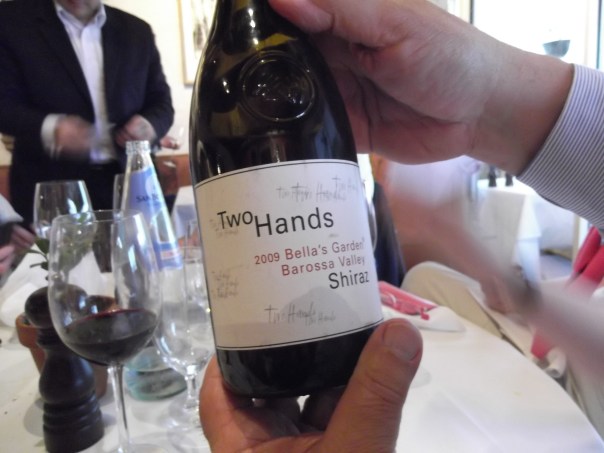
With Thanks to Matthew and the Barossa Valley

As the wines were consumed and the stories continued and we learned about grape growing and wine production in New Zealand, someone mentioned The Haka, a traditional dance form of the Maori.  New Zealand teams frequently perform it both locally and internationally before a game. After much coaxing from the Americans, Dave agreed to give us a performance of The Haka. He was fantastic and it was the highlight of the day.

Meeting those Kiwis, drinking wine and telling and listening to stories was an absolute delight, and to think, it might never have happened if that storm had missed the island and we had gone on with our original plans. But there was to be an additional bonus from that dark & stormy afternoon, Dave and Matthew told us about Beau Rivage and Chef Jean-Claude, and serendipity would abide.

To Be Continued, once again…

On Tour with The Literate Chef – Bermuda, Part I

In General Articles on May 20, 2012 at 8:16 PM

With travel, as with most things in life, planning is important, but be prepared to change your plans as circumstances warrant. Flexibility is essential and serendipity can be its reward.

The Idea

The idea for a trip to Bermuda was conceived 15 months ago in a pub in lower Manhattan, when six friends were discussing their past travels and favorite vacation sites. Someone mentioned Bermuda and Bernadette stated that she had never been there. Colin, Cathie, Bob, Betty and I had each been there on more than one occasion, with Cathie having been there innumerable times.

Bernadette is probably the most organized person I know. In a moment of pure genius she suggested that if we were serious about this, each couple should kick in $200 per month to build a kitty to cover, lodging, meals, drinks, taxis, etc., and that she would volunteer as treasurer and open a bank account to hold the money. This seemed like a painless way to plan for a trip and also would signify our commitment to the idea.

The Bermuda veterans all agreed that the month of May would be the best time for a visit, and if we started contributing right then, we would have between $8,400 and $9,000 for our land costs. It was also agreed that each couple would handle their own flight arrangements.

Time inexorably moved forward, the checks were mailed, the kitty grew and in January of this year we begin to plan in detail…pick the dates, book the flights and focus in on where to stay and what to do. Cathie, the most-seasoned Bermuda traveler, volunteered to research where to stay and where to eat, while Betty volunteered to research the pubs.

The Reality

Day One arrived. Betty and my part of the trip started out from Boston’s Logan airport in the middle of a tremendous rain storm. Weather reports for Bermuda ranged from sunny, to cloudy, to rain. Such is life! But when we arrived on the island, a mere two hours later, the sun was shining and reflecting off of the ubiquitous white roofs, the ocean was cerulean reflecting the sky and a light breeze was blowing billowing white clouds overhead. It was picture perfect! Bob and Cathie, having arrived from New York 30 minutes earlier, greeted us as if they were native Bermudians and the adventure began.

Cathie’s hotel selection was outstanding; The Royal Palms exceeded our expectations. The website pictures had not lied, and the staff members were friendly, courteous and would prove to be most helpful, as weather-related circumstances would dictate a change in plans on more than one occasion.

At The Royal Palms, Hamilton Bermuda

While awaiting the arrival of Bernadette and Colin, who were expected a few hours later, we decided on lunch at Ascots, a fine restaurant attached to the hotel. Dani, our charming hostess, brought us a round of Dark & Stormys to kick off the alcohol fueling for the day.

Being surrounded by hundreds of miles of the Atlantic, fish was a natural choice and the Bermuda Fish Chowder, laced with Gosling’s Bermuda Black Rum and Outerbridge’s Sherry Peppers Sauce did not disappoint. Neither did the Grilled Spicy Snapper sandwich, nor the rum raisin ice cream, nor the second round of Dark & Stormys.

That evening, after Colin and Bernadette had arrived, it was time to begin spending our cache. Our esteemed treasurer was equipped with credit cards and cash, so off we went to our first pub, The Robin Hood. Next, looking forward to some fine English fare we set off for the Hog Penny. Once upon a time in New York City, English pubs and their fare were quite common, my first introduction to which was in the late 60’s at The Jolly Sixpence, which today, unfortunately, is but a happy memory.

Liquid refreshments at the Hog Penny Pub consisted of several pints of Boddington’s (Watney’s, which used to be a standby there 40 years ago, was nowhere in sight). My victual of choice was Steak & Kidney Pie, a difficult decision, as  my inner Brit also called out for the Bangers & Mash and the Fish & Chips. The Steak & Kidney Pie was delicious and the others, which were ordered by members of our group, also received rave reviews.

The service was outstanding as well, and our waiter, Morgan, was most helpful in providing me with a quick & easy recipe for Yorkshire Pudding, as I was trying to copy it down from the menu. But that will have to wait for a winter Sunday afternoon, when cooking a Prime Rib. Nightcaps, accompanied by live music, were enjoyed at Flanagan’s before we  headed back to the hotel and crashed for the night.

Continued

A Visit to Lithuania

In General Articles on May 8, 2012 at 7:11 PM

About four years ago I traveled to Lithuania on business. Being my first trip to Eastern Europe, I didn’t know what to expect. This former Soviet republic has a varied and rich history dating back to the middle ages. Situated as it was between Prussia and Russia; it has seen invasion, annexation and general turmoil over the centuries, with brief periods of independence and relative calm. With the collapse of the Soviet Union in 1991, Lithuania is once again an independent nation with a republican form of government.

It is the largest of the three Baltic countries, the others being Latvia, its immediate neighbor to the north and Estonia, farther north. It is bordered on the east and south by Belarus, on the south by Poland and on the west by Kaliningrad (Russia) and the Baltic Sea.

Vilnius (known as Vilna, when it was occupied by Poland), with a population of around 550,000 is the capital. The next largest city is Kaunas, with a population of about 350,000.  After changing planes in Helsinki, I flew into Vilnius where my friend Col picked me up. We drove through the city, farmland and forests for about 90 minutes to Kaunas where our office is located and where I spent the next week.

Kaunas Castle: Medieval – Teutonic

The first thing that struck me about Kaunas was the architecture, which ranges from what I would call Medieval-Teutonic to Baroque to Late-Soviet Concrete, with a touch of Byzantine thrown in, in the form of St. Michael the Archangel Basilica. These diverse architectural styles reflect Kaunas’ long and varied history.

St. Francis Xavier Baroque Church

An Example of Late Soviet Concrete

A fascinating aspect of the city is its main avenue, Laisvès, which is a pedestrian mall that connects Old Town with New Town. It is lined with shops and restaurants, many of which offer outdoor seating for the great sport of people watching.

On the porch on Laisves

Laisves

The food in Lithuania is both foreign and familiar, given its long historical relationship with Poland, Russia and Germany I recognized many of the dishes, with quite a few unique ones mixed in, such as Cepelinas, so-called because the resemble zeppelins, although these bombs are anything but lighter than air! Made with grated potatoes and meat, and served with sour cream, you won’t need to eat again for 24 hours.

The Lithuanian dish that I enjoyed the most was a cold borscht soup known as Saltibarsciai (sal-ta-bar-shy). Arriving in Kaunas midday, Col, Patrick, Serge and I went to lunch at their favorite restaurant across the street from the office. We sat in the sunny courtyard and I ordered something off the menu which seemed familiar to me, but whatever it was, it was forgettable. However, the cognoscenti: Col & Pat, both Americans living in Kaunas for the past year, and Serge, a Lithuanian national, ordered the Saltibarsciai.

I was struck by its beautiful purple hue, which in the bright sunlight of a Kaunas afternoon took on the color of a field of lavender. The next day, already feeling like a native, I too ordered the Saltibarsciai, and had it for lunch or as a first course for dinner, practically the entire week. Returning home I emailed Serge for his recipe and here it is, Saltibarsciai a la Serge.

As one of our readers wrote, he loves beets, because they taste like dirt. Although that is not an analogy I would use, I am sure that this Saltibarsciai will appeal to his taste buds. I hope that you try it and enjoy it as much as I.

Pork & Prunes – Yum or Yuck?

In General Articles on May 5, 2012 at 6:51 PM

I don’t know about you, but prunes make me smile. As a child I hated them, particularly as prune juice, which my mother felt was a sure-fire remedy for whatever ailed me. While I still have no love for prunes in their juice form, I have come to appreciate their fruity, dark sweetness, either the dry, finger-sticky kind, or the plump, juicy kind. It is the latter kind that I decided to recently experiment with. But either type will work. If using the dried type, be sure to soak them in boiled water first and then drain them, reserving a bit of liquid for the sauce.

I came across Pork Tenderloin in the local supermarket, and unlike most that you find, this one was not marinated. Pork tenderloin is usually sold vacuum packed with 2 one-pound tenderloins in the package. They are low in fat, about 10 inches long and narrow, maybe two inches wide. Because of their narrowness, they cook through in 10 to 15 minutes. The marinated type, which come in a myriad of flavors, are a great boon to mankind; merely rip open the package, throw them on the grill and 15 minutes later slice them up and dinner is ready. The un-marinated kind are a great boon as well.

As I was moving through the supermarket aisle thinking of how I was going to prepare the tenderloins, I recalled how last year I experimented with Pork Chops with Apples, Raisins and Calvados and also Pork Chops with an Apricot Mango-Chutney and Cognac. Some sort of fruit seemed like a good idea, and, I still had a bottle of Calvados at home.

When I saw a jar of prunes in liquid on the shelf, bingo, I had it! Slice the tenderloins, brown them in a fat, add the prunes and flame-off with the Calvados – Pork Medallions with Prunes and Calvados. The only hard work here, if you want to call it that, is pitting the prunes.

Hint: If using the wet prunes pit them while the medallions are browning and with a small salad as a side, dinner is truly ready in 15 minutes! If using the dried ones, soak them in advance.

Tommy T and Me

In General Articles on April 30, 2012 at 2:06 PM

Me and Tommy T - June 2000

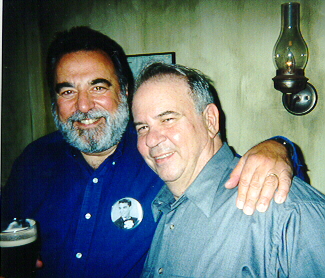
I met Tommy T on our first day of high school 56 years ago. We were assigned seats in alphabetical order, and as luck would have it, I sat next to him. We were from different neighborhoods, I from Inwood in Northern Manhattan and he from Highbridge in the Bronx.

Both neighborhoods, and in particular the parishes within them, Good Shepherd in my case and Sacred Heart in his, were populated predominantly by first and second generation Americans of Irish extraction. We were both second generation Americans of Italian extraction. Besides that commonality, we shared an interest in books and movies and appreciated a well-told story, particularly if it contained a humorous proclivity. One of the major pastimes in both of our neighborhoods was the imbibing of alcoholic beverages, another mutual interest of ours.

As we progressed through high school and college, Tom into an early marriage with Pat and the raising of three sons and I into military service to be followed a few years later with marriage to Betty and the raising of two daughters, our friendship grew and matured; expanding into good food, fine wine and the enjoyment of a Single Malt Scotch accompanied by a pleasant cigar.

We frequently got together for dinner, either alone, with our classmates, or with our wives and we attended our children’s weddings and welcomed his and Pat’s grandchildren into the world. This idyllic friendship lasted until Tom’s untimely death five years ago on May 10, 2007, so he never had the chance to meet our grandchildren.

In the intervening years, Betty and I became friends with Tom’s older brother Bill and his wife Kathy, who were frequent guests of Tom & Pat. This was a natural, as Bill, or Uncle Bill as he was often referred to, shared the same interest in books, movies, jokes, food, wine, single malts and cigars as did Tommy T and I, and the 3 wives all got along as well.

Recently Betty and I visited Bill and Kathy, and Bill prepared an excellent Penne a la Vodka as a first course for dinner. Having had this pasta dish on only one or two other occasions, I was curious to see how it was done, particularly the pink part. I watched Bill masterly prepare it and he was kind enough to write down his recipe.

This past weekend with our daughter and her family visiting, we invited my cousin Virginia and Peter to dinner to share in my adaptation of Uncle Bill’s Penne a la Vodka. Bill’s recipe calls for parsley, but having a beautiful bunch of basil on hand, I decided to substitute it for the parsley. Everyone raved about it and the next day, I asked my four–year old granddaughter if she would like to try some of Grandpa’s ‘Macaroni & Cheese’ for lunch. She did and devoured it saying ‘Grandpa, you are a good cook!’ It turns out that Uncle Bill’s Penne a la Vodka is also the perfect Mac & Cheese. Tommy T would have loved that!

The Maturing Palate

In General Articles on March 31, 2012 at 10:38 AM

As we mature, our palate does as well!  That statement is admittedly anecdotal and based solely on personal experience.  But think about it, how many foods did you as a child once eschew only to find yourself in later years enjoying, as if they were always a part of your diet?

My mature palate discoveries   have included Calves Liver, Brussel Sprouts, Broccoli Rabe, Fish and Beets! Yes, beets; that deep-red, firm and smooth vegetable which resembles nothing else in taste or texture and that, when forced upon me as a child, produced an involuntary gag reflex, appear to be good for you , as mother always claimed, and they taste good as well.

Beets, also known as beetroots, can be boiled or roasted and eaten warm, as a side dish; boiled and pickled and eaten cold, as a side dish; boiled, not pickled and either warm or cold used in a salad, particularly with goat cheese, which has a great affinity for beets. Last week, while trolling the aisles of the supermarket, I spotted a great sale on beets, a bag of 12 for $3. Being unable to resist such a bargain, I threw the bag into my shopping cart with little thought as what to do with them.

Betty, having grown up with Pickled Beets as a mainstay in her family, knew exactly what to do with them. She boiled and peeled them, then pickled half of them, setting aside the other half, which she chilled and added to salads during the week. So after eating beets for the past week in these various forms, I am on to the next discovery.

A Serendipitous Halibut Dinner

In General Articles on March 25, 2012 at 3:25 PM

With the recent spate of Spring weather that we have been experiencing, since even before the official start of the season, and with the grill having been fired up last week for the shell steaks that accompanied Aunt Emma’s Sauteéd Mushrooms, I thought that grilled striped bass would be in order for last night’s dinner. However, upon visiting the local fishmonger, alas, there was no bass! But he did have a beautiful piece of halibut fillet and it was of a good thickness, slightly more than one inch throughout.

Having found in the past that grilling a halibut fillet doesn’t seem to work, because the flesh, while dense, seems to fall apart on the grill, I now had to figure out what to do with it. For inspiration I stopped by the supermarket, and in trolling the aisles my eyes lit upon Chouriço. I had not cooked fish with sausage before, but the combination works very well in Paella and in Shrimp Jambalaya, and having read pasta recipes that combined clams with smoked sausage, I thought… why not?

I began to envision the dish taking shape. First, it would need some form of a sauce and should be served in a bowl as a one dish meal, as is done in many restaurants. Accordingly, I picked up a bag of spinach which would serve as the ‘bed’ for the halibut. Next, maybe some mushrooms to add to the chouriço to create the sauce. In the mushroom section I found a package of dried Porcini mushrooms, which, with their big flavor, would be a perfect counterpoint to the rather bland halibut. Then, a couple of San Marzano tomatoes to give the sauce a base, and maybe a Cherry Pepper to give it some heat and white wine for the liquid. Those three ingredients presented no problem, as they were all at home. Finally, I grabbed a package of fresh chives to add color and a bit more flavor.

The end result, Roasted Halibut with Chouriço and Mushrooms, was even better than I had imagined. And this morning, I used up the remaining chouriço for a quick Omelet.                                                                      

Roasted Halibut with Chouriço and Porcini Mushrooms

Chouriço Omelet

Anndemma

In General Articles on March 20, 2012 at 1:15 PM

Anndemma, or as correctly pronounced, Aunt Emma, was a real character. Big Mike’s older sister, who in 1910 at the age of 4, crossed the Atlantic with her mother, sister and older brother, stood an inch or two under five feet. However, what she lacked in height she more than made up for in the size of her heart. Emma had a wonderful laugh and smile that filled her face. She and her husband, Uncle Eddie, were building superintendents in New York and supported my grandparents who lived with them. Most of my Sundays as a child were spent visiting them, surrounded by aunts, uncles and cousins, enjoying a three hour dinner accompanied by family stories and jokes.

There were a lot of dishes on that Sunday dinner table which most of the adults relished, but which were much too weird or exotic for me; things like snails, scungilli salad, baccalà, capozella and tripe were not for my childish palate. At that age, I was not too enthralled with anything that swam in the ocean, stared me in the eye, or came from the innards of some animal. I was very content with lasagna, spaghetti and meatballs, chicken and roasted potatoes.

Shortly after Betty and I were married, she took Emma on a food shopping trip to Arthur Avenue in the Bronx. Visiting her favorite butcher, Betty bought the usual cuts of beef, veal, chicken and pork that we liked to eat. Emma, however wasn’t interested in such ordinary fare and instead ordered calves brains, tripe and pig’s feet, much to Betty’s horror. In the fish market next door, it was flounder fillet for Betty and snails and eel for Emma.

When it came to vegetables, one of Aunt Emma’s mainstays was, as she pronounced it in a Sicilian dialect, ‘galdoons’, which she picked from the city parks, and on which I couldn’t help wonder how many dogs had made their mark. Of course she rinsed and dried them before cooking, but I still would have nothing to do with them until I was much older. Actually, by that time, I had discovered that their real name was cardoons, not ‘galdoons‘, and that breaded or floured and then fried, they were delicious. The problem is trying to find them! But one vegetable dish that she always made, and for which the main ingredient is readily available in any supermarket, is sautéed mushrooms.

Yesterday being a beautiful and sunny 68 degrees, I decided to fire up the gas grill and cook some shell steaks for dinner. To accompany them, I made a batch of Aunt Emma’s Sautéed Mushrooms and Betty prepared a delicious mixed green salad with spiced walnuts, dried cranberries and a bleu cheese/champagne vinegar dressing. With that meal we bid adieu to Winter on its last day, and today we welcome Spring!

The Secret’s Out!

In General Articles on March 10, 2012 at 3:53 PM

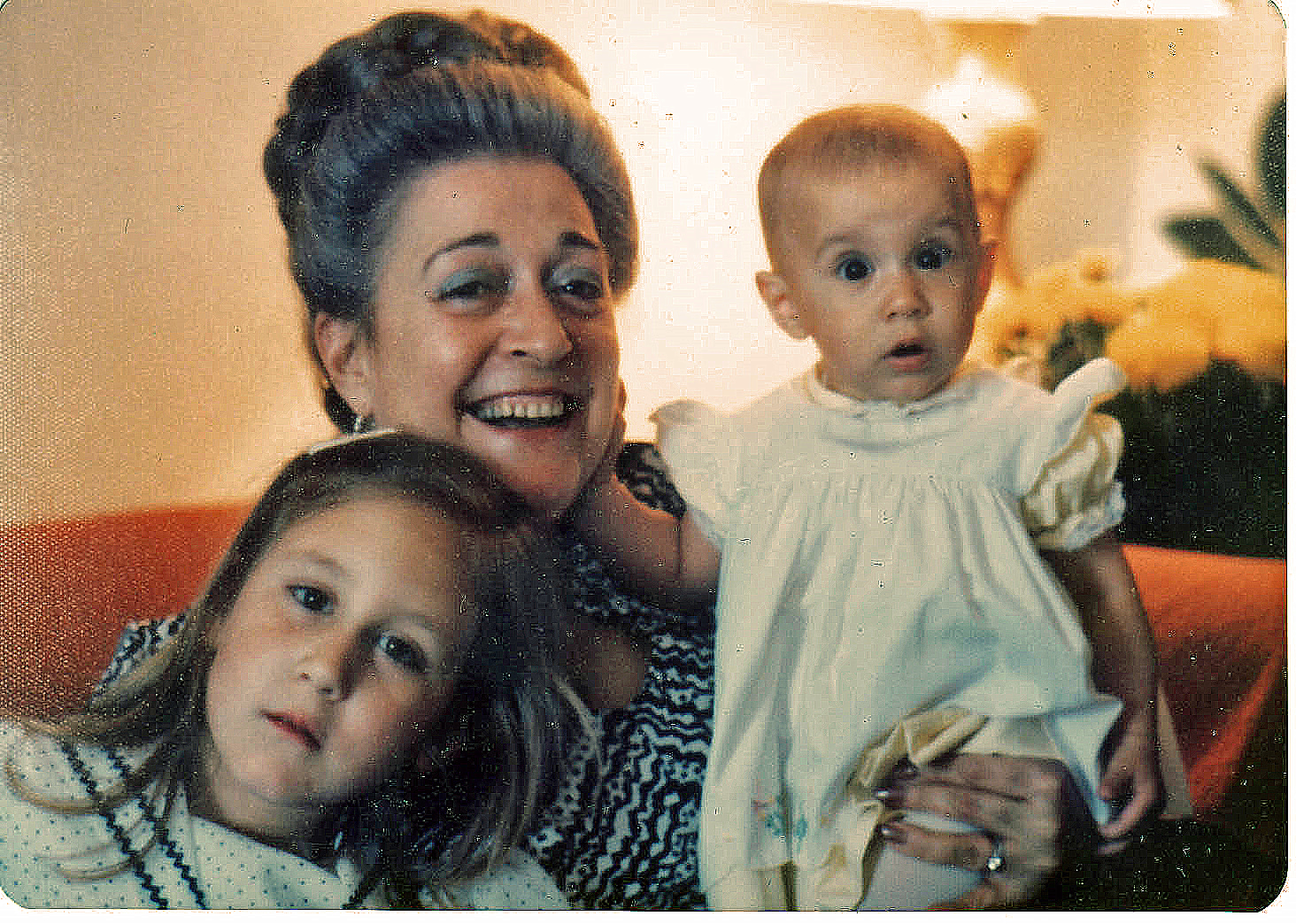
Dorothea & Her Granddaughters - Easter, 1977

By Betty

The year was 1967.  There I was, a young bride, the daughter of a woman whose culinary skills as described by my sister would ‘choke a maggot,’ attempting to please the palate of a man whose mother concocted such meals as Stuffed Artichokes, Steak a la Pizziaola, Paella, and Mussels Marinara, meals I had never heard of, let alone eaten.

I can still remember my very first cookbook, in which I took great pride of possession, the Farm Journal’s Country Cookbook.  Each day, I would come home from work and peruse its pages, looking for something exotic to prepare for my husband. I will never forget how he raved about a meatloaf that I had made from that cookbook, Meatloaf Tanta Clementina.  I was so proud of myself that I made it every week, for many weeks! Although my husband never complained about the lack of variety, as I am sure that he wanted to encourage my efforts, he never hesitated to jump at the chance to have dinner at his parents’ house.

My mother-in-law, Dorothea, like all doting Italian mothers, began to suspect that I could use a little help in the kitchen and decided to share her much-coveted recipe for ‘Sauce’, it was never called ‘Gravy’. I often asked her to simply write down its steps and measurements, but in the true fashion of an accomplished cook, she rarely, if ever, measured anything.

It was easier for her to enter my tiny kitchen and waltz me through the steps. I intentionally use the word waltz, because working side by side with ‘mom’ was truly a culinary dance. Her melodic voice and gentle manner guided me through each step, leading to the final culmination of a sauce that, if it were to be put to music, would end with a huge crescendo and the audience jumping to their feet with applause.

I was honored that my mother-in-law shared her sacred recipe with me, a neophyte in the kitchen, but I am certain that she did it out of concern for her son’s well-being. Prior to our wedding she had experienced a meal at my mom’s house, and was, I am certain, quickly able to assess the limitations of my culinary expertise. Baking had been my mother’s forte, so she always had deferred to my then recently deceased father for the more substantive aspects of family meals.

I had to practically swear a vow of Omertà that my lips would be sealed to any and all who requested her recipe. Her main fear was that some huge company would snatch it up, produce and market it and she would lose out on the royalties. Now, several years after her death, and with her son emerging as The Literate Chef, I believe that she would be honored to be a part of his enterprise, thus I unseal my lips in good faith.

Over the years, as my culinary skills have grown, I have ventured to slightly alter her sauce, but its essence remains unchanged. San Marzano Tomatoes, sugar, lots of sausage and garlic, as well as numerous ingredients added to prime chopped meat to make soft, delectable meatballs, are just some of the many ingredients that make her sauce outstanding.

This sauce is indeed time-consuming to prepare, but in my opinion it is worth every effort. The recipe produces enough  for several meals so I often break it down and freeze it in smaller batches for spur of the moment meals for my family and friends.

Our four-year old granddaughter, who is extremely selective about her food (actually I think she lives on air), loves Grammy’s Meatballs. That, in and of itself, makes Dorothea’s Homemade Italian Sauce worth the preparation time and effort.

East Side, East Side, All Around the Town

In General Articles on February 25, 2012 at 12:47 PM

It has been said that ‘imitation is the sincerest form of flattery.’ We recently had occasion to visit two vastly different restaurants on the eastside of New York. L’Absinthe, a beautifully decorated brasserie located on the Upper East Side  that is evocative of Belle Epoque Paris, and Freemans, a funky and charming restaurant in the Bowery on the Lower East Side, that with its rough-hewn tables, wide floor boards and private rooms is suggestive of a Colonial American tavern.

Betty and I enjoyed a wonderful dinner at the former, which presents a classic brasserie menu including Foie de Veau, sautéed calf’s liver and Coq au Vin, chicken braised in red wine. The following morning we met our friends Colin and Bernadette for brunch at Freemans, where we enjoyed two outstanding appetizers, Devils on Horseback and a hot artichoke dip served with crisp French bread, followed by traditional brunch dishes with innovative twists.

We will be back to both restaurants in the near future, as each was memorable in its own right; food service and ambiance, all at a reasonable price. But in the meantime we decided to try to replicate the appetizers and the Coq au Vin and invited our friends Ed and Anne to be the guinea pigs. Being world travelers, fine cooks, and people who enjoy food and wine, they were the perfect dinner guests with whom to share these ventures.

The Devils on Horseback were the easiest to replicate, as our waiter at Freemans was forthright in responding to the question ‘what are they?’ The hot artichoke dip was a little more complicated and required some thought and experimentation, as it was obvious that cheese was an essential ingredient along with non-marinated artichokes. But what cheese, which fat and how much savory? According to our guests, we got it right.

The Coq au Vin was the most complicated, and in order to limit the preparation to a manageable amount of time and effort, as well as utilize ingredients that are readily available, the consultation of three cookbooks was necessary:  Mastering the Art of French Cooking, French Classics Made Easy and The Food of France. We think we got that right too, at least all of our plates were clean at the end of the meal.

The Coq au Vin required two bottles of Côtes du Rhône and we and our guests required another two bottles. As a very wise man once told me, ‘you can’t go wrong with a good bottle of Côtes du Rhône.’ He was absolutely correct. Bon appétit!

Cooking in Naples…Florida, that is!

In General Articles on January 29, 2012 at 2:27 PM

Here we are, on vacation, in Naples Florida, mooching off of the Nearys for a week, and guess what, first Betty and then I am called upon to cook. Sometimes one just can’t get away from the stove; but to loosely quote Harry Truman, ‘if you can’t take the heat, stay out of the kitchen.’

Challenged to come up with a dinner plan a few days ago, after our hosts had outdone themselves with delicious meals, Betty hit upon the idea of making her Paella. With the help of sous chef Joan, she prepared a superb dinner that the four of us lustily consumed along with a couple of bottles of Rioja. There was very little left after several of us revisited the Paella Pan for seconds. Served preceded by a soup, or another first course, this recipe should easily feed six people.

My introduction to Paella was at El Faro in the West Village, about 55 years ago. I had never had anything like it before! Chicken, sausage and seafood mixed with rice, what’s not to like? Dorothea began making her version of it shortly thereafter and Betty’s is based loosely on hers. I say loosely, because my mother hardly ever wrote down a recipe and hardly ever measured out the ingredients, so we really don’t know what her version was, only what was in it or what was not. But as to the proportions of each ingredient that’s anybody’s guess.

Thankfully my wife kept a record of what went into her Paella this time and what quantity of each ingredient was used. She also documented each step and we are pleased to share it here with you as Paella Isabella.

Last night it was my turn in the kitchen and my challenge was to prepare something that 8 people would enjoy and which would not require me to be in the kitchen after the other 4 guests arrived. After considering Veal Saltimbocca and Veal Rollatini, both of which would require too much last minute preparation, I opted for a pasta dish with a flavorful sauce that could be prepared leisurely in the afternoon.

I decided to make a variation of Rigatoni all’ Oltrarno, reducing the amount of eggplant by about two-thirds, dispensing with the olives and hot pepper and adding instead, 2 pounds of Italian sausage, both the hot and sweet kind. Accompanied by a few bottles of Chianti Classico Riserva and several loaves of crusty Italian bread, there were no complaints from the gathered dinner guests. In honor of our generous hosts and longtime friends and traveling companions, this pasta dish has been named Rigatoni Neri.

The Best Italian Restaurant

In General Articles on January 21, 2012 at 3:13 PM

Inspired by a dish that she had on our most recent visit to Roberto restaurant in the Belmont neighborhood of the Bronx, my wife suggested the ingredients for Chicken Campagna. That is not the name that Roberto applied to one of the ‘specials’ that he offered that evening. We thought of the name because the dish that we developed in a failed attempt to replicate Roberto’s reminded us of a rustic Italian chicken preparation, one that you would find in a country restaurant practically anywhere in Italy. Campagna translates to countryside. Despite the fact that it is not à la Roberto, Chicken Campagna is delicious in its own right.

Roberto Paciullo, who with his brother opened his original restaurant in this Little Italy of the Bronx more than 20 years ago, is an incredibly superb chef. The current restaurant located on Crescent Avenue, around the corner from the well-known Arthur Avenue, is one block west of where the original was situated at the intersection of E. 186th St., Crescent and Belmont Avenues. For those of you unfamiliar with New York and especially with the Bronx, that is the same Belmont Avenue that gave rise to Dion and The Belmonts.

While the printed menu at Roberto contains plenty of excellent and creative dishes, the ‘specials’ offered on the blackboard each evening are replete with imaginative surprises. For his legions of fans, they are the only way to order. From the very beginning, Roberto’s cooking has been an inspiration to me as well as to many others.

His dishes are filled with ingredients and that are common to la cucina italiana, but are combined in inventive ways that are vastly different than the standard Italian restaurant fare. In my opinion, there is no equal, and I agree with John Mariani, the writer and columnist for Esquire and Bloomberg News, Roberto is ‘The Best Italian Restaurant in America’.

Thanks Roberto, for many years of good eating and inspiration. I can’t wait to return to see what you have developed next.

Breaking Out of the Food-Induced Coma

In General Articles on January 12, 2012 at 6:06 PM

We were a week into the New Year and attempting to break out of the holiday season food-induced coma of the prior six week period.  That coupled with the need for me to fit into my tux and my wife into her gown for a black tie event a few weeks down the road, led us back to seafood meals.

Our immediate thought the other night was for some shrimp, perhaps sautéed in butter, garlic and white wine and maybe a side of rice to absorb the sauce. But upon visiting the fish market, freshly harvested Bay Scallops were prominently displayed and attracted our attention.  Then it hit me; combine the shrimp and scallops with the rice and, presto, Seafood Risotto! All that was needed were some mussels to round out the seafood medley and we would have a true Frutti di Mare. Alas, there were no mussels to be had.

My wife who has an eye for these things, suggested that we go ahead with the risotto idea, and to add some color and flavor use up the leftover arugula and scallions, which had gone into the previous evening’s salad. A brilliant idea, I thought.

Making a risotto is fairly easy, but does involve active participation for perhaps an hour or so. However, the result is well worth the effort, so don’t be deterred by the time factor. Arborio Rice, which is a short-grained rice, is considered to be the best for making a risotto. It has a high starch content which produces an exquisite creaminess, as well as the ability to absorb plenty of moisture without losing its bite, its al dente quality.

Yesterday as my thoughts remained in the seafood mode, I visited the fish market again and purchased some flounder fillets along with a 1 pound can of crabmeat. These ingredients were melded into Baked Stuffed Flounder Fillets. Both of these meals were a welcome and delicious respite from our hearty holiday fare.

Where Have All the Butchers Gone?

In General Articles on January 4, 2012 at 4:25 PM

While attending high school, I held a number of after-school and summer jobs. It was easy to find work growing up in Inwood in the 1950’s, as there were many stores that needed delivery boys;  the drug stores, the florists, the dry cleaners, the fruit & vegetable stores, the deli’s, the fish markets and the butchers. There were not many cars in the neighborhood then, so we delivery boys either hoofed it, or made our runs on delivery bikes.

My delivery boy career included a cleaner, a fruit & vegetable store and a butcher; the latter was located on the corner of 207th Street and Sherman Avenue and was called Wal-Fred’s. I don’t recall either a Walter or a Fred, but think I remember a Tommy and a Patsy (Pasquale), both Italian-Americans, who were either brothers or cousins.  I’m lucky I can recall even that, but one thing I will never forget is the smell.

The delivery boy was also the one who cleaned the store after his delivery rounds were completed. There were chicken cases to be scrubbed and display trays to be washed; there were butcher blocks to be scraped with a steel brush; there were fat /offal cans to be washed out and deodorized and there was the floor to be swept and covered with fresh sawdust before the store was closed for the night at 6:00 pm. Aside from the tips, one of the best aspects of the job, was on a hot summer’s day being able to walk into the meat locker to cool down before heading home to my non air-conditioned apartment.

One by one, in most neighborhoods and towns, the little stores that provided these jobs disappeared as supermarkets and mega-markets made their appearance. And with the proliferation of cars and vans, deliveries are more often made by motor vehicle rather than on foot and bike. Of all of these businesses that have disappeared, the loss of butcher shops strikes me as the saddest.

Buying meat wrapped in plastic and placed on a Styrofoam tray is a far cry from asking the butcher to cut you a steak to a particular size, or to slice the veal cutlets and pound them into scaloppine or even to find certain specialty cuts like Osso Buco on the day you want to make it, rather than wait for the next warehouse delivery.

On a recent trip to New York, we visited our favorite butcher, Vincent’s Meat Market, on Arthur Avenue in The Bronx. At Vincent’s you are able to get the type of service that was standard back when there were butcher shops in every town and neighborhood. On this latest trip we brought back with us both 2 pounds of Veal Scaloppine and 4 lbs. of Osso Buco. The Osso Buco, which were two inches thick, were too large for one person, so at our request the butcher cut them in half horizontally with his electric band saw. Try getting that done in your local supermarket, even if you can find Osso Buco.

The veal cutlets, having been rolled and stuffed with Prosciutto and Fontina cheese, served six as Veal Rollatini for dinner last week. The Osso Buco was prepared Milanese style (without tomatoes, which in my opinion detract from the intense veal flavor) and served four for dinner on New Year’s Eve.

The Gift of Christmas Ham that Kept on Giving

In General Articles on December 28, 2011 at 3:07 PM

Christmas has come and gone, but the remains of the ham are still with us. Thanks to the kindness of our friend Rita, we found ourselves with a 12 pound Schaller & Weber bone–in smoked ham for Christmas.  Originally we had planned on a prime rib roast for Christmas dinner, but the receipt of the unexpected ham necessitated a new game plan. The Roasted Rosemary Potatoes would still work, but the ham, which would be baked with an orange-honey-brown sugar-mustard glaze called out for Dorothea’s Asparagus Tips as the green vegetable, rather than the originally planned Brussel Sprouts Roasted with Hazelnuts.

I was assigned ham duty and my wife took on responsibility for the asparagus and potatoes. The ham proved to be delicious and moist, unlike last year’s spiral cut ham, which became dried out as the interior was exposed to too much heat. Spiral cut hams are a great convenience, particularly for a buffet where each guest can cut off his or her own portion. But on balance, I think a whole uncut ham is superior in flavor and the carving is not all that difficult.

There were only six of us for Christmas dinner, so needless to say there were plenty of leftovers in the ham department. Big Mike always said, the best parts of a smoked ham are the leftovers and the ham bone. He loved frying up the ham for breakfast, which we did in his honor, on two mornings: fried ham and fried eggs the first day and then a ham and cheese omelet a few days later. Then the decision, what to do with the ham bone, which he usually employed in his favorite, Split Pea Soup. But a check of the pantry revealed a 2 pound bag of black beans, and a search of the refrigerator uncovered a package of Spanish Chorizos. With those ingredients readily available, it was not hard to envision a big batch of Black Bean Soup .

After a consulting Cook’s Illustrated.com for the basics on Black Bean Soup, I deleted some ingredients, salt (I figured the ham had plenty of salt), baking soda and cornstarch and added some others, jalapenos, chorizos and rum. I also adapted the proportions of vegetables to my personal taste. Most importantly, I conducted a research of chicken stock at our local supermarket. To my amazement, the quantity of sodium in each brand available on the shelf varied from a low of 150 mg per 240 ml (1 cup) for Kitchen Basics Unsalted Chicken Stock to over 900 mg per 240 ml for the store brand private label. According to Please, Don’t Pass the Salt! Blog, Swanson’s Unsalted Chicken Stock contains 13%  lower sodium – 130 mg per cup, but Swanson’s was not available on the supermarket shelf that day.

So from the gift of Christmas ham, not only did we have a memorable Christmas dinner but managed to eke out about 6 quarts of soup, breakfast meat for two mornings and still have  a half pound of ham leftover for sandwiches. Thanks Rita!

The Turkey That Keeps Giving

In General Articles, Recipes, Thanksgiving on December 4, 2011 at 3:59 PM

Here it is nine full days after Thanksgiving and we are still enjoying the gifts given up by our 21 pound Plainville Farms Thanksgiving turkey. The turkey dinner and its side dishes are but a memory.  The leftovers of hot turkey sandwiches smothered in gravy, accompanied by re-heated stuffing and the counterpoint of tart cranberry sauce, as well as cold turkey sandwiches on rye bread slathered with homemade Russian dressing disappeared days ago; and now the last of the Turkey Soup is gone as well. I have had my fill of Tom Turkey and if I don’t meet him again until next Thanksgiving, that will be just fine with me. But it is remarkable how many meals one can squeeze out of a single bird.

Our Thanksgiving feast this year started out with a gift of more than two dozen deliciously sweet and briny East Dennis Oysters™ compliments of John and Stephanie Lowell of the East Dennis Oyster Farm and our mutual friend Serge. I first became acquainted with these briny delights in Biloxi, Mississippi while on the payroll of Uncle Sam and stationed at Keesler AFB. Having had a long established relationship with another hard-shelled creature of the sea, Cherrystone clams, I never felt the need to meet their cousin. But clams were not readily available on the Gulf Coast, while oysters were in abundance, thus began a long-standing conflict; clams or oysters or both!

I am an able-bodied clam shucker, but never developed the skill of oyster shucking, so have always had to depend on the kindness of strangers. Our son-in-law, having grown up on the North Shore of Boston and on Martha’s Vineyard, is a skilled oyster shucker. He was assigned the task of prying these creatures from their shells, and as you can see from the picture, did a remarkable job in doing so.

Original East Dennis Oysters™

My wife, bravely tried her first raw oyster, but happily for the rest of us, demurred from having a second. As a result, our two daughters, son-in-law and I finished them off in a flash, washing them down with a well-chilled bottle of Crémant de Loire.

By the time we finished off the oysters, the main meal was ready. The Roast Turkey, having been filled with Dorothea’s Italian Sausage and Mushroom Stuffing, was waiting to be carved.

Ready and Waiting for the Carving Knife

I dutifully performed that task while my wife readied the delicious Bourbon Sweet Potatoes and the additional side dishes of Brussel Sprouts Roasted with Hazelnuts and Cranberry Sauce. The latter was prepared by following the recipe on the bag of fresh cranberries, as opposed to opening a can.

Fresh Cranberry Sauce

Sitting around our harvest table, with no gift-giving, or tinsel, or Christmas music to distract my thoughts, I reflected upon how fortunate I was to be surrounded by the love of our ever-growing family, which over the past 40 years has grown from two to seven.

A Pre-Thanksgiving Meal

In General Articles on November 23, 2011 at 4:19 PM

With the annual gorge fest known as Thanksgiving coming up, we thought it would be a good idea to eat lightly last night. So off we went to the local fish market to see what was fresh. Fillet of Grey Sole looked good at $15.99 per pound, and with Tuesday being senior discount day, it looked even better at $14.39 per pound. Three fillets weighed in at just less than 1 pound.

Now that we had the main course, what would go well with it? Our daughter, who had arrived for Thanksgiving said ‘how about stuffed artichokes and a simple arugula salad?’ That sounded good to me, as each dish required very little work and even better, she volunteered to prepare the salad.

Stuffed artichokes were a mainstay of Dorothea’s repertoire. She never wrote down any recipes, so this could prove to be a challenge. But, having watched her prepare them a number of times, I thought that I was up to the challenge. I think Dorothea learned how to prepare them from my grandmother, as Big Mike had spoken about how, since they were so inexpensive, his mother used to make them at least once a week when he was a child. At $2.50 each, artichokes are somewhat expensive today, considering how little food you get from each.

Mike also used to say that artichokes were the only food that you wound up with more of, after they had been eaten. A bit of an exaggeration but not too much, as the leaves are not edible, just the underside of them, which is scraped off on your teeth along with the stuffing. And of course the artichoke heart, which is the best part, and which is the reward for peeling off the leaves.

As for the fish, I decided to make Fillet of Sole Francese, rather than breaded and fried, since the artichoke stuffing would contain plenty of breadcrumbs. So now with extra room in our stomachs, we are prepared for the all-day eating feast of Thanksgiving, and wish a Happy Thanksgiving to all of our readers.

SOUP’S ON!

In General Articles on November 19, 2011 at 11:47 AM

That was Big Mike’s call for dinner when he made his favorite Lentil Soup. Lentil Soup in those days, many years ago, meant opening a can of Lentil Soup, pouring the contents into a pot, taking several hot dogs, slicing them, adding them to the soup, heating the soup until the hot dog pieces puffed out, and then calling out to the family…’SOUP’S ON!’ I thought it was delicious, which was probably due to the fact that it must have contained three days’ worth of sodium.

Lentil Soup has nothing to do with the period of 40 days preceding Easter.  From what I have read, lentils have been around for about 10 millenia and their name is derived from the plant Lens culinaris, of which lentils are the edible seeds.

With the first days of winter only weeks away, soup is on the mind. So off we went to the supermarket to pick up the ingredients for Lentil Soup. This Lentil Soup takes a little more time than opening a can and heating its contents, but actually not much more time. The recipe came from Uncle Fred, who always had a few containers of it stored away in his freezer and which he generously shared with us upon our arrival at The Cape for the summer. Now I find myself assuming the role of Uncle Fred as I await the arrival of my children this Thanksgiving.