The Literate Chef

Author Archive

Rigatoni all’ Oltrarno

In Pasta, Recipes on May 12, 2011 at 1:27 PM

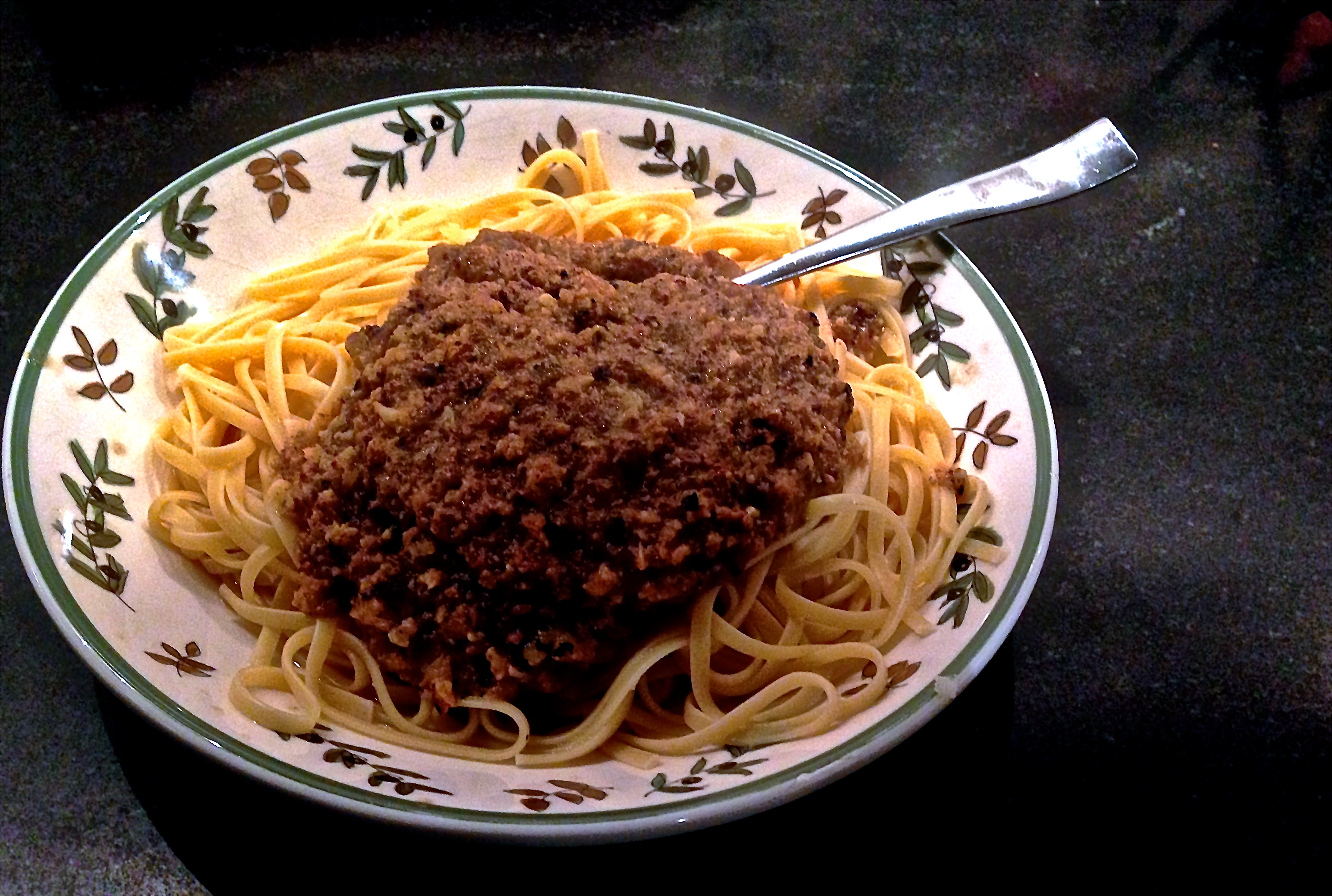
Rigatoni with Roasted Eggplant and Black Olives in a spicy tomato-based sauce.

NOTE: This recipe, which makes about 5 quarts of sauce can be frozen in batches and is enough for 3 lbs. of Rigatoni.

Ingredients:

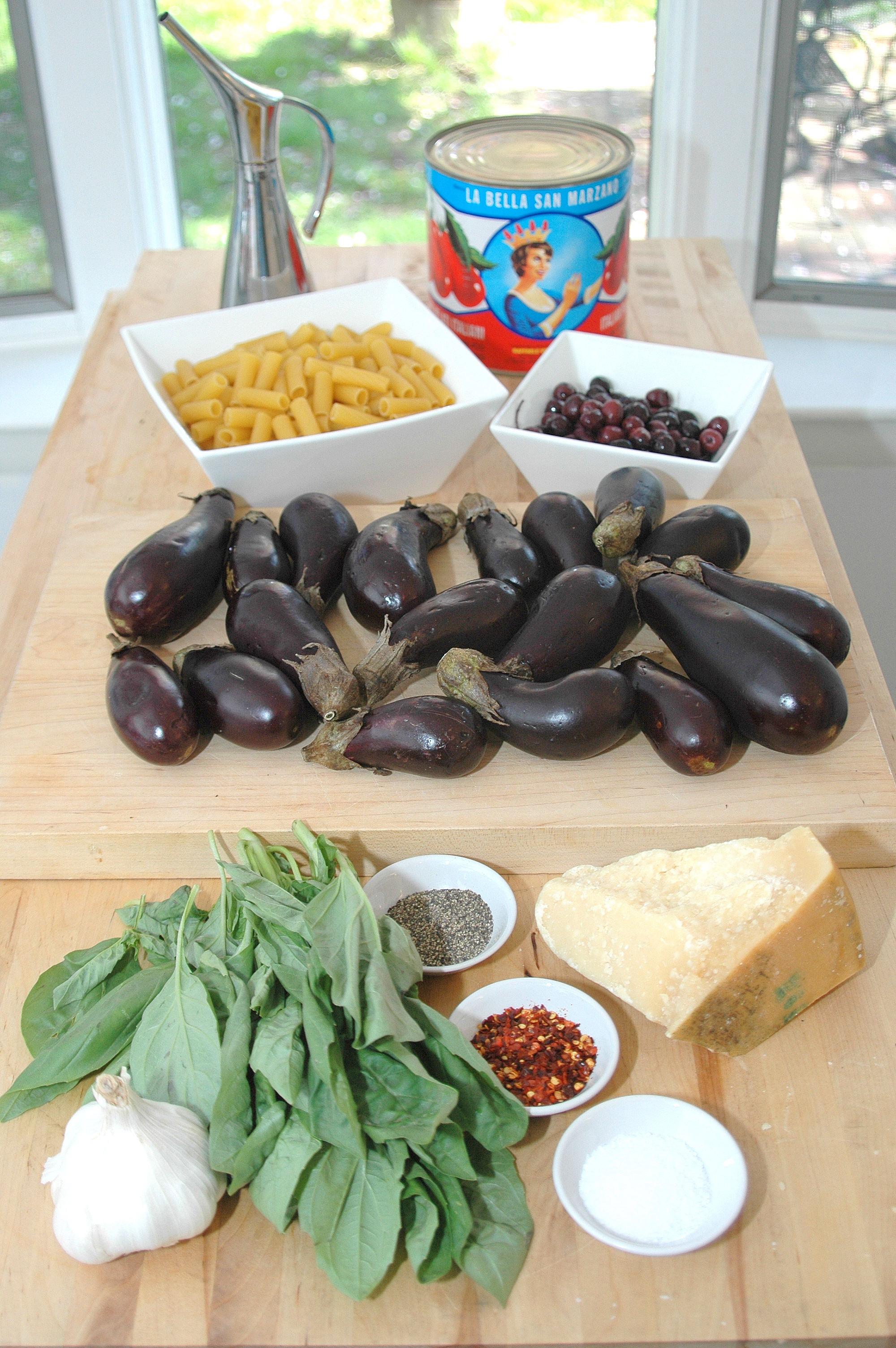
  • 12 -18 small “Italian Eggplants” (about 3 lbs.), remove tips and cut into 1-inch cubes (you can also use the large eggplants if you cannot find the smaller ones, which I find are more tender and less bitter)
  • 1 cup + 6 tablespoons of Extra Virgin Olive Oil
  • 1 tablespoon each of kosher salt & ground black pepper
  • 12 cloves of garlic, chopped fine
  • 1 tablespoon of Hot Red Pepper Flakes (if you do not like it spicy, use ½ tablespoon or 1 teaspoon).
  • 1 pint of pitted, imported black olives (Gaeta or Moroccan) chopped coarse
  • 3 cans (35 oz. size) San Marzano Tomatoes cut into large chunks
  • 1 cup dry red wine
  • 1 – 3 lbs. dried Rigatoni (see note above)
  • 30 leaves of fresh Basil
  • Freshly grated Parmigiano-Reggiano

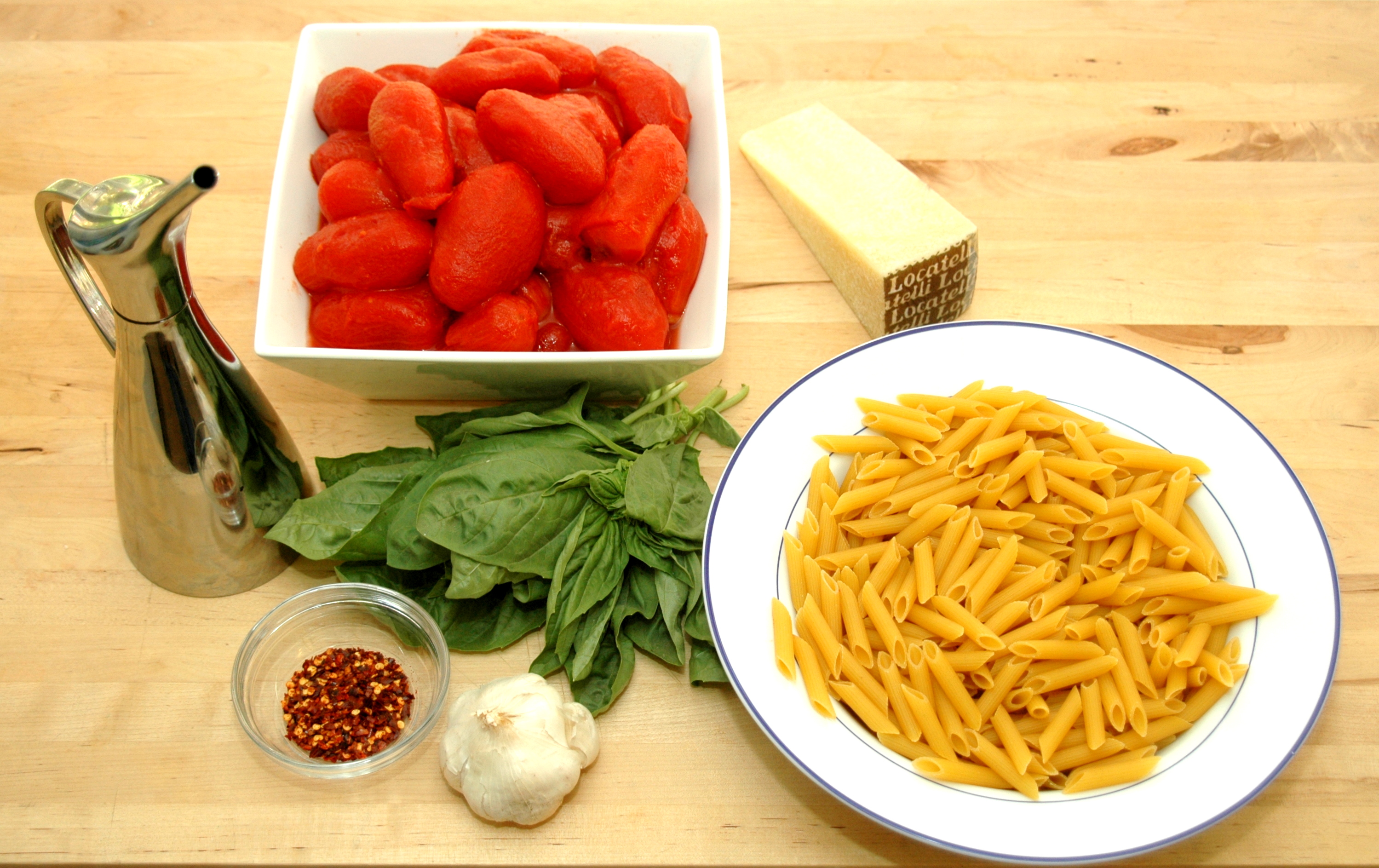
Ingredients for Rigatoni all' Oltrarno

Steps:
1.    Pre-heat oven to 350 degrees.
2.    In a large bowl, toss the cubed eggplant with 1 cup of the olive oil. When fully coated, sprinkle with salt & black pepper and toss again.
3.    Spread the eggplant in one layer on 1 or 2 cookie sheets, roast in the oven between 30 and 40 minutes.
4.    Heat remaining olive oil on high in an 8 quart pot.
5.    When oil is hot but not smoking, reduce heat to medium, stir in the chopped garlic and sauté for 1 to 2 minutes. Quickly add the hot red pepper flakes followed by the olives, stirring constantly for about a minute.
6.    Add the tomatoes and their liquid; return heat to high and bring to a boil. Reduce heat to medium, cook uncovered for 15 minutes, stirring frequently.
7.    Add the roasted eggplant and wine, turn heat to low and simmer covered for about an hour to fully blend flavors, stir periodically.
8.    Fill a large pot with sufficient water to cook the Rigatoni according to directions on the box of pasta.
9.    When Rigatoni is cooked, drain it and toss it with the sauce.
10.    Tear basil leaves into small pieces and add to pasta, toss well again and serve with freshly grated Parmigiano-Reggiano.

Hot crusty Italian Bread makes a great accompaniment for this pasta dish, as does a bottle or two or three of full-bodied  Sangiovese.

See Related Article

Our Italian Thanksgiving

In General Articles on May 12, 2011 at 12:55 PM

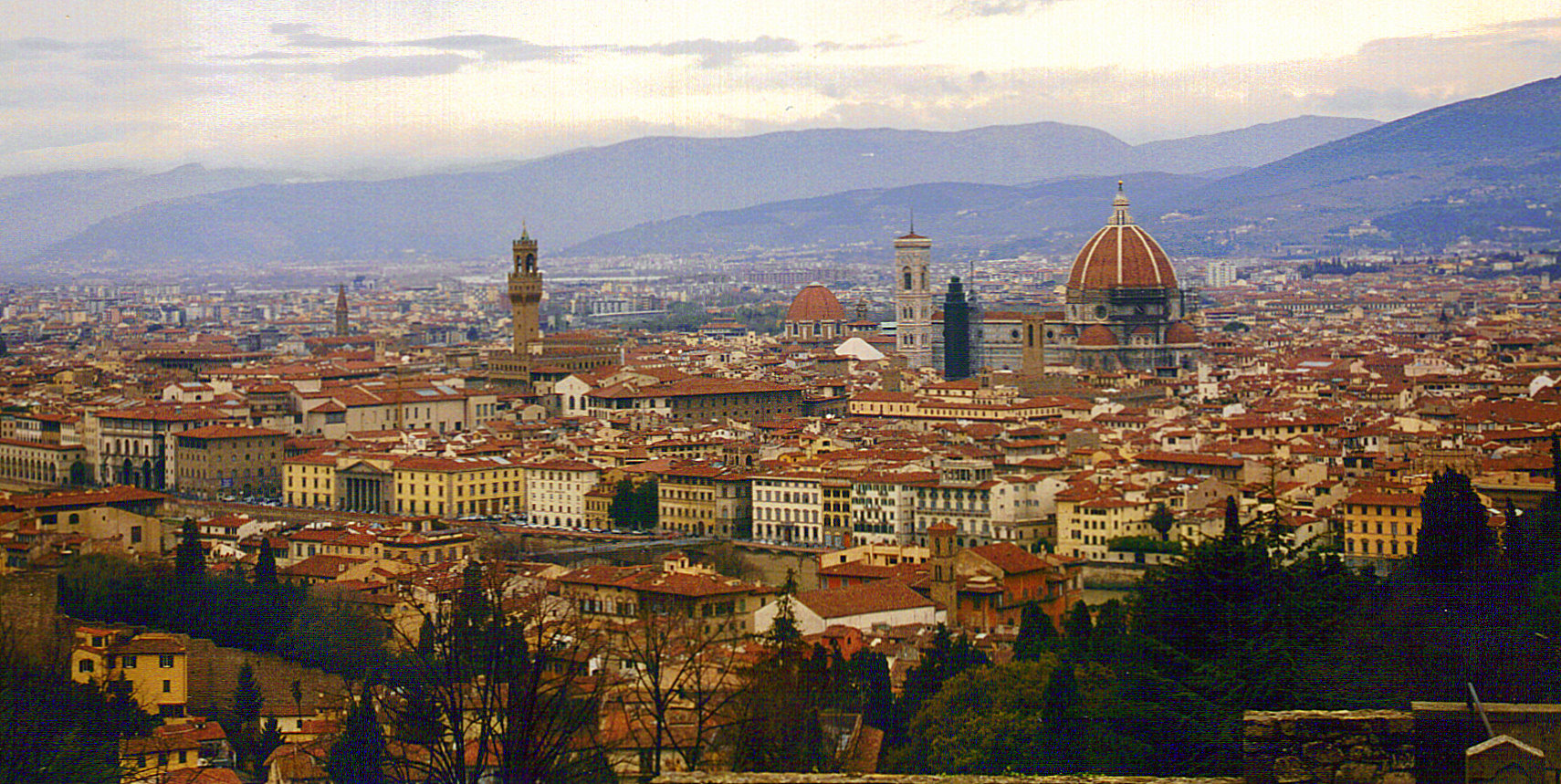
In the fall of 1997, our younger daughter spent a semester abroad in Florence. Missing her greatly after ten weeks, my wife and I flew to Milan on the Sunday before Thanksgiving. Upon landing we took a bus into the central city and caught a train down to Florence, where we had booked ‘a room with a view‘ at the Hotel Pensione Pendini for six nights.

Hotel Pensione Pendini - A Room with a View

Arriving in the city around 6:00pm, after traveling for about 18 hours, we took a taxi from the Santa Maria Novella Railway Station to the Pendini, which is centrally located on the Piazza della Repubblica.

We had been to Florence once before, in the summer of 1970, but for only two days while on a whirlwind tour of Italy. So not only were we thrilled to be seeing our daughter, but looking forward to the prospect of spending a leisurely week exploring the city, its museums: The Uffizi, The Accademia, The Pitti Palace and The Bargello; its churches: The Duomo, Santa Croce, Santa Maria Novella, San Miniato and The Brancacci Chapel; and the surrounding countryside, all without the usual crush of summer tourists.

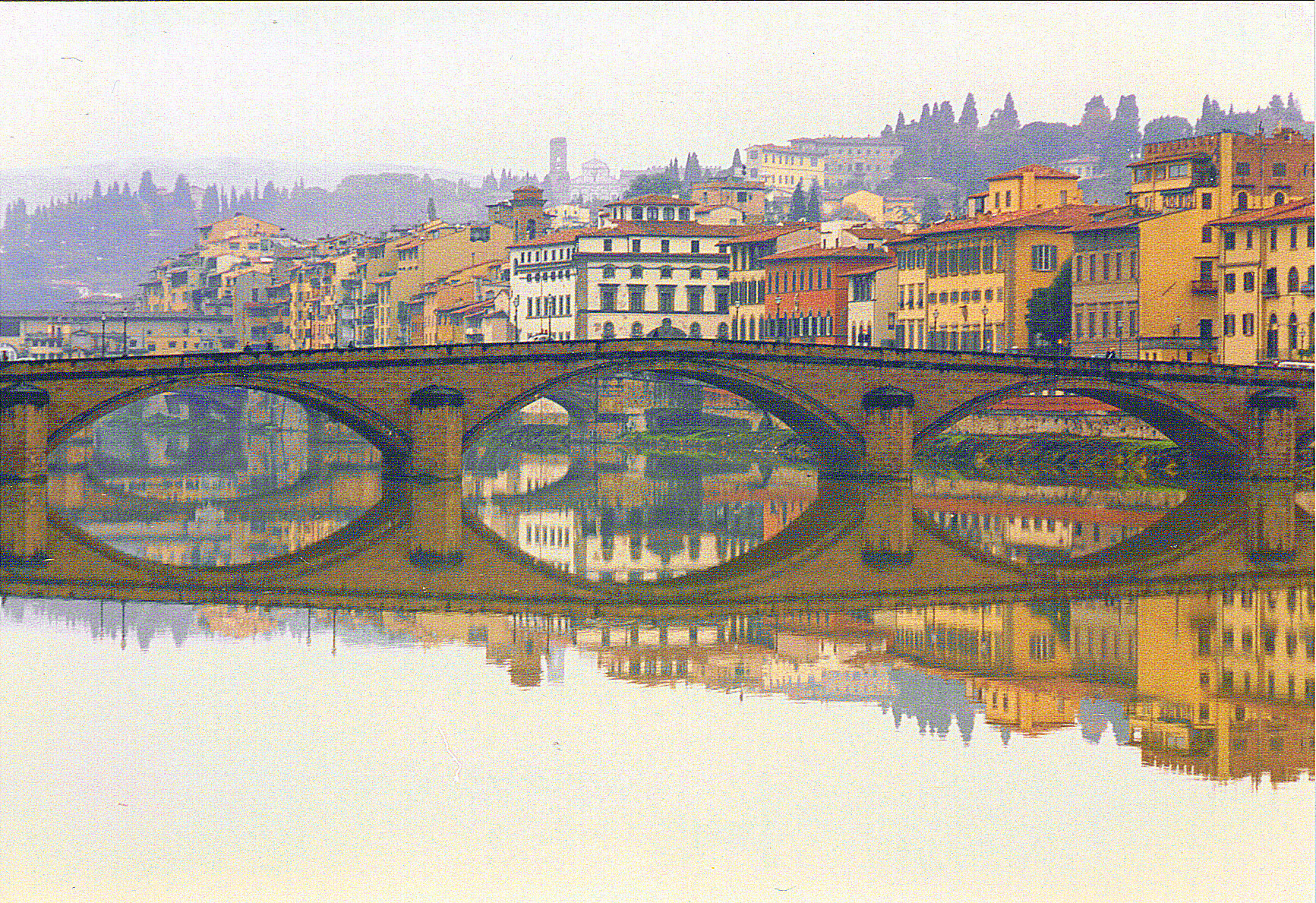
Our daughter was living in a section of Florence known as Oltrarno, which translates to ‘across the Arno‘, the river that bisects the city. Her apartment on the Via Maggio near the Boboli Gardens was shared with a friend and is a short walk from the Pendini, which is located on the northern side of the Arno River.

During the days that she was in class, my wife and I toured the city. On her days off she joined us. Having her show us around to her favorite spots and translate for us was a treat. It was great for her too, not only because we picked up the tab, but with our rental car, she got see the Tuscan hill towns of San Gimignano and Volterra, which otherwise would have been difficult for her to visit.

Firenze from the Piazzale Michelangelo

In the evenings we had some great meals at restaurants such as: Il Latini, Mama Gina and Trattoria Cammillo. On Thanksgiving Day, which of course is not a holiday in Italy, my wife and I decided to treat our daughter and four other homesick American students doing their ‘semester abroad’, to ‘Thanksgiving Dinner’ at Borgo Antico, a local restaurant which the girls frequented regularly.

Since turkey with all of the Thanksgiving trimmings was not on the menu, I decided on a vegetarian pasta dish consisting of rigatoni, eggplant and black olives. It was excellent and tasted even better with my share of the six bottles of Chianti Riserva that were shared by all. As a matter of fact, the combination of wine, youthful high spirits exhibited by the young ladies and the heady idea of a group of Americans celebrating America’s most traditional holiday in a city that is more than 2,000 years old, dating back to Julius Caesar, was such that I have no recollection of the rest of the meal. I do remember thinking that we, and hopefully our daughter and her friends, would remember this Thanksgiving for the rest of their lives.

Firenze-Oltrano

In attempting to re-create this memorable pasta dish several iterations with the eggplant were necessary. First I added raw eggplant to the tomato-based sauce and discovered that it lacked flavor, so I tried roasting it first and that helped. But I also found that the ½ inch-cubed eggplant pieces were too small, as a result it broke down and almost disappeared as it cooked in the sauce; one inch cubes worked better. Some still broke down, but most retained their shape thus enhancing the combination of pasta, eggplant and olives. Initially, I had used regular sized eggplants but found them to be a little too bitter for my palate. I then experimented with the smaller ‘Italian’ variety and found them to be more to my liking. But if you cannot find them, by all means try the larger sized ones.

Here then is the recipe for my re-creation of that hearty pasta dish whose name on the menu of Borgo Antico also slips my mind. I named it Rigatoni all’ Oltrarno in honor of the section of Firenze in which Borgo Antico is located. I have read that Tuscans have an abiding love of beans, accordingly, they became known in other Italian regions as mangiafagioli, (bean eaters). Lest you think that this is a blog only for the ‘mangiapasta‘, please continue at: Basta Pasta!

Da’s Penne Arrabiata

In Pasta, Recipes on May 8, 2011 at 5:11 PM

Ingredients:                                                                                                               

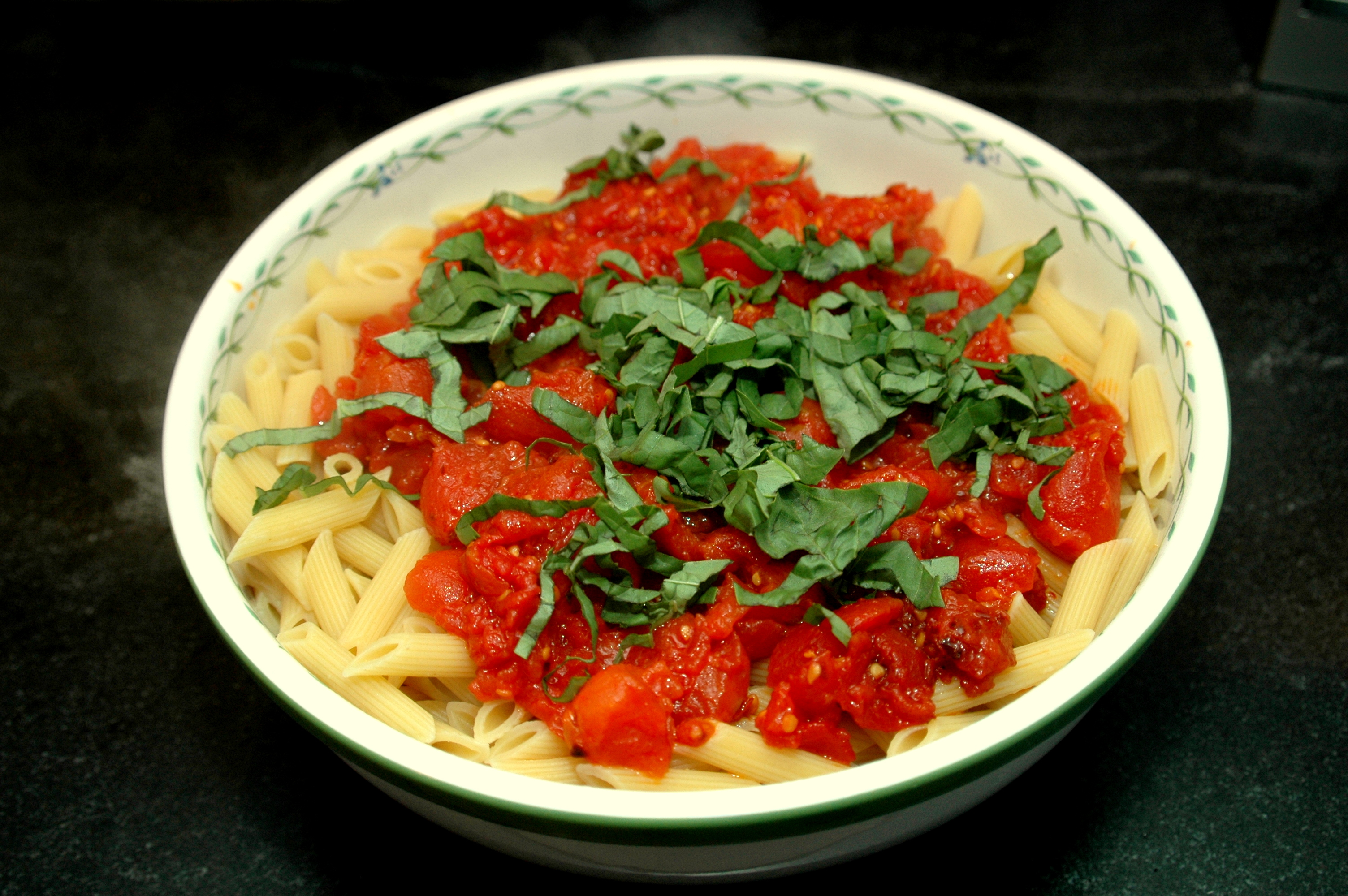
Ingredients for Da's Penne Arrabiata


•    3/4 cup Extra Virgin Olive Oil
•    12 large cloves of garlic, sliced very thin
•    2 teaspoons hot red (chili) pepper flakes
•    Two  35 oz. cans of San Marzano Tomatoes, remove tomatoes from the can, cut into ¾ to inch pieces and drain well in a colander
•    1 lb. Penne
•    1 cup of  fresh basil leaves, sliced

Steps:

1.    For the pasta, bring a large pot of salted water to a boil.
2.    In the meantime, heat the olive oil in a deep frying pan.
3.    When the oil is hot, add the garlic slices and stir frequently.
4.    When the garlic begins to turn medium-brown (3-4 minutes), shut the heat and remove the garlic with a slotted spoon and discard.

What the Garlic Should Look Like

5.    With the heat still off add the pepper flakes to the hot oil.
6.    Quickly add the cut-up drained tomatoes before the pepper flakes burn, turn the heat to high and cook for about 10 minutes.
7.    When the pasta water comes to a boil, add the penne and cook according to directions.
8.    Drain the pasta well, transfer to a large bowl and add the sauce. Stir well, add the basil and stir again.

Mangia!

Serve with grated Locatelli Romano Cheese, warmed Italian Bread, a bottle of Montepulciano d’ Abruzzo Riserva and a salad.

See related article at: I Found This Dish in San Francisco…

I Found This Dish in San Francisco, High on Russian Hill it Called to Me

In General Articles on May 8, 2011 at 4:42 PM

Penne Arrabiata, another family favorite, resulted from a business trip to San Francisco in the mid 80s. At that time, I was enmeshed in the corporate life and frequently traveled on business. Dinners with clients and local associates were usually an integral part of these trips and I looked upon them as recompense for the hardships of business travel.

One of my favorite cities is San Francisco, which my wife I had first visited in the summer of 1968. We fell in love with ‘That City by the Bay‘ and I wanted to permanently relocate there, but for numerous reasons that never occurred. As a result, I always looked forward to trips back to San Fran (never ‘Frisco’?), whether for business or pleasure.

On this particular trip a group of us were taken to Allegro on Russian Hill, the favorite restaurant of our West Coast Regional Vice President. He was such a regular at Allegro that his autographed picture hung on the wall alongside numerous and more recognizable luminaries than he. Perusing the menu for the pasta course, I noted that among the usual dishes of Baked Ziti, Linguini with Clam Sauce and Rigatoni Bolognese, was something called Penne Arrabiata, which was new to me.

The waiter explained that penne was a hollow-shaped pasta somewhat like ziti, but smaller and with pointed ends like a quill pen. Also that Arrabiata was a spicy tomato-based sauce that meant angry; an allusion to the hot pepper, which is integral to the sauce. Having grown up with Dorothea’s Homemade Hot Pepper Sauce, that sounded right up my alley, so I ordered it for a first course and became immediately addicted. So memorable was the Penne Arrabiata that I have long since forgotten what I ordered for the main course.

Since my first trip to the West Coast in 1968, I have noted that trends, fads and fashions tend to originate there and move eastwards. That seems to me to have been the case with our current obsessions with food, wine and most of all coffee…think Starbucks! In the mid 1980s,  penne was not as ubiquitous as it is today, and I dare say, was practically unknown in most sections of the country. Penne Arrabiata was even more obscure. Or maybe, I was just oblivious to them both. I think that today, penne appears to be fairly common on restaurant menus across the country; there is Penne alla Vodka, Penne Pasta (a redundancy?) with Vegetables and even Penne Arrabiata on the more adventurous menus.

When I returned to New York after that dinner in San Francisco, I described Penne Arrabiata to my wife and daughters and they suggested that I undertake its replication. I thought long and hard about the ingredients and the process, but it would take about ten tries to perfect it to my liking and to come as close to what I remembered it from that night at Allegro.

My first problem was in finding penne. Most of the local supermarkets had limited depth in the pasta area, certainly not like it is today. There were shells (conchiglie) fettuccine, linguini, spaghetti, thin spaghetti (spaghettini), angel hair (capellini), rigatoni, ziti, even ditali and ditalini in some stores, but no penne. So, initially, I made it with ziti, but the ziti were too large and too smooth and didn’t hold the sauce well. Eventually, I found penne in some specialty food stores. However, the penne available at that time was smooth like ziti, and thus, like its counterpart, the sauce did not adhere to it as well as I would have liked. Then I discovered Penne Rigate, which had little lengthwise ridges for retaining the sauce. Perfetto! It appears that pasta maker Barilla eventually discontinued the smooth penne and dropped the word rigate, so that now Barilla produces only one kind of penne, ridged.

Beside the other obvious ingredients of olive oil, tomatoes, hot pepper, and basil, there was garlic. However, garlic was not visible in the dish and the flavor was more one of deeply-browned, but not burned, garlic. After several attempts, I realized that the Chef at Allegro must have removed the garlic after he had browned it in the oil thus giving it that smooth garlic base. I experimented with just how far to brown the garlic without burning it and making the dish inedible.

I also noted that there was very little liquid to the sauce, it was redolent of tomatoes, but they were chunky, not soupy. I first tried draining the tomatoes straight from the can, it was still too soupy. Next I chopped the tomatoes and then drained them of their natural water, close, but still not yet exactly right. Then one day I read about San Marzano tomatoes and how they were riper, meatier and had less liquid in the can as compared to other types. That was it, perfection in a can and the solution to the tomato dilemma!

Then there came the problem of how much hot pepper…one teaspoon was too little and one tablespoon was too much. One time I made it for my daughter and her friends and it was apparently not well received, as the next time my daughter asked me to make it, she requested that I tone down the hot pepper.

In the 1980s, finding basil outside of the summer season used to be a problem as well; but thankfully, that is no longer the case.

I recently looked for Allegro online and found Allegro Romano on Russian Hill, which is a fairly new restaurant, having opened in 2004, but it appears to be in the same location as the Allegro where I was first introduced to Penne Arrabiata. I hope to return to San Francisco and see if they have Penne Arrabiata on the menu and if so, how it compares to my version, the recipe for which can be found at…Da’s Penne Arrabiata.

If you have read these articles this far, you no doubt have come to the realization that pasta (or macaroni as Big Mike referred to it) is a big hit in our family and that travel is also a passion. Next stop on these global peregrinations is Florence Italy, where in 1997, we celebrated Our Italian Thanksgiving.

Chronological Index of Articles by Chef Scar

In Article Index on May 1, 2011 at 9:28 AM

          1. How to Cook Like an Italian Grandmother
          2. Everybody Has a Story
          3. Pasta Memories
          4. Another of Big Mike’s Favorites
          5. Eat It! It’s Good for You!
          6. Pasta Fagioli, or Pasta Fazool?
          7. I Found This Dish in San Francisco, High on Russian Hill it Called to Me
          8. Our Italian Thanksgiving
          9. Basta Pasta!
          10. Steak! It’s What’s for Dinner!
          11. Chicken Scarpiello; Everybody Makes it Differently!
          12. Midnight (and Calvados) in Paris
          13. Fish is not Just for Fridays, Anymore
          14. Memories of Grandpa and Summers at The Shore
          15. Brother Devil
          16. For Moms on the Go
          17. Catching Wild Salmon in Alaska and Cooking Wild Salmon at Home
          18. ‘The Other White Meat’
          19. A Nutritionally Balanced and Delicious Mediterranean Meal
          20. Uncle Fred, The Godfather
          21. Time to Get Back to Cooking and Posting
          22. The Last of the Basil
          23. Grandma Loved Ceci Beans
          24. Eat Your Brussel Sprouts! Mother Commanded
          25. A Hearty Beef Stew for Those Chilly Autumn and Winter Nights
          26. Sunday Chicken Dinner- No Leftovers!
          27. Meatloaf for Dinner! Again?
          28. Requiem for a Pig
          29. SOUP’S ON!
          30. A Pre-Thanksgiving Meal
          31. The Turkey that Keeps Giving
          32. The Gift of Christmas Ham that Kept on Giving
          33. Where Have All the Butchers Gone?
          34. Breaking Out of the Food-Induced Coma
          35. The Best Italian Restaurant
          36. Cooking in Naples…Florida that is!
          37. East Side, East Side, All Around the Town
          38. The Secret’s Out!
          39. Anndemma
          40. A Serendipitous Halibut Dinner
          41. The Maturing Palate
          42. Tommy T and Me
          43. Pork & Prunes – Yum or Yuck?
          44. A Visit to Lithuania
          45. On Tour With The Literate Chef-Bermuda, Part I
          46. On Tour With The Literate Chef-Bermuda, Part II
          47. On Tour With The Literate Chef-Bermuda, Part III
          48. Clam Shucking
          49. A Multitude of Fishes
          50. Memories of NOLA
          51. You Can Take it With You
          52. An Experiment in Stuffing a Roast
          53. ‘You can go to heaven if you want. I’d rather stay in Bermuda.’
          54. Discoveries at The Shore
          55. My Cousin Vinny to the Rescue
          56. Where Have All the Germans Gone?
          57. What to Do With a Piece of Cod
          58. With Thanksgiving but a Week Away…
          59. At The Farmers Market
          60. This Little Piggy Came from the Market
          61. The Red, The White, The Green and The Yellow
          62. Vegging out & Vegging In
          63. Time to Draw a Line in the Breadcrumbs
          64. Attention, Garlic Lovers
          65. Luigi the Barber
          66. She proposed and I disposed
          67. Summer Serendipity
          68. Is it Autumn Yet?


Pasta e Fagioli alla Veneziana

In Pasta on April 18, 2011 at 3:31 PM

Preparation time is 30 minutes. Cooking time, exclusive of soaking the beans, is approximately 3 ½ hours. This recipe produces about 8 quarts of fairly thick soup. If you like it soupier, add more water before serving. I use Borlotti beans, which are also known as Cranberry Beans. However, if they are not available, use white Cannelini beans. The correct ratio of beans to pasta is 3:2.

Ingredients:

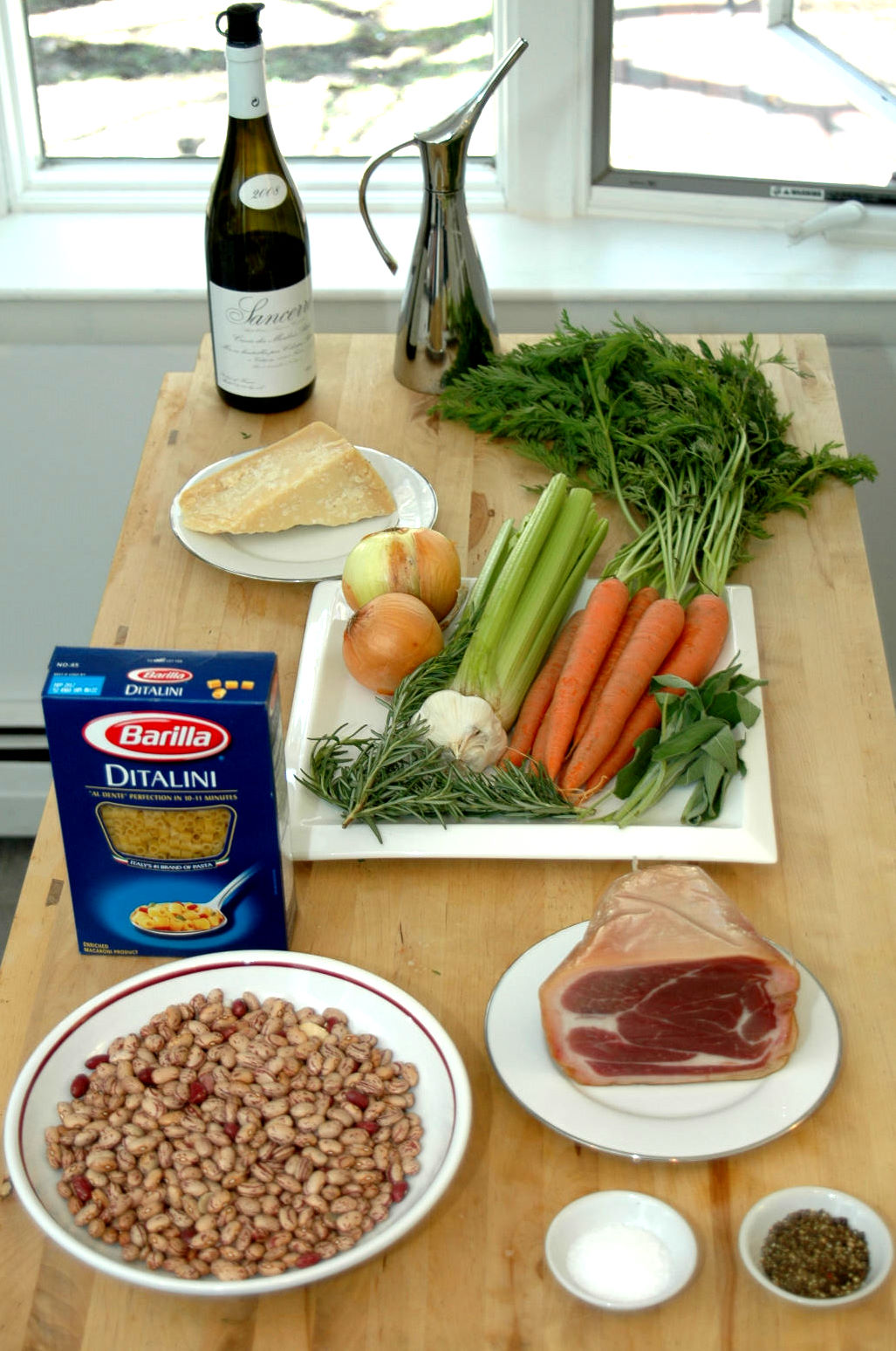
Ingredients for Pasta e Fagioli alla Veneziana

1 ½ lbs. of Borlotti Beans
1 cup of extra virgin olive oil
4 cloves of garlic, chopped
2 carrots, peeled and chopped
2 medium sized onions, chopped
3 stalks of celery, chopped
2 sprigs of rosemary, stems removed and discarded, chopped.
6 sprigs of sage, stems removed and discarded, chopped
1 prosciutto end, about 1 lb.
1 cup of dry white wine
1 lb. of Ditalini
2 tablespoons freshly ground black pepper
1 tablespoon kosher or sea salt
16 sage leaves, chopped

Steps:

1.    Soak the beans overnight for 12 hours, then drain and rinse them and set them aside. As an alternative, cover the beans in an 8 quart pot with 4 quarts of cold water and bring to a boil. Boil the beans for 2 minutes and remove from the heat, let stand in the pot, covered, for one hour, then drain, rinse and set aside. Rinse out the pot and use it to prepare the soup.
2.    Heat olive oil on medium heat in an 8 quart pot.
3.    Add garlic and stir for two minutes until translucent.
4.    Add carrots, onions and celery, stir for an additional two minutes.
5.    Add beans and mix well.
6.    Add 4 quarts of water.
7.    Add chopped herbs and mix well.
8.    Add prosciutto, bring to boil, reduce heat to medium and cook uncovered for 1 hour. Stir at 15 minute intervals.
9.    After 1 hour, cover pot, reduce heat to low and simmer an additional 2 hours. Stir every 30 minutes.
10.    Remove beans, vegetables and meat and set aside.
11.    Add the wine to the broth. If it is too thick add some water and bring to a boil.
12.    Add the Ditalini and cook for only 6 minutes, as it will continue to cook.
13.    While the pasta is cooking, chop the meat discarding any bone and gristle.
14.    There should be about 8 cups of beans and vegetables. Mash, or puree in food processor, about 1/4 (2 cups) of the beans and vegetables.
15.    Return mashed beans, whole beans and chopped prosciutto to the pot.
16.    Add pepper and salt, as well as 2 more cups of water and the chopped sage. Mix everything well and continue on low heat to blend flavors until ready to serve or save.
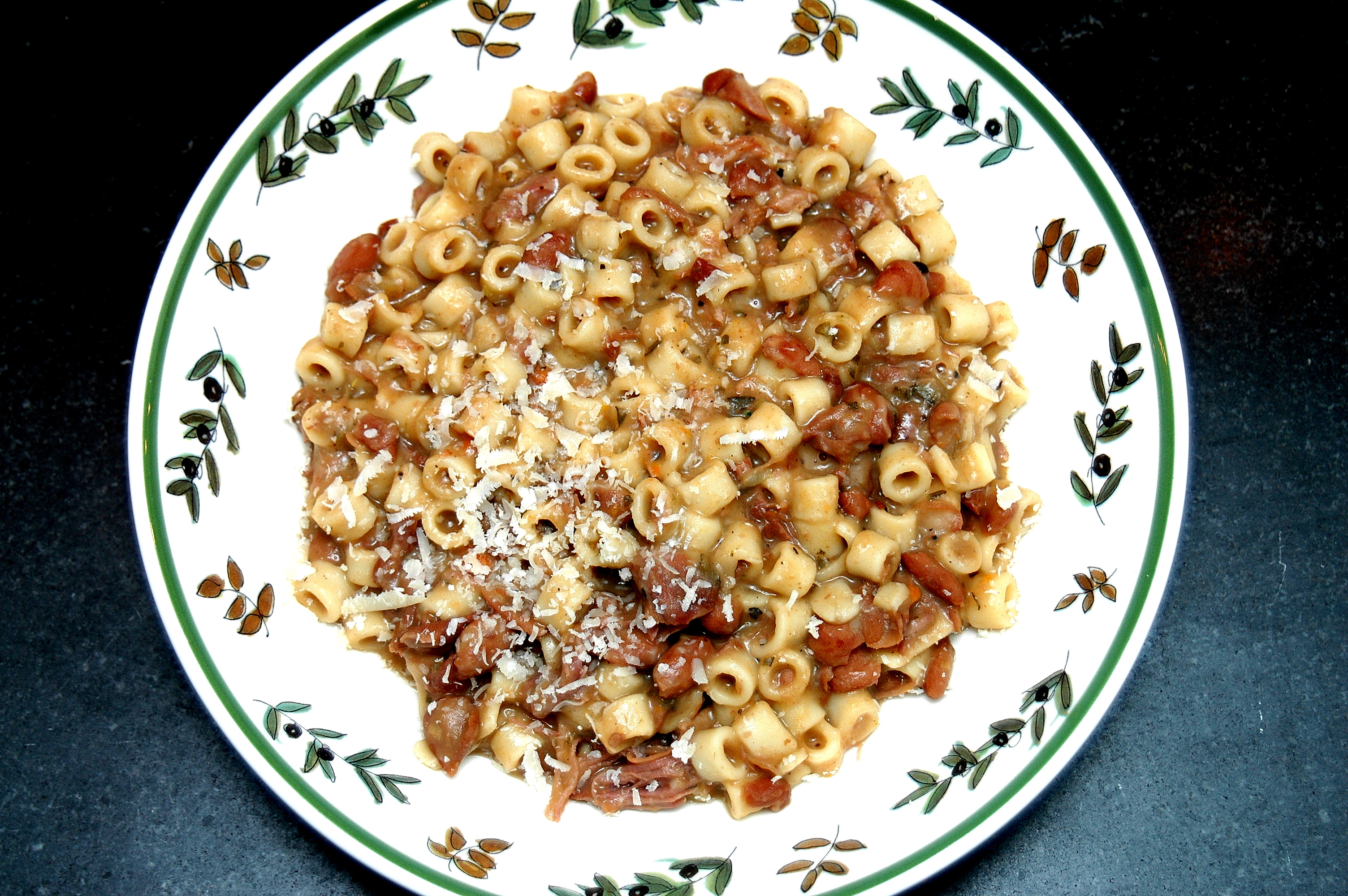
17.    Serve in soup bowls with extra virgin olive oil, freshly grated Parmigiano Reggiano and Dorothea’s Homemade Hot Pepper Sauce.

Pasta e Fagioli alla Veneziana

See Related Article at: Pasta Fagioli or Pasta Fazool?

Pasta Fagioli or Pasta Fazool?

In General Articles on April 18, 2011 at 2:17 PM

In June 2000, my wife and I along with two other couples, friends of many years with whom we had traveled extensively, spent a glorious week in a rented villa called Solaria, which is located in the Tuscan hilltown of Vagliagli. Vagliagli is a small town about 9 miles north of Siena on the road to Radda in Chianti and Castellina in Chianti, two larger and better-known towns. Each day, we piled into our rented van and explored the numerous hilltowns in the vicinity, beside the two mentioned above, and the city of Siena. These included: Colle di Val d’Elsa, Cortona, Monteriggioni, San Gimignano, Volterra and, of course, Florence (Firenze). We never had a bad meal or bad wine in any one of them and the weather was perfect the entire week.

When the rental was over, one couple went on to Germany and the other returned to the States, while my wife and I took off for Venice by train, where we planned to stay for a full, glorious week. We had been to Venezia on two previous occasions, both for very brief visits. One was in the summer of 1970 on our first trip to Italy, and at that time, we stayed for only two days. The second was even shorter; one bleak wintery day in November 1997, when we took the train up from Florence, where we were visiting our younger daughter during her semester abroad. On that occasion, we left Santa Maria Novella Station on a 5:30 am train and returned there about 1:00 am, having spent only 10 hours in Venice and either on trains or waiting for them the remainder of the time.

Visiting Venice the first time, we fell in love with the La Serenisima and afterwards read extensively both fiction and non-fiction books centered around its people, history and architecture. This longer third visit provided us with the perfect opportunity to explore many of its treasures at a leisurely pace. On one of those excursions, through the alleys of Dorsoduro, we came upon an unexpected treasure which resulted in another favorite family recipe. We had spent the morning at the Peggy Guggenheim Museum, which fronts on the Grand Canal. I had read a review in Gourmet Magazine on a fabulous Venetian seafood restaurant, Antica Trattoria La Furatola located at 2870a Calle Lunga de San Barnaba, Dorsoduro, less than ½ mile from the museum. We were hungry after touring the museum and from the map thought this close by. However, after a frustrating 45 minutes of innumerable twists and turns through alleys and piazzas, crossing and re-crossing canals, we finally came upon the restaurant, only to discover that it was closed for lunch on Wednesdays.

But our disappointment quickly turned to serendipity, as we discovered a tiny, unassuming treasure just down the alley from La Furatola. We had walked right past it earlier but failed to take notice, as we were so focused on finding La Furatola. When we walked through the door of Enoteca Osteria – Sandro and inhaled the aromas emanating from the kitchen, we wondered if it would be a suitable place for lunch. Any hesitation we might have felt was quickly removed by Sandro’s warm welcoming smile. He asked if we would like to sit in the back courtyard, which we welcomed since it was a beautiful sunny, blue sky day. I asked him what smelled so good; he said it was his Pasta Fagioli, which may be known more familiarly as Pasta Fazool!

We shared a bottle of chilled white wine from the Friuli region and I ordered the Pasta Fagioli, while my wife ordered pasta with gorgonzola and zucchini. Sandro’s Pasta Fagioli was unlike any Pasta Fazool I had ever eaten prior to that revelatory day. First, it lacked the tomato base that was such a prevalent ingredient in my mother’s recipe; second, it was redolent with herbs, which seemed to me to be sage and rosemary; and third there was a distinct salted pork flavor, which I thought might be prosciutto. Later, after much experimentation and consulting of several cookbooks (ones which were focused more on Northern Italian style cooking, rather than the Southern Italian style that I had grown up with) I developed my recipe for Pasta e Fagioli alla Veniziana. I hope one day to return to Venice and to thank Sandro for inspiring me to try to develop this version of Pasta Fazoole, which is a favorite meal among our family and friends.

Another big favorite in our home is a pasta dish that I developed after a visit to that ‘famous city by the bay’. Read all about it in: I Found This Dish in San Francisco, High on Russian Hill it Called to Me.

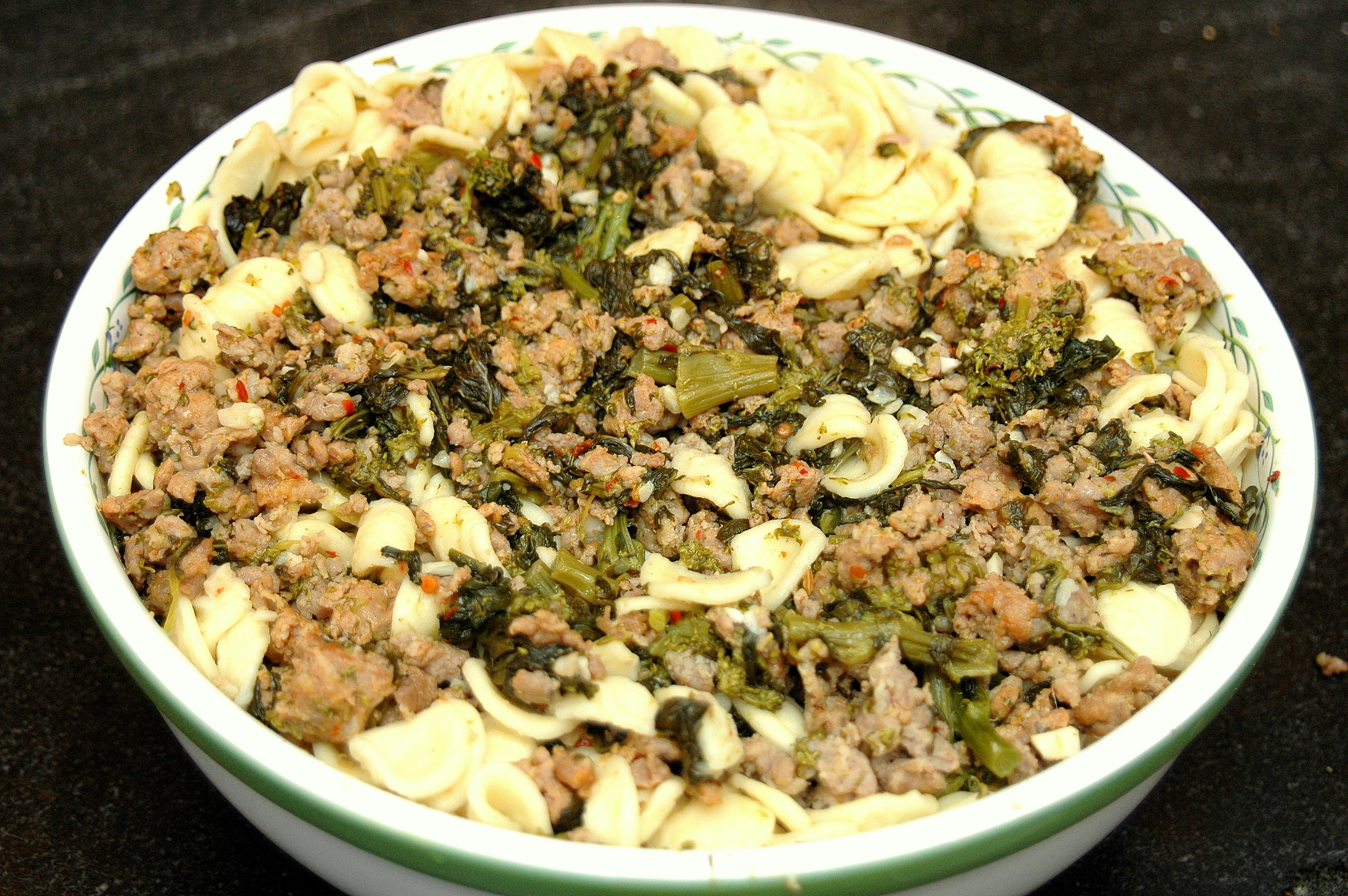
Orecchiette with Broccoli Rabe and Sausage

In Pasta on April 17, 2011 at 9:37 PM

This recipe will easily serve 8 people with leftovers.

Ingredients:

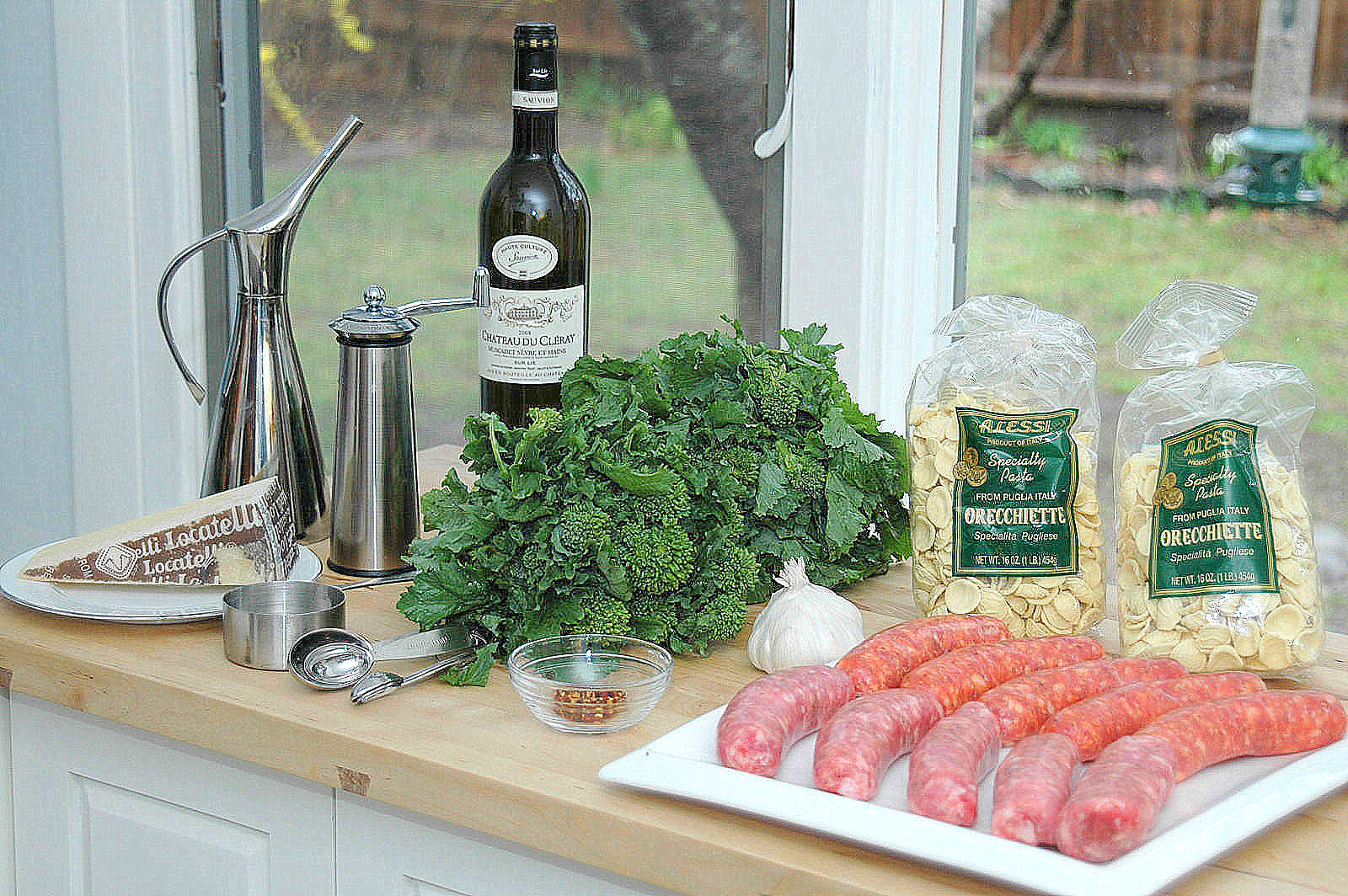
1.25 lbs. sweet Italian sausage (about 5 links)
1.25 lbs. hot Italian sausage (about 5 links)

2 bunches (approx. 2lbs.) broccoli rabe

Ingredients for Orecchiette with Broccoli Rabe and Sausage

½ cup + 4 tablespoons of extra virgin olive oil
1 teaspoon hot pepper flakes
12 cloves of garlic, chopped coarsely
½ cup of dry white wine
2 lbs. of orecchiette pasta

Freshly ground black pepper

Freshly grated Locatelli Romano cheese

Steps:

1.    Bring a large (8 quart with a removable strainer) pot of water to boil for blanching the broccoli rabe, as well as for cooking the orecchiette.
2.    Remove sausage meat from its casings and discard the casings.
3.    Heat 4 tablespoons of olive oil in a heavy frying pan on medium heat.
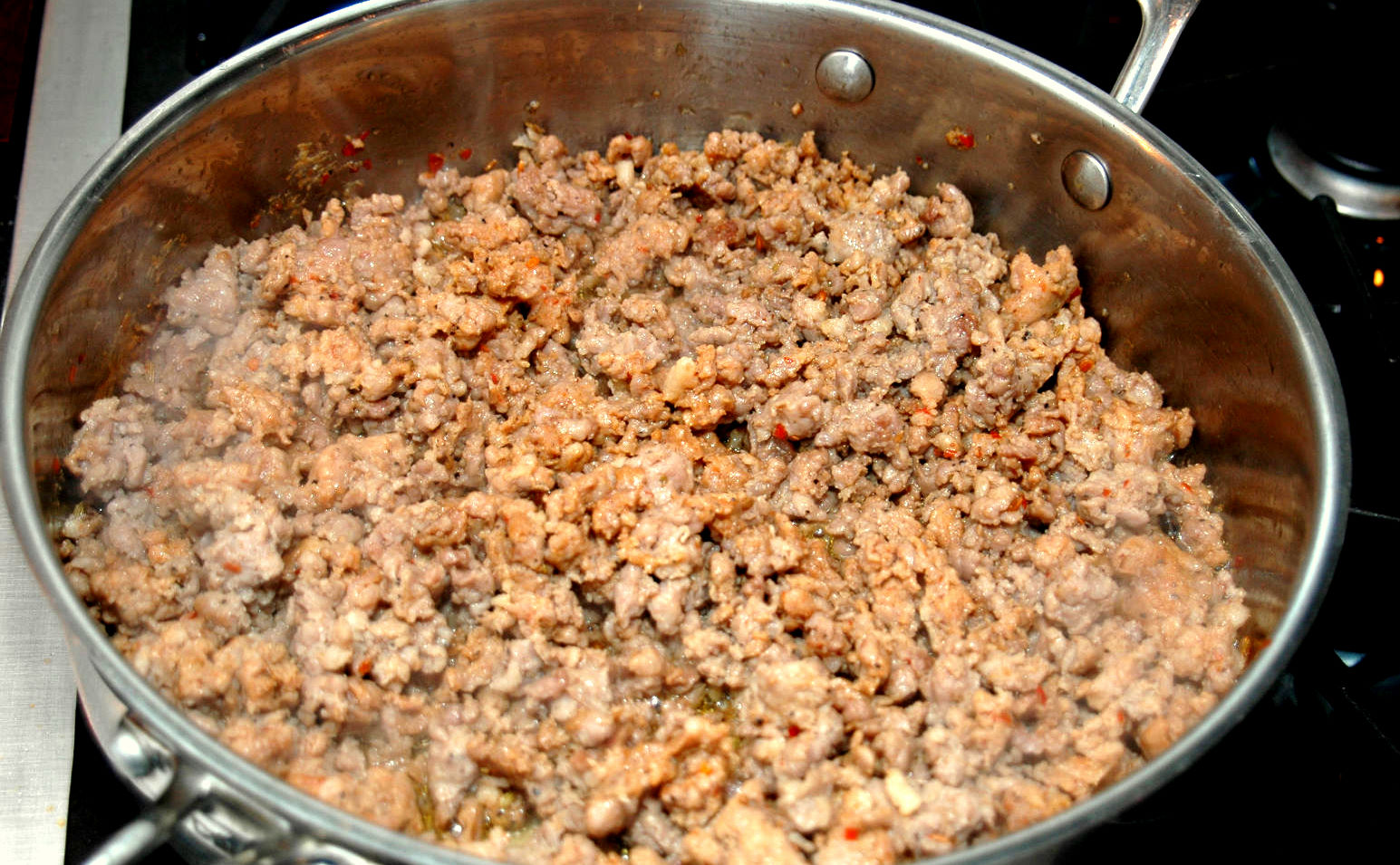
4.    Add sausage meat to the hot oil, continuously breaking up the meat with a wooden spoon until it loses its pink color and is lightly browned-about 20 minutes. When sausage meat is cooked remove it to a bowl.

Lightly Browned Sausage Meat

5.    While the sausage is browning, rinse the broccoli rabe and discard the thick stems, cutting about 3 inches off the bottom. Then blanch the broccoli rabe in the boiling water for about 60 seconds.
6.    Remove the broccoli rabe, strain it and plunge it immediately into a bowl filled with ice and cold water to retain its dark green color. Reserve the blanching water for cooking the orecchiette, but remove about 4 cups to thin out the sauce later, if needed.
7.    When broccoli rabe is cool, chop it into pieces about 1 to1.25 inches in length.
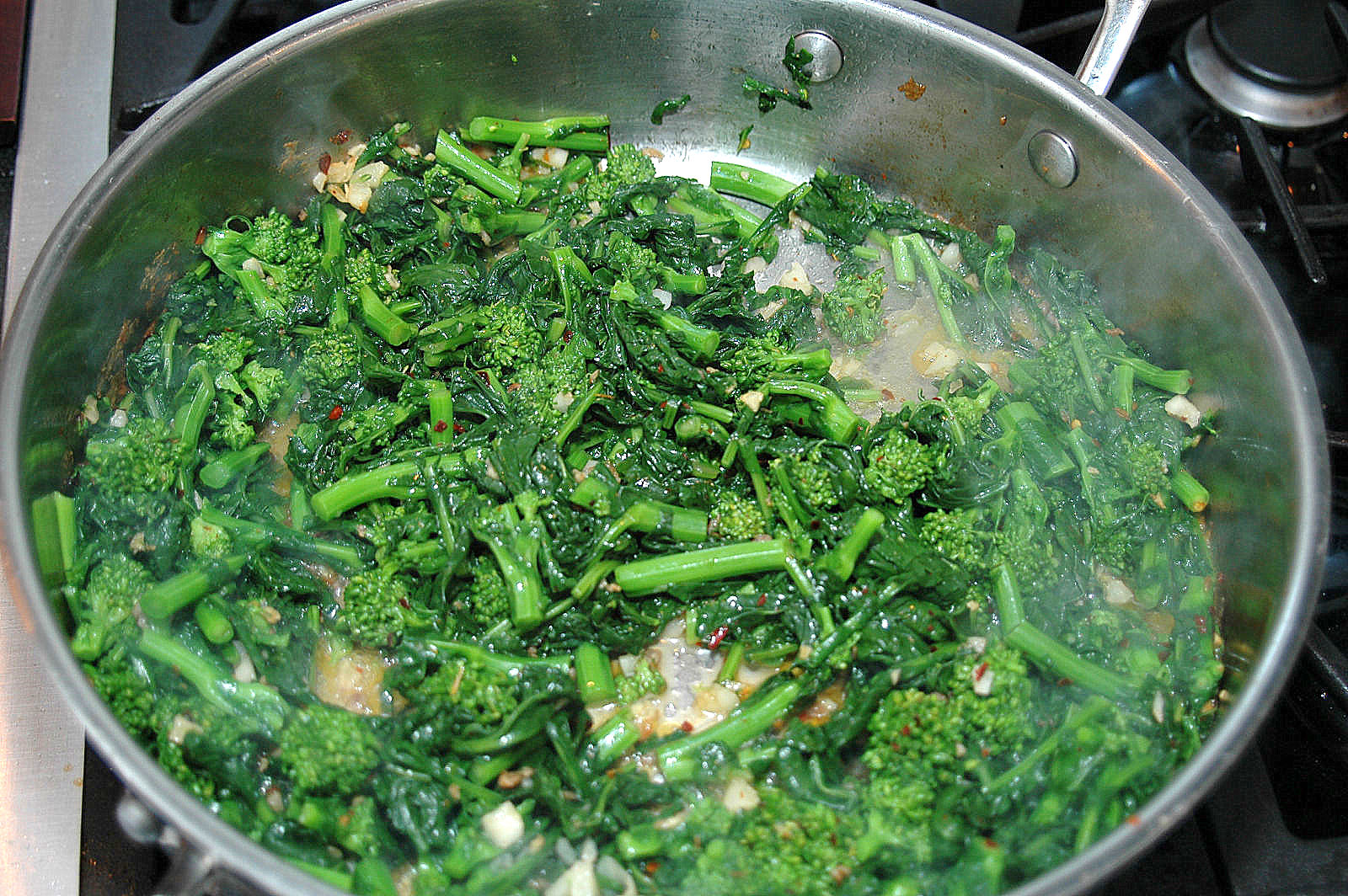
8.    After removing the cooked sausage meat from the frying pan, add the ½ cup of olive oil to the pan, then add the chopped garlic and quickly sauté it on high heat. As the garlic begins to brown on the edges, add the hot pepper, then the broccoli rabe and sauté it for about 3 to 5 minutes so it does not lose it dark green color. Remove it from the pan and set it aside with the sausage meat.

Sauteed Broccoli Rabe

9.    Bring the blanching water to a boil once again, add the orecchiette and cook according to the directions on the package.

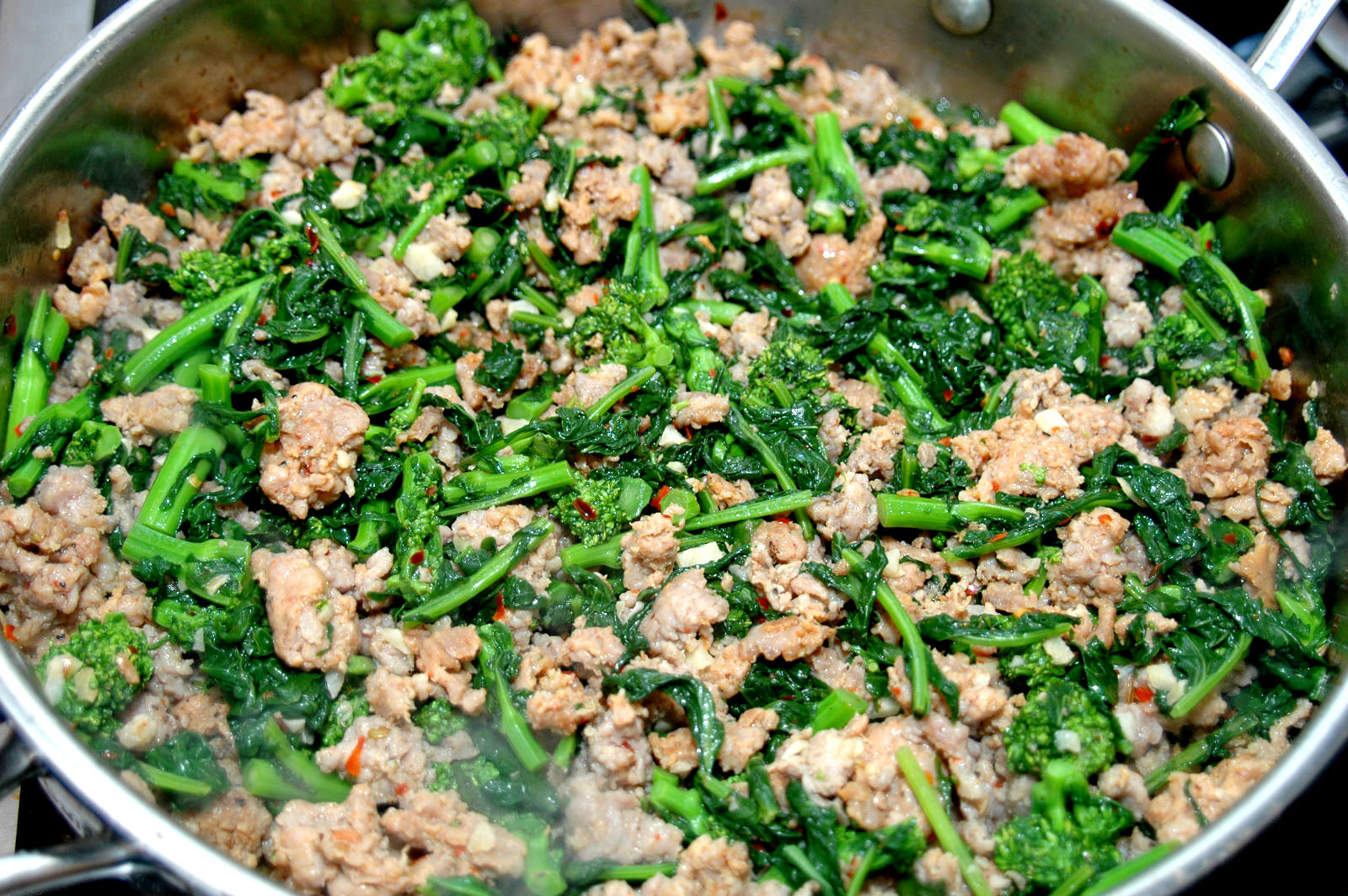
Completed Sauce

10.    In the meantime, turn the heat under the empty frying pan to high, add the ½ cup of dry white wine stirring up the solids on the bottom of the pan.
11.    Add back the cooked sausage and broccoli rabe to the pan mixing them together with the wine and solids; add some of the retained blanching water to thin out the sauce according to your preference. (I usually add about 2 cups.)

12.    When the orecchiette is al dente, drain it and mix it well with the sauce, adding more blanching water if necessary.
13.    Serve orecchiette, broccoli rabe and sausage in pasta bowls and sprinkle liberally with freshly ground black pepper and the grated cheese.

See Related Article at: Eat It! It’s Good for You

Mangia


Eat It! It’s Good for You!

In General Articles on April 17, 2011 at 9:06 PM

‘Eat it,’ my mother insisted, ‘broccoli rabe is good for you. It is full of iron and vitamins and it will help you go to the bathroom.’ Words any child with sense would immediately cringe at; almost as bad as ‘eat your liver’ because you won’t be able to leave the table until you do. As a child and teenager, I recoiled from eating broccoli rabe because it was bitter, smelly, soggy and overcooked. Then one day, when I was in my twenties, attending the Feast of San Gennaro, which is held annually on Mulberry Street in Little Italy, downtown Manhattan, I was drawn to a sausage stand by the aroma of freshly grilled sausage, fried peppers and onions. They had the usual hot sausage and sweet sausage, plus a third kind, which I had never seen before. The cook told me it was made by mixing chopped broccoli rabe with pork and spices before stuffing it into the sausage casing. Being adventurous, I tried one and was pleasantly surprised at how the spiciness and sweetness of the sausage meat provided a perfect counterpoint to the bitterness of the broccoli rabe.

As time passed, I began to notice in the pasta section of the menus at several Italian restaurants, Orecchiette with Broccoli Rabe and Sausage. It had probably been there all along, but I am sure that my brain never noticed it because of my earlier aversion to the vegetable. Remembering the delicious sausage from the Feast, I worked up the courage to finally order it from one of those restaurants. The combination of chopped broccoli rabe and sliced sausage was the perfect accompaniment to the al dente pasta. As I mentioned earlier in Everybody has a Story, trying to re-create a dish that was first consumed in a restaurant is challenging and fun. This was one of them. I first tried making it with sliced sausage, then with cubes of cooked sausage, but neither of these seemed to appeal to me. After several variations I finally hit upon the best method to my taste, which is removing the sausage meat from the casing, blanching, chopping and then sautéing the broccoli rabe in garlic, adding some hot pepper and white wine, and mixing it all together.

I hope that you, your family and friends enjoy this recipe as much as I and mine do. Mother was right as usual, broccoli rabe is good for you, it is full of iron and vitamins, and when mixed together with sausage and pasta, it is irresistible. So, all of you mothers and fathers out there, this is a good way to get your child to eat his or her veggies! Mangia!

My mother also made a delicious one dish meal that she called Pasta Fazool. Actually many Italian-Americans refer to this macaroni and bean dish similarly. But it wasn’t until I spent some time in Italy that I found out that over there, particularly in Northern Italy, which has a totally different dialect from that of Southern Italy, it is called Pasta e Fagioli. Please read Pasta Fagioli, or Pasta Fazool? to find out more about this controversy.

Alphabetical Recipe Index

In Recipe Index on April 16, 2011 at 10:59 PM

APPETIZERS

BAKING

BRUNCH

EGG DISHES

DESSERT

MEAT

    Beef

    Chicken

    Lamb

    Pork

   Turkey

   Veal

PASTA

RICE

SALADS

SAUCES

SEAFOOD

    Clams

    Fish

    Mussels

    Scallops

    Shrimp

SOUPS

STEWS

THANKSGIVING

VEGETABLES

VEGETARIAN MEALS

Crispy, Fried, Leftover Linguine with Cauliflower Sauce

In For Moms on the Go, Pasta, Recipes on April 10, 2011 at 10:50 AM

img_1155

Ingredients:

Leftover Linguine with Cauliflower Sauce
½ cup extra virgin olive oil

Freshly ground Locatelli Romano cheese

Steps:

1.    Heat the olive oil in a heavy sauté pan
2.    Add the leftover linguine and cauliflower, frying the pasta and cauliflower.
3.    Sprinkle the cheese on the pasta and cauliflower and stir and turn until fully blended.
4.    Keep frying and stirring until the pasta noodles become crispy.
5.    When done to your taste remove from the heat and enjoy.

See the Related Article at: Another of Big Mike’s Favorites

Dorothea’s Homemade Hot Pepper Sauce

In Recipes, Sauces on April 9, 2011 at 3:23 PM

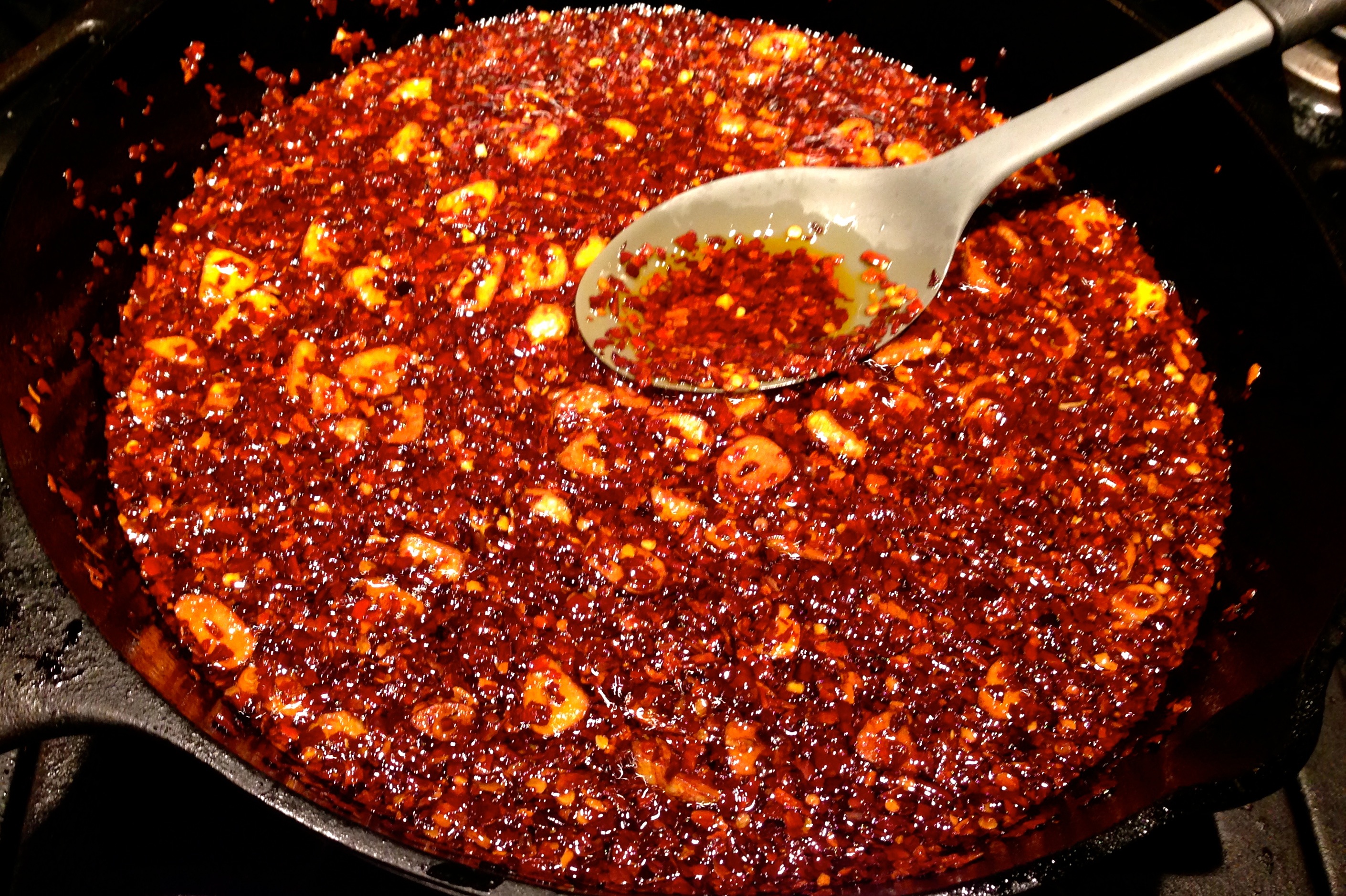
Dorothea 1943

(Warning: Be sure to turn on the exhaust fan or open the window when preparing this sauce)

Ingredients:

1 cup extra virgin olive oil
6 cloves garlic, sliced
1 cup of Crushed Red (Chili) Pepper

Steps:

1.    In a heavy skillet, heat the olive oil on high heat.
2.    When it is shimmering, add the garlic, stirring constantly until it turns a medium almond color.
3.    Quickly add the Crushed Red Pepper, remove the pan from the heat and keep stirring as the pepper continues to brown.
4.    Before it begins blacken and burn, pour the sauce into a container to let cool. When fully cooled transfer it to a small jar.
5.    Top off the jar with olive oil so that there is at least a quarter of an inch of liquid on top.
6.    Refrigerate the sauce. Before using in the future, bring it to room temperature and stir it well.
7.    Use sparingly on your pasta dishes, whenever extra spiciness is desired.

See Pasta Memories

Dorothea's Hot Pepper Sauce

Dorothea’s Hot Pepper Sauce


Big Mike’s Linguine with Cauliflower Sauce

In Pasta, Recipes on April 9, 2011 at 3:21 PM

Linguine with Cauliflower Sauce

Linguine with Cauliflower Sauce

Ingredients:

1/2 cup of extra virgin olive oil
12 cloves of garlic, chopped
1 head of cauliflower, separated
1 pound of Linguine
Kosher salt or sea salt
Freshly ground Locatelli Romano cheese
Dorothea’s Homemade Hot Pepper Sauce

Steps:

1.    Fill a six quart pot with water, bring to a boil.
2.    Add the cauliflower and cook until fork-tender.
3.    In the meantime, pre-heat a large cast iron frying pan on high, then add the olive oil.
4.    When the oil is shimmering, reduce the heat; add the garlic and sauté lightly, do not let it brown.
5.    Remover the cauliflower from the boiling water, remove 4 cups of the water for developing the sauce and reserve the rest for cooking the linguine.
6.    Add the cauliflower to the oil and garlic, and mash it in the pan continuing to break it down until it is the consistency of mashed potatoes.
7.    Raise the heat, allowing the moisture from the cauliflower to burn off and the cauliflower to begin to brown.
8.    Continue this process, by pushing the cauliflower to one side of the pan while adding some cauliflower water; scraping  up the burnt fond on the bottom of the pan and let it burn off again and again, until the mashed cauliflower takes on a nut brown hue.
9.    In the meantime bring the remaining cauliflower water to a boil, add the linguine and cook according to directions on the box.
10.    After tasting the linguine to determine if it is al dente, drain it in a colander.
11.    Add the cooked linguine to the cauliflower sauce and mix thoroughly, adding some of the reserved water if too dry.
12.    Serve in bowls for people to add their own grated Romano cheese and Dorothea’s Homemade Hot Pepper Sauce.

Note: This pasta dish is best accompanied by a loaf of fresh, crusty, Italian bread to sop up the leftover sauce and a chilled bottle of white wine, perhaps a Soave or a Verdicchio.

LEFTOVERS: This dish lends itself to a great leftover, if there is any – Crispy, Fried, Leftover Linguine with Cauliflower Sauce.

Please see the Related Article at:  Another of Big Mike’s Favorites

Another of Big Mike’s Favorites

In General Articles on April 9, 2011 at 3:15 PM

Another pasta dish that was a memorable staple growing up in my family, one which we introduced to our children and they loved as well, was Linguine with Cauliflower Sauce. With this pasta dish the memory is olfactory. First, the less than pleasant smell of boiling cauliflower, quickly, and thankfully, followed by that of sautéed garlic, then the exquisite aroma of the finished product, which of course contains both Locatelli Romano cheese and Dorothea’s Homemade Hot Pepper Sauce.

This pasta dish (sorry Dad – macaroni dish) was another favorite of my father and was great during those meatless Fridays when Catholics had to ‘suffer’ by abstaining from meat. When it comes to food, Italians have a knack for turning suffering into a joyful feast; just think La Vigilia the Christmas Eve Feast of the Seven Fishes!

See the recipe for Linguine with Cauliflower Sauce for the technique of preparing this delicious dish.

If you have any of this pasta dish leftover, which is highly unlikely in my house, then you are really lucky and you can use ‘the leftovers’ to make Crispy, Fried, Leftover Linguine with Cauliflower Sauce.

Of course my father was not the only cook in the house, my mother also had her repertoire, which was frequently focused on what was good for you. Please read Eat It! it’s Good for You!, to get a better understanding of what I mean.


Spaghetti with Del Monte Sauce

In For Moms on the Go, Pasta, Recipes on April 9, 2011 at 3:06 PM

Ingredients:

¼ cup + 1 tablespoon of extra virgin olive oil
6 cloves of garlic, sliced
1 tablespoon of dried oregano
2 12 oz. cans of Del Monte tomato sauce
1 pound of spaghetti
Kosher salt or sea salt
Freshly ground Locatelli Romano cheese
Dorothea’s Homemade Hot Pepper Sauce

Steps:

1.    Fill a six quart pot with water and bring to a boil.
2.    In the meantime, pre-heat a mid-sized sauté pan on medium then add the ¼ cup of olive oil.
3.    When the oil is shimmering add the garlic, sauté until it becomes light gold in color.
4.    Add the oregano and stir quickly.
5.    Reduce the heat to low, add the tomato sauce, return heat to high and bring to a boil.
6.    When the water is at a full boil, add a dash of kosher salt or sea salt plus the tablespoon of olive oil.
7.    Add the spaghetti and cook according to the instructions on the box.
8.    After tasting the spaghetti to determine if it is al dente, drain it in a colander.
9.    Transfer the sauce to the large pot, return the spaghetti and mix thoroughly.
10.    Serve in bowls for people to add their own grated Locatelli Romano cheese and Dorothea’s Homemade Hot Pepper Sauce.

Note: This quick, easy to prepare dish is best accompanied by a simple salad with Homemade Italian Dressing, a loaf of fresh, crusty, Italian bread and a bottle of Chianti Classico.

Please see Pasta Memories

Pasta Memories

In General Articles on April 9, 2011 at 3:00 PM

My earliest Pasta Memory, one filled with nostalgia for the simpler times in life, is Spaghetti with Del Monte Sauce. This was a ritual many Friday nights in our 3½ room apartment in the Inwood neighborhood of northern Manhattan, when I was growing up in the 1940s and 50s. First came the savory aroma of sliced garlic sautéed in hot olive oil, then the pungency of dried oregano added to the pan, finally the sizzling sound of canned Del Monte tomato sauce as it hit the hot oil and the fragrant aroma of tomato was released into the apartment. With the water for the spaghetti already at a boil, dinner was less than 15 minutes away.

My father, Big Mike, the designated Friday night cook, (he learned to cook from his mother, but I suspect that he perfected this meal while serving with the CCC out West) would sample the macaroni (he never called it ‘pasta’) after about 9 minutes of boiling and announce that it was al dente; that was the signal that we should take our seats at the table. After draining the spaghetti in a colander, (a ‘skoola pasta‘, in the Sicilian dialect he learned from his immigrant mother) he would return it to the pot, mix in the sauce, stir it well and scoop it into bowls. The spaghetti was always accompanied by freshly grated Locatelli Romano cheese, which was to be sprinkled liberally over it, by all. All that is, except my mother, Dorothea, who disdained cheese on her macaroni, as she claimed it detracted from the flavor of the sauce. Instead, she would heap one or two teaspoonfuls of her homemade Hot Pepper Sauce onto her bowl, as if that did not detract from the flavor of the sauce! She then proceeded to cut the spaghetti with a knife and fork and eat it with a spoon, so as to ‘get the spaghetti together with the sauce in one mouthful’.

Big Mike working for the CCC (circa 1934)

After my wife and I married, Spaghetti with Del Monte Sauce became a regular meal in our household, though not every Friday night, as it was quick, easy, inexpensive and delicious. Big Mike had another pasta dish that he enjoyed cooking and eating, and Another of Big Mike’s Favorites was also a regular Friday night dinner.

Everybody Has a Story

In General Articles on April 9, 2011 at 2:52 PM

Everybody has a story. It is how these stories are conveyed that determines the ability of the storyteller to attract the attention of the listeners. The same may be said of food. Everybody is capable of preparing a meal, but it is how the food is prepared and presented that attracts those for whom it is prepared and whether or not it will be memorable.

Growing up in my family, mealtime, primarily dinner, was always a special time for us. When my father came home for work at the Post Office, we would sit down together to eat and to discuss the day. On Sunday’s, after Mass, invariably we would gather with my aunts, uncles and cousins at Grandma & Grandpa’s apartment off of Webster Avenue in The Bronx. We called it ‘Grandma & Grandpa’s’, but the apartment was actually that of my aunt and uncle, the building superintendent. Those meals were the most memorable!

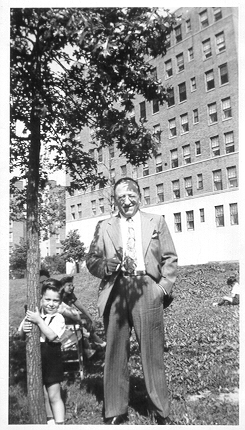
Grandpa & Me in Inwood Park

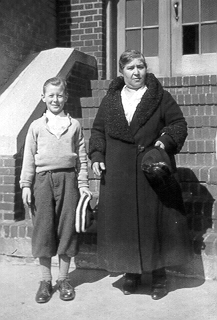
Grandma with Cousin Bobby


Those memories actually begin with the anticipation and excitement of being all together, eating delicious food, hearing new and often repeated family stories, as well as the jokes and laughter that accompanied each anecdote. Upon walking into the building lobby, taking that first breath and inhaling the aromas emanating from their apartment, we knew that an enjoyable time awaited us.

As my wife and I began to raise our own family and entertain relatives and friends, we first learned to cook basic meals. Then we began to experiment with more elaborate ones. The ones I liked best were those where we tried to re-create a dish, after experiencing something in a restaurant. We would play the guessing game: What ingredients made this particular dish unique? What spices were added? What cooking method did the chef employ? How did he prepare that sauce? Imitation is said to be the sincerest form of flattery, well if that is the case then we flattered a lot of chefs over the years.

What follows are stories from some of those meals, both original meals, as well as those which we re-created, accompanied by recipes for one or more of the dishes that comprised the meal and made it so memorable.

Please Continue to: Pasta Memories

How to Cook Like an Italian Grandmother

In General Articles on April 9, 2011 at 2:48 PM

Food, from its raw state to its ultimate consumption, is a sensual journey. From the acquisition of the ingredients, through the process of preparation, presentation and consumption, the senses of sight, smell and taste, almost always come into play. However, the two other senses, sound and touch, are no less important to our overall enjoyment of food, even though they are not always present during each food experience.

As more of us dine out, or purchase prepared foods, the sense of sound usually experienced in the preparation of food is lost, unless of course, you are eating in a restaurant with an open kitchen. Similarly, in many dining out experiences, formal or otherwise, unless it is finger-food like passed hors d’oeuvres, or hand-food such as barbecued ribs, the sense of touch is not necessarily evident.

Certain foods frequently take us back through time to our childhood, or to particularly memorable moments in our lives. Who among us having grown up in a large city, has not, when walking past a ‘Jewish’ deli, and inhaling that heady aroma of a combination of grilled frankfurters, steamed corned beef and pastrami, mixed with the pungency of dill and new pickles, recalled a time from their childhood when they were treated to a similar experience?

Having grown up in the northern Manhattan neighborhood of Inwood in the 1940s and 50s, living with my parents and younger sister, I, like many of my friends and contemporaries was fortunate to have had those food experiences, as well as others, many times over. I can still recall hot summer afternoons and the Jewish deli that used to be on the southwest corner of Vermilyea Avenue and 207th Street. Its aroma would hit me full in the face as I walked into the store, awakening my salivary glands in anticipation to the treats ahead. Then the crunch, the heat, the powerful salty taste, moderated by the yeasty freshness of the bun, as I first bit into a sizzling hot dog, just off the grill. To be followed by the greasy yet crisp feel of French fries served in a paper cup, each of which was coated with salt grains that clung to it and ketchup that cooled its heat. As I savored this combination of flavors, all five senses were certainly going strong!

Equally vivid in my memory bank  is walking into the Pizza Haven, inhaling the aroma of garlic, fresh basil, tomato sauce and yeast. I can still recall the sensation of that first slice of ‘fresh from the oven’ hot pizza, as the mozzarella clung to and burned the roof my mouth!

My forays into the pizza parlor were a secret kept from my grandmother and mother, each of whom took great pride in her ability to create a memorable meal for her family.

What we have attempted to do with theliteratechef.com is to entertain and share with you some of our memories while giving you some cooking ideas to introduce to your family and friends. Hopefully you will find them easy to implement and they will become part of your memories as well.

Please Continue to: Everybody Has a Story