The Literate Chef

Author Archive

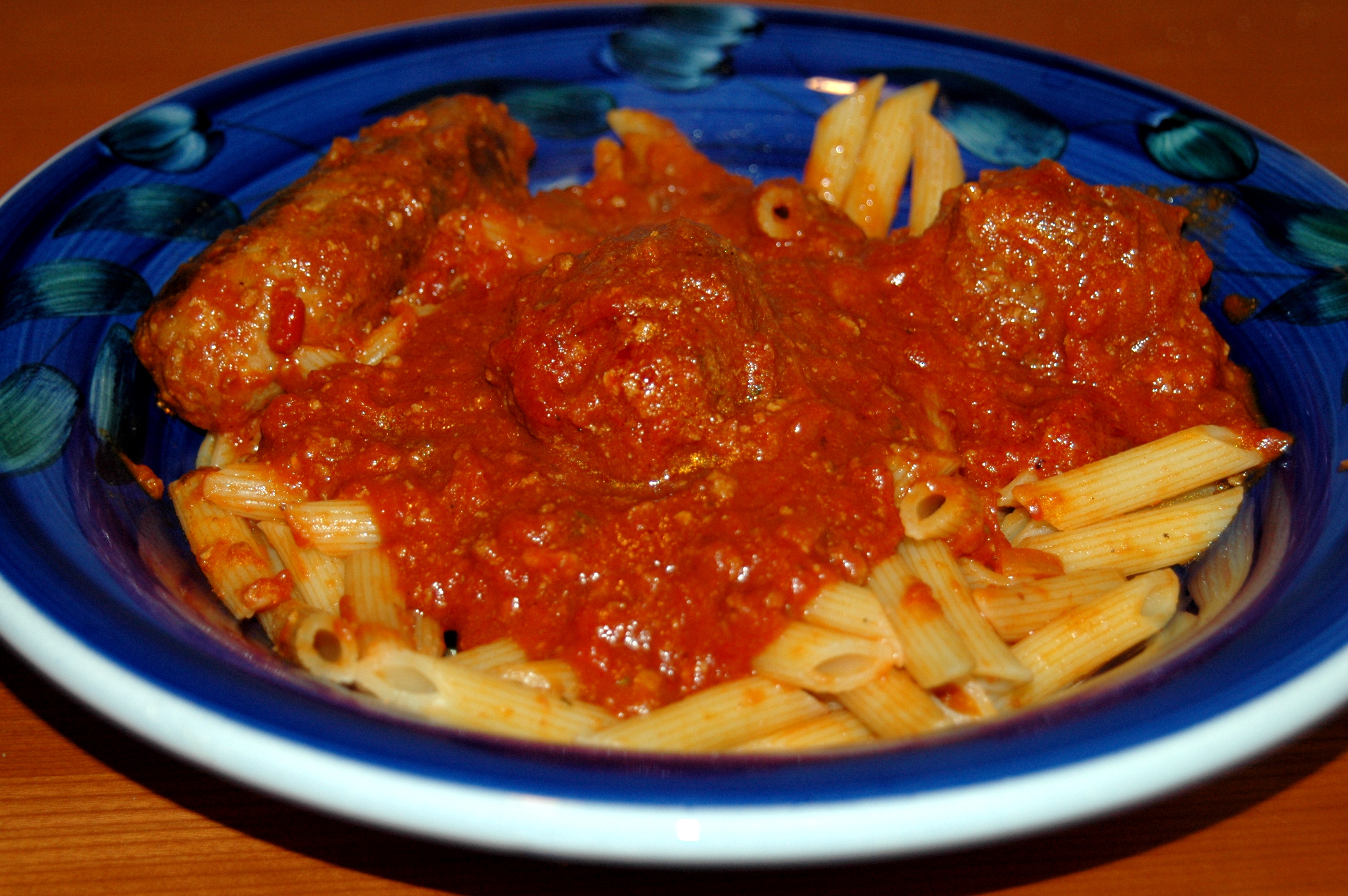
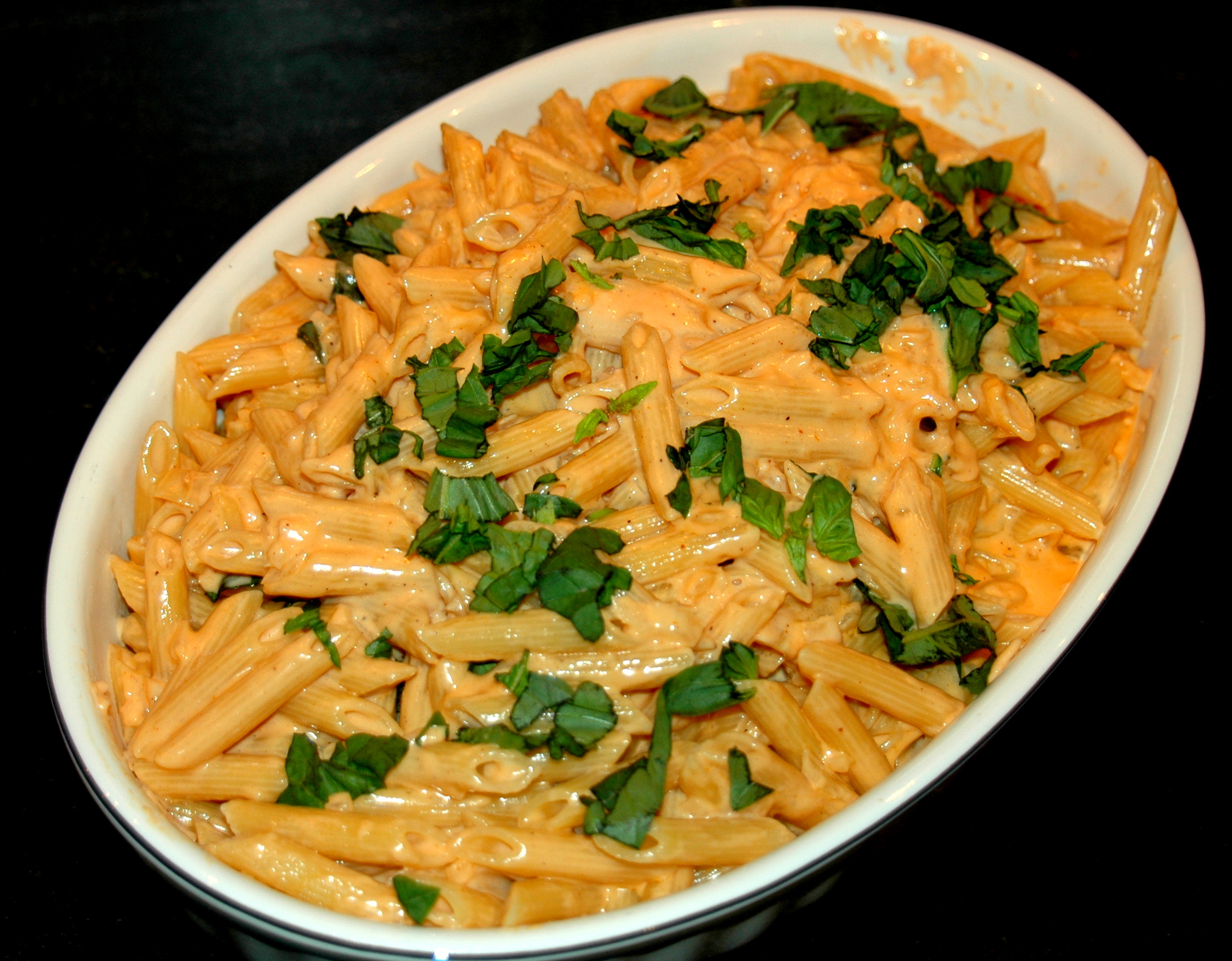
Uncle Bill’s Penne a la Vodka

In Guest Chefs, Pasta on April 30, 2012 at 2:07 PM


(Preparation time 15 minutes; serves 4 as a main course or 8 as a first course)

Ingredients:

1 large onion, finely chopped
¼ lb. of butter
½ cup of Vodka
1 pint heavy whipping cream
1 & ½ cups of grated Parmesan cheese
2 dashes of ground nutmeg
¼ cup plain tomato sauce (Del Monte, Hunts or Contadina) for color
Chopped parsley or basil depending on preference and availability
1lb. Penne

Procedure:

1.    Melt the butter in a large sauté pan and add the onion. Sauté on medium-high for about 8 minutes.
2.    Raise the heat to high, add the vodka and let sit 15 seconds. Shut the heat and ignite the vodka. CAUTION: Stand back from the stove, and if you have a vent fan directly over the stove be sure to shut it before igniting the vodka.
3.    When the flame subsides, return heat to medium high and whisk in the cream.
4.    With heat remaining on medium-high, slowly whisk in the cheese, ¼ cup at a time until fully blended.
5.    Stir in two dashes of nutmeg.
6.    Slowly add the tomato sauce until the color turns a desired shade of pink.
7.    When the Penne is cooked al dente (about 11 minutes), drain it and slowly mix in with the vodka sauce, then transfer to a serving dish.
8.    Sprinkle liberally with your choice of parsley or basil.

Serve with hot crusty Italian Bread and a fine Sangiovese such as a  Chianti Riserva.

Note: if making for a larger group,  merely double each of the ingredients.

Please refer to Tommy T and Me.

Tommy T and Me

In General Articles on April 30, 2012 at 2:06 PM

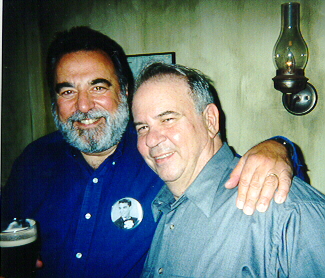
Me and Tommy T - June 2000

I met Tommy T on our first day of high school 56 years ago. We were assigned seats in alphabetical order, and as luck would have it, I sat next to him. We were from different neighborhoods, I from Inwood in Northern Manhattan and he from Highbridge in the Bronx.

Both neighborhoods, and in particular the parishes within them, Good Shepherd in my case and Sacred Heart in his, were populated predominantly by first and second generation Americans of Irish extraction. We were both second generation Americans of Italian extraction. Besides that commonality, we shared an interest in books and movies and appreciated a well-told story, particularly if it contained a humorous proclivity. One of the major pastimes in both of our neighborhoods was the imbibing of alcoholic beverages, another mutual interest of ours.

As we progressed through high school and college, Tom into an early marriage with Pat and the raising of three sons and I into military service to be followed a few years later with marriage to Betty and the raising of two daughters, our friendship grew and matured; expanding into good food, fine wine and the enjoyment of a Single Malt Scotch accompanied by a pleasant cigar.

We frequently got together for dinner, either alone, with our classmates, or with our wives and we attended our children’s weddings and welcomed his and Pat’s grandchildren into the world. This idyllic friendship lasted until Tom’s untimely death five years ago on May 10, 2007, so he never had the chance to meet our grandchildren.

In the intervening years, Betty and I became friends with Tom’s older brother Bill and his wife Kathy, who were frequent guests of Tom & Pat. This was a natural, as Bill, or Uncle Bill as he was often referred to, shared the same interest in books, movies, jokes, food, wine, single malts and cigars as did Tommy T and I, and the 3 wives all got along as well.

Recently Betty and I visited Bill and Kathy, and Bill prepared an excellent Penne a la Vodka as a first course for dinner. Having had this pasta dish on only one or two other occasions, I was curious to see how it was done, particularly the pink part. I watched Bill masterly prepare it and he was kind enough to write down his recipe.

This past weekend with our daughter and her family visiting, we invited my cousin Virginia and Peter to dinner to share in my adaptation of Uncle Bill’s Penne a la Vodka. Bill’s recipe calls for parsley, but having a beautiful bunch of basil on hand, I decided to substitute it for the parsley. Everyone raved about it and the next day, I asked my four–year old granddaughter if she would like to try some of Grandpa’s ‘Macaroni & Cheese’ for lunch. She did and devoured it saying ‘Grandpa, you are a good cook!’ It turns out that Uncle Bill’s Penne a la Vodka is also the perfect Mac & Cheese. Tommy T would have loved that!

Pork Medallions with Prunes and Calvados

In For Moms on the Go, Meat, Pork, Recipes on April 30, 2012 at 11:04 AM

(Preparation time 15 minutes; serves 4.)

Ingredients:

2 Tbsp. unsalted butter
Pork Tenderloin, (plain, i.e. unseasoned) about 2 lbs., sliced into 1 inch medallions – You should have about 16-18 pieces
24-30 Ready-to-Serve Prunes, drained and pitted (between 1 and 2 for each medallion). As an alternative, soak dried, pitted prunes in 1 quart of boiled water. In either case reserve about 1/4 cup of liquid to enhance the sauce. Or an even better suggestion soak them in Calvados as suggested by Jeannie.
1/2 cup Calvados
Salt and Freshly Ground pepper to taste

Procedure:

1.    In a 12 inch non-stick skillet, on high heat, melt the butter.
2.    Add the Pork Medallions, sprinkle with salt & pepper to taste and sauté for 10 minutes, turning several times to brown evenly.
3.    When browned, add the prunes and then the Calvados. Shut the heat and ignite the Calvados.

CAUTION: When igniting, stand back from the stove, and if you have a vent fan directly over the stove be sure to shut it before igniting the Calvados.

4.    Once ignited return heat to low, and with long tongs, carefully turn the medallions several times times to coat them well with the sauce, continuing cooking 2 to 3 minutes longer.
5.    Place 4 to 5 medallions on each plate, cover with an equivalent number of prunes and 2 or 3 extra, and pour the sauce over all. Serve immediately with vegetable of choice, or a small salad.

Please refer to Pork & Prunes – Yum or Yuck?

Pickled Beets

In Recipes, Vegetables on March 31, 2012 at 10:38 AM

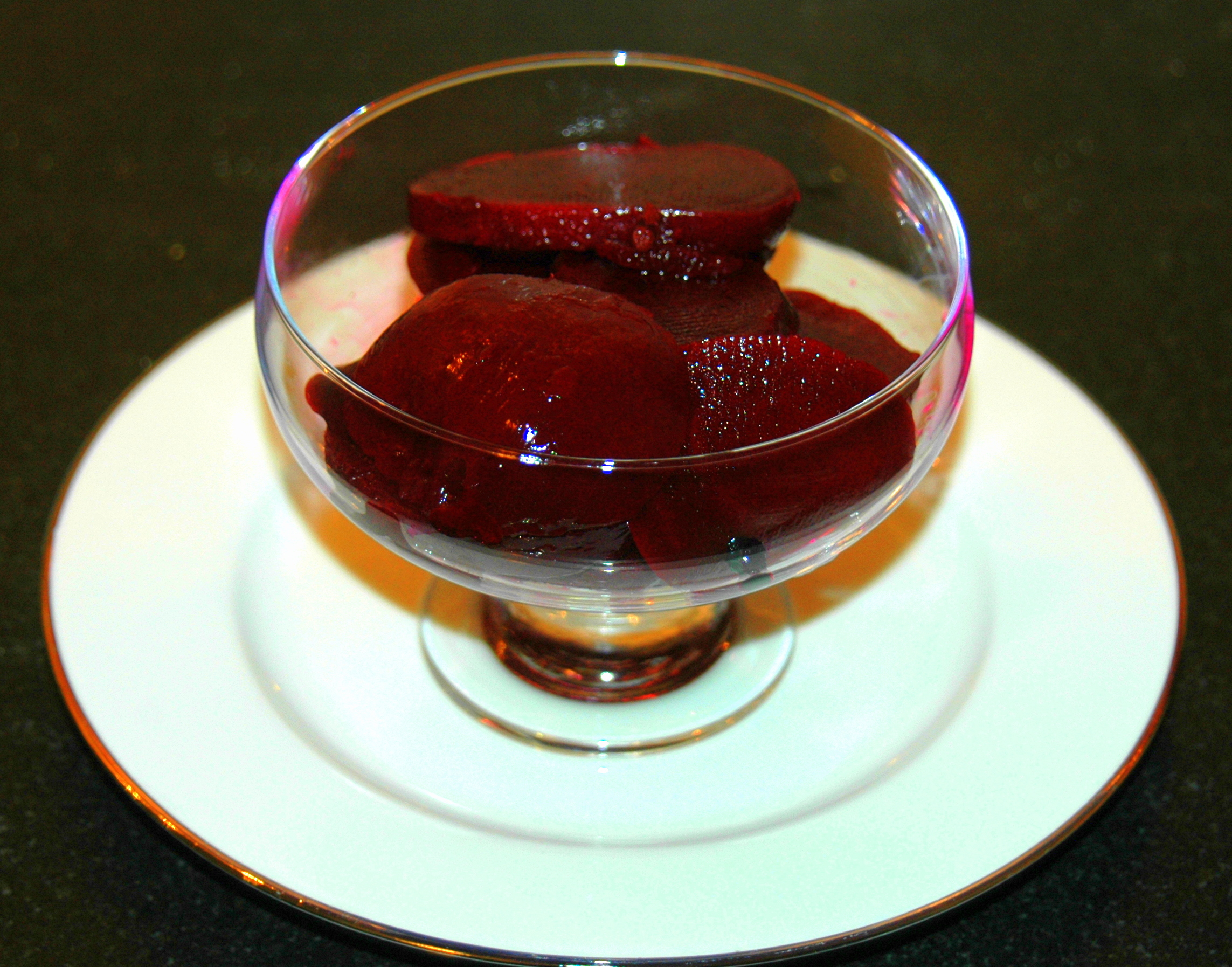
Pickled Beets

By Betty:

Ingredients:

7 Medium size beets
Water to cover the beets
Pickling Marinade*

Preparation Step I (cooking the beets):

  1. Remove stems and roots from the beets and place in a large pot with water to cover.
  2. Cook beets for 2 hours on medium heat. Beets are done when a fork is easily inserted into the beet.
  3. Remove beets from cooking water with a slotted spoon, chill under cold water and remove skins.
  4. Reserve 1 cup of the cooking water for the marinade.
  5. Slice beets into 1/4 inch thick slices and set aside.

Preparation Step II – (making the pickling marinade).

*Ingredients for pickling marinade:

1 cup cider vinegar
1 cup beet  liquid reserved from Step I
½ cup sugar
pinch of mustard seeds
10 whole cloves
16 black peppercorns

  1. In a small saucepan combine the above ingredients and bring to a boil.
  2. Reduce heat and simmer for 3 minutes until sugar is dissolved.
  3. Pour marinade over sliced beets and refrigerate overnight.
  4. Before serving, strain the marinade through a fine sieve and pour the strained liquid over the beets.

Serve as side dish.

Please see: The Maturing Palate

The Maturing Palate

In General Articles on March 31, 2012 at 10:38 AM

As we mature, our palate does as well!  That statement is admittedly anecdotal and based solely on personal experience.  But think about it, how many foods did you as a child once eschew only to find yourself in later years enjoying, as if they were always a part of your diet?

My mature palate discoveries   have included Calves Liver, Brussel Sprouts, Broccoli Rabe, Fish and Beets! Yes, beets; that deep-red, firm and smooth vegetable which resembles nothing else in taste or texture and that, when forced upon me as a child, produced an involuntary gag reflex, appear to be good for you , as mother always claimed, and they taste good as well.

Beets, also known as beetroots, can be boiled or roasted and eaten warm, as a side dish; boiled and pickled and eaten cold, as a side dish; boiled, not pickled and either warm or cold used in a salad, particularly with goat cheese, which has a great affinity for beets. Last week, while trolling the aisles of the supermarket, I spotted a great sale on beets, a bag of 12 for $3. Being unable to resist such a bargain, I threw the bag into my shopping cart with little thought as what to do with them.

Betty, having grown up with Pickled Beets as a mainstay in her family, knew exactly what to do with them. She boiled and peeled them, then pickled half of them, setting aside the other half, which she chilled and added to salads during the week. So after eating beets for the past week in these various forms, I am on to the next discovery.

Chouriço Omelet

In Egg Dishes, Recipes on March 25, 2012 at 3:26 PM

Chouriço Omelet

Ingredients:

2 tbsps. unsalted butter
4 oz. coarsely chopped Chouriço, Chorizo or Linguiça
2 eggs, whisked with ¼ tsp. of turmeric, if desired
2 tsps. chopped fresh chives

Preparation:

1.    In a low-sided, non-stick omelet pan, melt the butter on medium heat.
2.    Add the chouriço and lightly brown for three minutes, turning frequently.
3.    When the chouriço is browned, push to the middle of the pan and slowly pour in the eggs.
4.    Shake the pan lightly to let the eggs spread out.
5.    Reduce the heat to low and let the eggs settle, raising the edges with a spatula, from time to time, to allow the liquid to run off to the sides.
6.    When most of the liquid solidifies, sprinkle with the chives, carefully fold over and let sit for 30 seconds.
7.    Serve and enjoy!

Please see: A Serendipitous Halibut Dinner

Roasted Halibut with Chouriço and Porcini Mushrooms

In Fish, Pork, Recipes, Seafood on March 25, 2012 at 3:25 PM

Roasted Halibut with Chouriço and Porcini Mushrooms

Ingredients:

1 lb. Halibut fillet
.5 oz. Dried Porcini Mushrooms
8 oz. fresh spinach
4 tbsps. Extra Virgin Olive Oil
8 oz. Hot Chouriço or Hot Chorizo,* sliced into ¼ inch thick pieces and then quartered
2 San Marzano tomatoes, chopped and drained
1 tbsp. chopped Cherry Pepper*, stem removed
1 cup dry white wine
1 tbsp. chopped fresh chives

Preparation:

1.    Pre-heat oven to 400 degrees with the rack on the highest level.
2.    Rehydrate the mushrooms according to instructions on the package. If no instructions are included, soak the mushrooms in 1 cup of warm water for 20 to 30 minutes. Remove the mushrooms with a slotted spoon and set aside, reserve the liquid for use in the sauce.
3.    Steam the spinach in 1 cup of water; drain, and when cooled, squeeze out and discard any liquid, set the spinach aside.
4.    Place the halibut in a greased roasting pan and roast for 18 minutes. When done, place under the broiler for 2 minutes.
5.    While the halibut is roasting, heat the olive oil in a 10-12 inch sauté pan on medium heat; add the chorizo and lightly brown for 3 minutes, turning frequently.
6.    Add the tomatoes, cherry pepper and mushrooms, reduce heat to medium low and mix well, cook for 3 minutes more.
7.    Add the wine, raise the heat to medium-high and let boil for 3 minutes until reduced by approximately half.
8.    Add the reserved mushroom-soaking water and boil for 3 more minutes. You should wind up with about 1 cup of liquid.
9.    Divide the spinach in half and place in the center of two bowls. When the halibut is done, slice in half and place each piece atop the spinach ‘bed’.
10.    With a slotted spoon, remove most of the chorizo and mushrooms from the sauce (reserving some for garnish) and spread around the halibut/spinach combination in the bottom of the bowl.
11.    Pour the sauce and the remaining chorizo and mushrooms over the halibut and sprinkle with the chives.

*If the spicy (but not overwhelming so) combination of hot chorizo and cherry pepper is not for your palate, leave out the cherry pepper and use regular chouriço, chorizo or linguiça.

Serve with a well-chilled bottle of dry white wine, such as a Sauvignon Blanc or a crisp, fresh, Arneis from the Italian Piedmont.

Please see: A Serendipitous Halibut Dinner

A Serendipitous Halibut Dinner

In General Articles on March 25, 2012 at 3:25 PM

With the recent spate of Spring weather that we have been experiencing, since even before the official start of the season, and with the grill having been fired up last week for the shell steaks that accompanied Aunt Emma’s Sauteéd Mushrooms, I thought that grilled striped bass would be in order for last night’s dinner. However, upon visiting the local fishmonger, alas, there was no bass! But he did have a beautiful piece of halibut fillet and it was of a good thickness, slightly more than one inch throughout.

Having found in the past that grilling a halibut fillet doesn’t seem to work, because the flesh, while dense, seems to fall apart on the grill, I now had to figure out what to do with it. For inspiration I stopped by the supermarket, and in trolling the aisles my eyes lit upon Chouriço. I had not cooked fish with sausage before, but the combination works very well in Paella and in Shrimp Jambalaya, and having read pasta recipes that combined clams with smoked sausage, I thought… why not?

I began to envision the dish taking shape. First, it would need some form of a sauce and should be served in a bowl as a one dish meal, as is done in many restaurants. Accordingly, I picked up a bag of spinach which would serve as the ‘bed’ for the halibut. Next, maybe some mushrooms to add to the chouriço to create the sauce. In the mushroom section I found a package of dried Porcini mushrooms, which, with their big flavor, would be a perfect counterpoint to the rather bland halibut. Then, a couple of San Marzano tomatoes to give the sauce a base, and maybe a Cherry Pepper to give it some heat and white wine for the liquid. Those three ingredients presented no problem, as they were all at home. Finally, I grabbed a package of fresh chives to add color and a bit more flavor.

The end result, Roasted Halibut with Chouriço and Mushrooms, was even better than I had imagined. And this morning, I used up the remaining chouriço for a quick Omelet.                                                                      

Roasted Halibut with Chouriço and Porcini Mushrooms

Chouriço Omelet

Aunt Emma’s Sautéed Mushrooms

In Recipes, Vegetables on March 20, 2012 at 1:16 PM

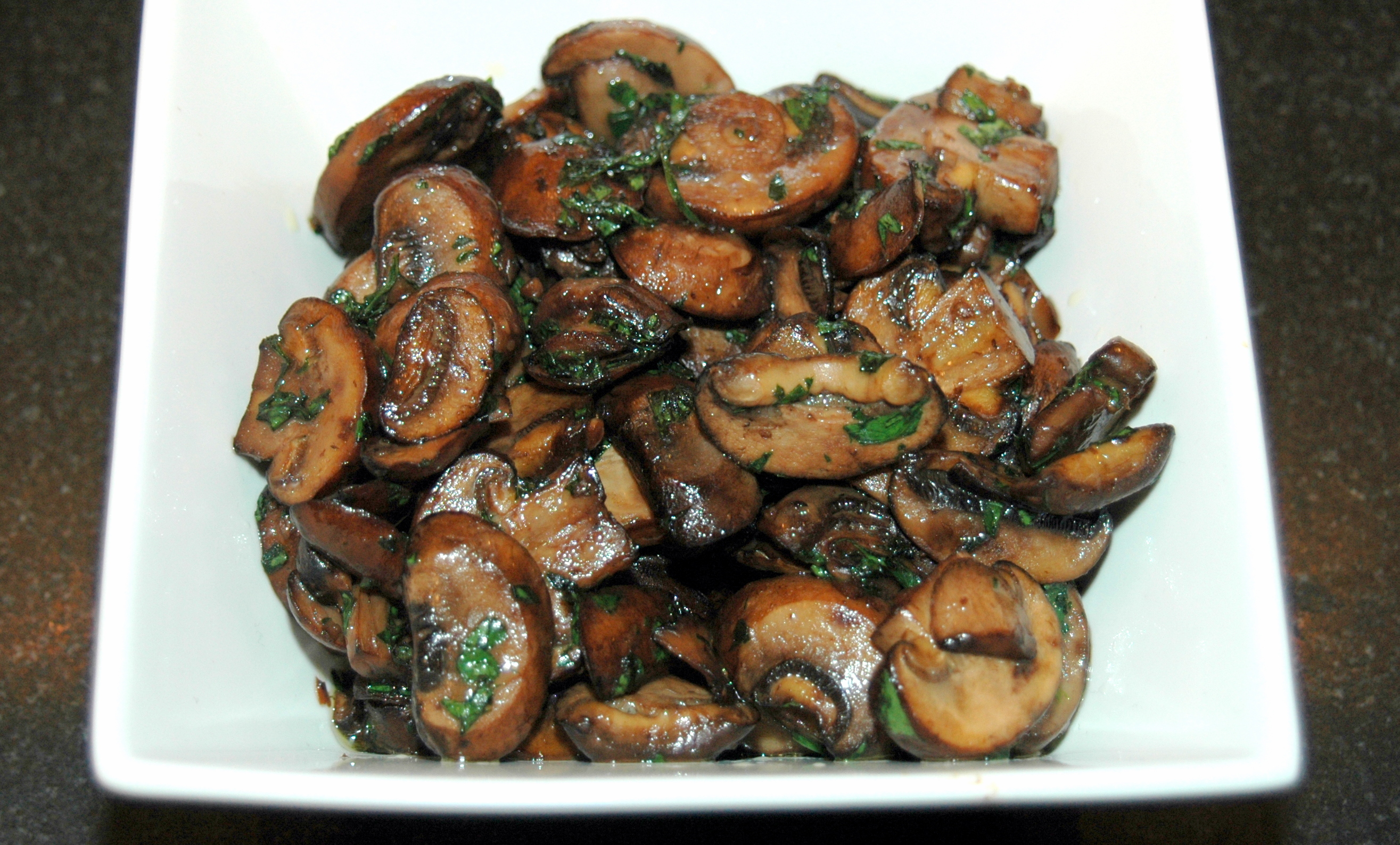
Aunt Emma's Sautéed Mushrooms

Ingredients:

1 lb. Cremini mushrooms, sliced
1/3 cup Extra Virgin Olive Oil
1 tsp. finely minced garlic
¼ cup chopped, fresh Italian (flat leaf) parsley
Kosher salt to taste

Preparation:

1.    Heat the olive oil on high heat in a 12 inch, non-stick sauté pan.
2.    Add the garlic, stir well and reduce heat to medium.
3.    Add the mushrooms and sauté for 12 to 15 minutes, until they give off and then absorb their liquid.
4.    Add the parsley and salt, stir well, and cook for another minute of two.
5.    Remove the sautéed mushrooms to a serving bowl with a slotted spoon and serve immediately.

Please see Anndemma

Anndemma

In General Articles on March 20, 2012 at 1:15 PM

Anndemma, or as correctly pronounced, Aunt Emma, was a real character. Big Mike’s older sister, who in 1910 at the age of 4, crossed the Atlantic with her mother, sister and older brother, stood an inch or two under five feet. However, what she lacked in height she more than made up for in the size of her heart. Emma had a wonderful laugh and smile that filled her face. She and her husband, Uncle Eddie, were building superintendents in New York and supported my grandparents who lived with them. Most of my Sundays as a child were spent visiting them, surrounded by aunts, uncles and cousins, enjoying a three hour dinner accompanied by family stories and jokes.

There were a lot of dishes on that Sunday dinner table which most of the adults relished, but which were much too weird or exotic for me; things like snails, scungilli salad, baccalà, capozella and tripe were not for my childish palate. At that age, I was not too enthralled with anything that swam in the ocean, stared me in the eye, or came from the innards of some animal. I was very content with lasagna, spaghetti and meatballs, chicken and roasted potatoes.

Shortly after Betty and I were married, she took Emma on a food shopping trip to Arthur Avenue in the Bronx. Visiting her favorite butcher, Betty bought the usual cuts of beef, veal, chicken and pork that we liked to eat. Emma, however wasn’t interested in such ordinary fare and instead ordered calves brains, tripe and pig’s feet, much to Betty’s horror. In the fish market next door, it was flounder fillet for Betty and snails and eel for Emma.

When it came to vegetables, one of Aunt Emma’s mainstays was, as she pronounced it in a Sicilian dialect, ‘galdoons’, which she picked from the city parks, and on which I couldn’t help wonder how many dogs had made their mark. Of course she rinsed and dried them before cooking, but I still would have nothing to do with them until I was much older. Actually, by that time, I had discovered that their real name was cardoons, not ‘galdoons‘, and that breaded or floured and then fried, they were delicious. The problem is trying to find them! But one vegetable dish that she always made, and for which the main ingredient is readily available in any supermarket, is sautéed mushrooms.

Yesterday being a beautiful and sunny 68 degrees, I decided to fire up the gas grill and cook some shell steaks for dinner. To accompany them, I made a batch of Aunt Emma’s Sautéed Mushrooms and Betty prepared a delicious mixed green salad with spiced walnuts, dried cranberries and a bleu cheese/champagne vinegar dressing. With that meal we bid adieu to Winter on its last day, and today we welcome Spring!

Dorothea’s Homemade Italian Sauce

In Beef, Meat, Pork, Recipes, Sauces on March 10, 2012 at 3:55 PM

Dorothea’s Homemade Italian Sauce served Over Penne

By Grammy Betty

Ingredients:

3 35 oz. cans of San Marzano Tomatoes, mashed
3 small cans (8 oz.), of Del Monte Tomato Sauce
4 cloves garlic, thinly sliced
1 ½ tsp. sugar
1 lb. hot Italian sausage
1 lb. sweet Italian sausage
1 small onion, chopped
16 Grammy’s Meatballs – 2 lbs. prime (90% lean beef) chopped meat, 1 ½ lbs. used for Grammy’s Meatballs and the remainder reserved for adding to the sauce.)
2 small cans (6 oz.) of Contadina Tomato Paste

Preparation:

1.    Add the mashed tomatoes and their juice to a large (8 qt.) pot.
2.    Add the garlic, sugar and Del Monte tomato sauce.
3.    Bring to a boil, reduce heat and let simmer.
4.    In the meantime, add the sausage to a skillet, pierce them with a fork, and cook over medium heat until done.
5.    Remove cooked sausage and add to the sauce, and remove all but 2 tbsps. of rendered fat and add to sauce.
6.    Add chopped onion to the scrapings and remaining fat  from the sausage, brown and deglaze the pan, add to the sauce.
7.    Make the 16 meatballs (see Grammy’s Meatballs for recipe) and add to the sauce.
8.    Brown the remaining ½ lb. of chopped meat, add in the tomato paste, stir and cook for 5 minutes or so, over medium heat, remove and add to the sauce.
9.    Simmer sauce uncovered, on a low flame, for approximately 4-5 hours, stirring occasionally.

Due to the thickness of the sauce, it is best served over a pasta shape that will trap and hold the sauce, such as Penne, Ziti, Rigatoni or Shells (conchiglie). Add some chopped fresh basil to each bowl, and serve with grated imported Italian Cheese, and Dorothea’s Homemade Hot Pepper Sauce, on the side.

A good bottle of Italian red wine, such as a Rosso di Montalcino, the less expensive cousin of Brunello, makes this pasta dish just perfect!

Please see: The Secret’s Out!

Note: The unused sauce can be frozen in meal sized batches. Often it thickens after taken from the freezer. When this happens, simply add some water to thin the sauce to your liking.

Grammy’s Meatballs

In Beef, For Moms on the Go, Meat, Pasta, Recipes, Sauces on March 10, 2012 at 3:53 PM

Grammy’s Meatballs

By Grammy Betty

Our granddaughter, May, defines the term fussy eater. So imagine how thrilled The Literate Chef and I were when she devoured my meatballs during a recent visit. With the love of our granddaughter in mind, I share my recipe for Grammy’s Meatballs.

Ingredients:

1 ½  lbs. prime (90% lean beef) chopped meat
2 eggs
½ cup grated Parmigiano-Reggiano or Locatelli-Romano
½ cup whole milk
½ cup Italian Seasoned Breadcrumbs
3 cloves of garlic, minced
1 small yellow onion, finely chopped
¼ tsp. freshly ground pepper
1/8 tsp. salt
¼ cup chopped fresh parsley
3 tbsps. Extra Virgin Olive Oil for browning the meatballs

Preparation:

1.    Place all of the above ingredients, except the olive oil, in a large bowl, and kneed them together until well mixed and spongy.
2.    Form into 16 medium size (about 2 inches in diameter) meatballs.
3.    Heat the olive oil in a skillet over a medium-high flame.

Browning the Meatballs

4.    Add the meatballs and brown on all sides for approximately 5 minutes.
5.    Reduce flame to medium and continue cooking, turning frequently, for an additional 15-20 minutes. Serve immediately.

(Note: If adding the meatballs to Dorothea’s Homemade Italian Sauce, skip the last step and add the browned meatballs directly to the sauce, where they will continue to cook.)

Please see: The Secret’s Out!

The Secret’s Out!

In General Articles on March 10, 2012 at 3:53 PM

Dorothea & Her Granddaughters - Easter, 1977

By Betty

The year was 1967.  There I was, a young bride, the daughter of a woman whose culinary skills as described by my sister would ‘choke a maggot,’ attempting to please the palate of a man whose mother concocted such meals as Stuffed Artichokes, Steak a la Pizziaola, Paella, and Mussels Marinara, meals I had never heard of, let alone eaten.

I can still remember my very first cookbook, in which I took great pride of possession, the Farm Journal’s Country Cookbook.  Each day, I would come home from work and peruse its pages, looking for something exotic to prepare for my husband. I will never forget how he raved about a meatloaf that I had made from that cookbook, Meatloaf Tanta Clementina.  I was so proud of myself that I made it every week, for many weeks! Although my husband never complained about the lack of variety, as I am sure that he wanted to encourage my efforts, he never hesitated to jump at the chance to have dinner at his parents’ house.

My mother-in-law, Dorothea, like all doting Italian mothers, began to suspect that I could use a little help in the kitchen and decided to share her much-coveted recipe for ‘Sauce’, it was never called ‘Gravy’. I often asked her to simply write down its steps and measurements, but in the true fashion of an accomplished cook, she rarely, if ever, measured anything.

It was easier for her to enter my tiny kitchen and waltz me through the steps. I intentionally use the word waltz, because working side by side with ‘mom’ was truly a culinary dance. Her melodic voice and gentle manner guided me through each step, leading to the final culmination of a sauce that, if it were to be put to music, would end with a huge crescendo and the audience jumping to their feet with applause.

I was honored that my mother-in-law shared her sacred recipe with me, a neophyte in the kitchen, but I am certain that she did it out of concern for her son’s well-being. Prior to our wedding she had experienced a meal at my mom’s house, and was, I am certain, quickly able to assess the limitations of my culinary expertise. Baking had been my mother’s forte, so she always had deferred to my then recently deceased father for the more substantive aspects of family meals.

I had to practically swear a vow of Omertà that my lips would be sealed to any and all who requested her recipe. Her main fear was that some huge company would snatch it up, produce and market it and she would lose out on the royalties. Now, several years after her death, and with her son emerging as The Literate Chef, I believe that she would be honored to be a part of his enterprise, thus I unseal my lips in good faith.

Over the years, as my culinary skills have grown, I have ventured to slightly alter her sauce, but its essence remains unchanged. San Marzano Tomatoes, sugar, lots of sausage and garlic, as well as numerous ingredients added to prime chopped meat to make soft, delectable meatballs, are just some of the many ingredients that make her sauce outstanding.

This sauce is indeed time-consuming to prepare, but in my opinion it is worth every effort. The recipe produces enough  for several meals so I often break it down and freeze it in smaller batches for spur of the moment meals for my family and friends.

Our four-year old granddaughter, who is extremely selective about her food (actually I think she lives on air), loves Grammy’s Meatballs. That, in and of itself, makes Dorothea’s Homemade Italian Sauce worth the preparation time and effort.

Coq au Vin

In Chicken, Meat, Recipes on February 25, 2012 at 12:49 PM

Coq au Vin

Serves 8 or serves 4 with leftovers.

Adapted from several cookbooks, see East Side, East Side, All Around the Town

Ingredients:

2 Bell & Evans Free Range Chickens, quartered, about 8 or 9 lbs. total weight
Kosher salt and freshly ground black pepper
2 bottles of Côtes du Rhône
3 bay leaves
3 sprigs of thyme
1 large shallot coarsely chopped
3 cloves of garlic, sliced
¾ lb. pearl onions, about 16 to 20 depending on size
½ lb. thick sliced bacon
1 lb. Cremini mushrooms
¼ lb. unsalted butter
3/4 cup flour
½ cup cognac
2 & ½ cups unsalted beef stock
6 tbsps. Beef demi-glace

Preparation:

Steps 1 to 7 take about 1 hour and can be performed a day in advance and refrigerated overnight.

1.    Prepare a bouquet garni, by wrapping the bay leaves, thyme sprigs, shallot & garlic in a piece of cheese cloth and tying it off.
2.    Separate the drumsticks from the thighs and cut each breast in half leaving the wings attached to the upper half of the breast. You will end up with 16 pieces of chicken. Liberally salt and pepper each piece.
3.    Place the chicken pieces and the bouquet garni in a large non-reactive bowl and cover with the contents of 1 bottle of the wine. Cover the bowl and refrigerate, marinating the chicken for 6 to 8 hours or overnight.
4.    Bring a small pot of water to boil, add the pearl onions and blanch for 1 minute. Remove the onions and when cooled, remove and discard their skins.
5.    Re-boil the water; add the bacon slices and par-boil for about 3 minutes to remove some of the saltiness. Drain and pat the bacon dry. Heat a non-stick sauté pan on medium and fry the bacon until cooked but still soft about 3 or 4 minutes. Remove the bacon, slice into ½ inch wide pieces and set aside.
6.    Remove most of the bacon fat from the sauté pan leaving about two tablespoons.  Add 2 tbsps. of butter and then the skinned onions, brown on high heat for about 3 minutes, remove and set aside.
7.    Repeat step 6 with the cremini mushrooms, adding 2 tbsps. of butter and browning the mushrooms for about 5 minutes.
8.    When the chicken pieces are finished marinating, drain and pat them dry; reserve the marinade and the bouquet garni.
9.    Dredge the chicken pieces in flour. Melt 4 tbsps. of butter in a stainless steel sauté pan on medium heat and brown the chicken pieces well, for about 10 minutes turning them several times. You will probably have to do this in two batches.
10.    Remove the chicken to a large casserole, or Dutch Oven.
11.    Add the cognac to the sauté pan; bring to a boil and deglaze the pan about 1 minute. Pour the cognac and the fond over the chicken; add the reserved marinade, 2nd bottle of wine, beef stock and bouquet garni.
12.    Bring to a boil, reduce heat to medium and cook for 30 minutes adding the mushrooms, onions, bacon after 15 minutes.
13.    Remove the chicken, bacon, onions and mushrooms, set aside and keep warm. Remove and discard the bouquet garni.
14.    Strain the liquid through a fine sieve, and pour off the fat. Clean the casserole, return the sauce to it and bring to a boil, add the demi-glace to thicken the sauce and when it reaches the consistency thick enough to coat the back of a spoon, add back all of the set aside ingredients, stir well and heat covered for about 15 to 30 minutes on low, prior to serving.

Serve with Mashed Potatoes and Côtes du Rhône

Please see East Side, East Side, All round the Town

Hot Artichoke Dip

In Appetizers, Recipes on February 25, 2012 at 12:48 PM

Hot Artichoke Dip

(Active preparation time 45 minutes + 30 minutes cooking time in oven)

Ingredients:

2 Cans of Cento Artichoke Bottoms (Net Wt. 14 oz.) packed in water (7 to 9 per can)
6 tbsp. unsalted butter
½ cup thinly sliced leeks, about 1/2 leek
4 oz. dry white wine
½ lb. Imported Gruyere, 2 cups shredded
Salt & black pepper to taste
1/8 tsp. Cayenne Pepper

Preparation:

1.    Pre-heat oven to 350 degrees.
2.    Drain the artichokes, place them in a food processor, and pulse chop for about 10 or 12 pulses. It should produce about 3 cups. Set aside.
3.    Melt the butter in a small sauté pan on medium-low heat. Raise heat to medium, add the leeks and sauté until translucent, do not brown; then add the artichokes, season with salt and pepper to taste, and cook, stirring frequently, for about 6 to 8 minutes. Remove from the pan and set aside.
4.    Add the wine and bring to boil, reduce heat to medium-low and slowly add the cheese, stirring constantly until melted. Shut the heat and add back the artichoke – leek combination.
5.    Turn heat to medium –low, add the cayenne pepper and stir and cook for several minutes until thickened to a consistency similar to that of oatmeal.
6.    Transfer the mixture to a small ramekin or cocotte and bake uncovered in the oven for about 30 minutes until the top is a light golden brown. Remove any excess oil that rises to the top and place under broiler for 2 to 3 minutes to lightly brown.

Serve with lightly toasted thinly sliced pieces of French baguette.

Please see East Side, East Side, All Around the Town

Devils on Horseback

In Appetizers, Recipes on February 25, 2012 at 12:48 PM

Devils on Horseback

(As adapted from Freemans Restaurant)

Ingredients:

12 prunes, removed from liquid and pitted
¼ lb. creamy Gorgonzola
6 slices of thick-cut bacon, each piece cut in half

Preparation:

1.    Pre-Heat oven to 350 degrees.
2.    Using a small spoon, fill each pitted prune with Gorgonzola cheese, about ½ tsp. of cheese for each.
3.    Wrap each filled prune with a piece of bacon and secure with a toothpick.
4.    Place the wrapped prunes on a baking sheet and bake in the oven for 45 minutes until the bacon is crisped, but not burnt.
5.    Let cool for 5 to 10 minutes and serve warm.

Please see East Side, East Side, All Around the Town

East Side, East Side, All Around the Town

In General Articles on February 25, 2012 at 12:47 PM

It has been said that ‘imitation is the sincerest form of flattery.’ We recently had occasion to visit two vastly different restaurants on the eastside of New York. L’Absinthe, a beautifully decorated brasserie located on the Upper East Side  that is evocative of Belle Epoque Paris, and Freemans, a funky and charming restaurant in the Bowery on the Lower East Side, that with its rough-hewn tables, wide floor boards and private rooms is suggestive of a Colonial American tavern.

Betty and I enjoyed a wonderful dinner at the former, which presents a classic brasserie menu including Foie de Veau, sautéed calf’s liver and Coq au Vin, chicken braised in red wine. The following morning we met our friends Colin and Bernadette for brunch at Freemans, where we enjoyed two outstanding appetizers, Devils on Horseback and a hot artichoke dip served with crisp French bread, followed by traditional brunch dishes with innovative twists.

We will be back to both restaurants in the near future, as each was memorable in its own right; food service and ambiance, all at a reasonable price. But in the meantime we decided to try to replicate the appetizers and the Coq au Vin and invited our friends Ed and Anne to be the guinea pigs. Being world travelers, fine cooks, and people who enjoy food and wine, they were the perfect dinner guests with whom to share these ventures.

The Devils on Horseback were the easiest to replicate, as our waiter at Freemans was forthright in responding to the question ‘what are they?’ The hot artichoke dip was a little more complicated and required some thought and experimentation, as it was obvious that cheese was an essential ingredient along with non-marinated artichokes. But what cheese, which fat and how much savory? According to our guests, we got it right.

The Coq au Vin was the most complicated, and in order to limit the preparation to a manageable amount of time and effort, as well as utilize ingredients that are readily available, the consultation of three cookbooks was necessary:  Mastering the Art of French Cooking, French Classics Made Easy and The Food of France. We think we got that right too, at least all of our plates were clean at the end of the meal.

The Coq au Vin required two bottles of Côtes du Rhône and we and our guests required another two bottles. As a very wise man once told me, ‘you can’t go wrong with a good bottle of Côtes du Rhône.’ He was absolutely correct. Bon appétit!

Rigatoni Neri

In Pasta, Recipes on January 29, 2012 at 2:30 PM

Rigatoni Neri

Active preparation time – 45 minutes, inactive cooking time – 1 hour. Serves 8 people.

The sauce may be made in advance and reheated before cooking the Rigatoni.

Ingredients:
•    1 cup + 1/3 cup Extra Virgin Olive Oil
•    1 large Eggplant, cut into 1 inch cubes
•    Kosher salt & freshly ground pepper to taste
•    1 lb. sweet Italian sausage
•    1 lb. hot Italian sausage
•    12 cloves of garlic chopped fine
•    3 28 oz. cans San Marzano tomatoes cut into large chunks
•    1 cup dry red wine
•    2 lbs. Rigatoni
•    1 fresh unsalted mozzarella packed in water, diced small, about 1&1/2 cups
•    30 leaves of basil chopped coarsely
•    Freshly grated Locatelli Romano cheese

Preparation:
1.    Pre-heat oven to 350 degrees.
2.    In a large bowl, toss the cubed eggplant with 1 cup of the olive oil. When fully coated, sprinkle with salt & black pepper and toss again.
3.    Spread the eggplant in one layer on a cookie sheet, roast in the oven for 40 minutes.
4.    While the eggplant is roasting, brown the sausages on medium heat for 20 minutes, turning frequently.
5.    When browned, slice the sausage into ½ inch pieces.
6.    Heat remaining olive oil on high in a 6 quart pot.
7.    When oil is hot but not smoking, reduce heat to medium, stir in the chopped garlic and sauté for 1 to 2 minutes. Add the sliced sausage, stirring constantly for about a minute.
8.    Add the tomatoes and their liquid; return heat to high and bring to a boil. Reduce heat to medium, cook uncovered for 15 minutes, stirring frequently.
9.    Add the roasted eggplant and wine, turn heat to low and simmer uncovered for an hour to fully blend flavors, stir periodically.
10.    Fill a large pot with sufficient water to cook the Rigatoni according to directions on the box of pasta.
11.    When Rigatoni is cooked, drain and toss it with the sauce.  Add the diced mozzarella, one handful at a time,and toss well to melt and spread throughout the pasta.
12.    Add the basil and serve at once with grated cheese.

Please see: Cooking in Naples…Florida, that is!

Serve with crusty Italian Bread and Chianti Classico Riserva

Paella Isabella

In Recipes, Rice, Seafood on January 29, 2012 at 2:28 PM

Paella Isabella

Paella Isabella

The secret to great paella is to be vigilant during the cooking process, constantly turning the mixture as ingredients are added, while simmering on low heat. The rice should be moist, sticky and tender when finished, so taste it periodically during the cooking. Make no mistake about it, paella is not a ‘fast food’, but the attention it requires is repaid by a delicious and most enjoyable meal.

Special equipment: a carbon steel 12 to 14 inch paella pan, a wooden spoon for stirring and large spatula for turning.

Total preparation and cooking time: 1 ½ to 2 hours. Serves 4 to 6 people.

Ingredients:
•    2 tbsps. Extra Virgin Olive Oil
•    4 Boneless, Skinless, Chicken Thighs, halved
•    4 tbsps. Unsalted Butter
•    1 Large Yellow Onion, chopped
•    1 qt.  Unsalted Chicken Stock
•    1 tsp. Saffron
•    1 Cup of Arborio Rice
•    3 Chorizos, sliced ¼ inch thick
•    ½ lb. Frozen Peas
•    ½ lb. Mussels, de-bearded and rinsed
•    2 dozen small Littleneck Clams, scrubbed and rinsed
•    2 Lobster Tails, removed from shell and quartered
•    ½ cup dry white wine
•    1 lb. Large Shrimp, cleaned and deveined
•    2 large Roasted Red Peppers, thinly sliced
•    1 small jar Marinated Artichoke Hearts, drained

Preparation:
1.    Heat the olive oil on medium and brown the chicken.
2.    Remove and set aside the chicken, add and melt the butter.
3.    Add onions, sauté until translucent.
4.    Add 3 cups of chicken stock and bring to a low boil.
5.    Add saffron and stir well, then add the rice.
6.    Cook over low-medium heat for about 15 minutes, stirring constantly.
7.    Add back the browned chicken, then the chorizos.
8.    Add the peas and remaining cup of chicken stock, reduce heat to low.
9.    For the next 30 minutes add and stir constantly the following ingredients: mussels, clams and lobster meat.
10.    When clams begin to open, add the wine and cook 5 minutes.
11.    Add the shrimp, peppers and artichoke hearts, stir until shrimp turn pink approximately 15 minutes.

Serve with Rioja wine such as: Marques De Caceres Rioja Crianza Red

Please see: Cooking in Naples…Florida, that is!

Cooking in Naples…Florida, that is!

In General Articles on January 29, 2012 at 2:27 PM

Here we are, on vacation, in Naples Florida, mooching off of the Nearys for a week, and guess what, first Betty and then I am called upon to cook. Sometimes one just can’t get away from the stove; but to loosely quote Harry Truman, ‘if you can’t take the heat, stay out of the kitchen.’

Challenged to come up with a dinner plan a few days ago, after our hosts had outdone themselves with delicious meals, Betty hit upon the idea of making her Paella. With the help of sous chef Joan, she prepared a superb dinner that the four of us lustily consumed along with a couple of bottles of Rioja. There was very little left after several of us revisited the Paella Pan for seconds. Served preceded by a soup, or another first course, this recipe should easily feed six people.

My introduction to Paella was at El Faro in the West Village, about 55 years ago. I had never had anything like it before! Chicken, sausage and seafood mixed with rice, what’s not to like? Dorothea began making her version of it shortly thereafter and Betty’s is based loosely on hers. I say loosely, because my mother hardly ever wrote down a recipe and hardly ever measured out the ingredients, so we really don’t know what her version was, only what was in it or what was not. But as to the proportions of each ingredient that’s anybody’s guess.

Thankfully my wife kept a record of what went into her Paella this time and what quantity of each ingredient was used. She also documented each step and we are pleased to share it here with you as Paella Isabella.

Last night it was my turn in the kitchen and my challenge was to prepare something that 8 people would enjoy and which would not require me to be in the kitchen after the other 4 guests arrived. After considering Veal Saltimbocca and Veal Rollatini, both of which would require too much last minute preparation, I opted for a pasta dish with a flavorful sauce that could be prepared leisurely in the afternoon.

I decided to make a variation of Rigatoni all’ Oltrarno, reducing the amount of eggplant by about two-thirds, dispensing with the olives and hot pepper and adding instead, 2 pounds of Italian sausage, both the hot and sweet kind. Accompanied by a few bottles of Chianti Classico Riserva and several loaves of crusty Italian bread, there were no complaints from the gathered dinner guests. In honor of our generous hosts and longtime friends and traveling companions, this pasta dish has been named Rigatoni Neri.