The Literate Chef

Archive for 2012|Yearly archive page

On Tour with The Literate Chef – Bermuda, Part III

In General Articles on July 22, 2012 at 3:52 PM

Continued From Part II

Upon returning to the hotel, we decided to have dinner at Ascot, rather than travel out to Tom Moore’s Tavern. Lunch on the first day was a preview to the excellent dishes turned out by the chef, and after-dinner drinks in the lounge rounded out a perfect day.

Day Three greeted us once again with sunshine, a light breeze and cheerful birdsong. However, this time the sun was out to stay, so after a brief committee meeting it was decided to catch the ferry out to the Royal Naval Dockyards.

But first, thanks to contacts made by a fellow NYAC club member we had lunch at The Royal Bermuda Yacht Club, where we ran into yet another fellow Club member, who with his wife had sailed up from the Caribbean on a friend’s boat.  What are the odds, bumping into several people you know, 769 miles from home? (I had neglected to mention earlier that at Bolero on the previous day, we ran into a different fellow Club member.)

Upon arriving at the Dockyards, where was berthed the cruise ship Explorer of the Seas, a leviathan of the sea at 3 and ½ football fields in length, we kicked around for a few hours, checked out the beach, the glass-works and the old fort and then stopped in at the The Frog & Onion Pub for a few refreshing pints and some good music.

We missed our ferry back to Hamilton so decided to take a taxi rather than wait around for 90 minutes. Once again serendipity stepped in, as our cab driver, Reynoldo proved to be a great guide, raconteur and poet in his own right. On previous visits to Bermuda, when we were young and carefree, we always got around the island on motorbikes. While cabs are much safer for those of us who are past middle age, they also are a better way to observe the scenery instead of focusing on avoiding a head-on collision.

The afternoon was but a prelude to the evening, because at long last, it was time to head to Beau Rivage Restaurant  where we would meet Master Chef Jean-Claude Garzia and be treated not only to the finest meal on the island, in a spectacular setting overlooking the harbor, but as an added plus would meet the Chef himself, whose talent is only exceeded by his charm.

In June 1997, Chef JC was awarded the gold medal of “Meilleur Ouvrier de France,” the highest honor for a chef in France, by then President Jacques Chirac at the Elysée Palace in Paris. The difficult and demanding contest for this award is held every four years in France. Chef Jean-Claude applied for and was accepted into the 1996 contest. He was one of 17 chefs who won the award out of 550 chefs who had competed. He did so after 20 years of training, studying and working as a chef in France, then at the Chateau Frontenac in Québec City and at the Cambridge Beaches Resort in Bermuda. In 2008, he opened Beau Rivage, for which my friends and I are very thankful.

A Perfect Bloody Mary

A 20 minute taxi ride from Hamilton, and just across the harbor, Beau Rivage is a true gem of Bermuda. From its spectacular deck, while enjoying a delicious Bloody Mary, Apple Martini, Dirty Martini or glass of wine, each of which was tested by one or more of our merry little band, you can watch the magnificent sunset and see the lights come on in Hamilton. As we discovered, the views were equally enjoyable inside.

Sunset Hamilton Harbor from Beau Rivage

After perusing the extensive and mouth-watering menu, I decided to go with two classics, a creamy Lobster Bisque and an outstanding Filet de Boeuf Wellington. Other members of our party equally enjoyed  perfect Coquille Saint-Jacques, spectacular Seafood Risotto, classic Bermuda Sautéed Rockfish and the innovative Glazed Salmon. After dessert, we got to meet Chef Jean-Claude and compliment him on his outstanding restaurant.

We spoke briefly about my efforts as The Literate Chef, after which he invited me back into his kitchen. His philosophy is that everyone is welcome in his kitchen and there are no secrets. I asked Chef JC if he would mind if I took one of his menus so that I would be able to mention in my blog the wonderful dishes that he offered. Much to my surprise, he presented me with an autographed copy of his most recent book, Bon Appétit Bermuda, which is filled with detailed recipes accompanied by beautiful photographs. Dinner at Beau Rivage was the perfect finale to our serendipitous Bermuda adventure, that had begun more than a year ago on a chilly afternoon in New York City!

Chef Jean-Claude’s inviting personality matched by his delicious dishes, the professional service of his staff, and the ambiance of his restaurant, make Beau Rivage a must place to visit on your next trip to Bermuda. In my case it will be my first stop. In the meantime, I will have to content myself with following his recipes and sharing those adventures with my readers.

Strawberries with Zabaglione

In Dessert, Recipes on June 20, 2012 at 8:44 AM

Strawberries with Zabaglione

(Preparation time 30 minutes, serves 4)

Adapted from Molto Batali as published in The McClatchy Tribune

Ingredients:

2 pints of fresh strawberries, washed, hulled and sliced
4 egg yolks, at room temperature
1/3 cup of sugar
1/4 cup Sweet Marsala
6 oz. Heavy Cream, whipped

Preparation:

1.    In the top of a double boiler, combine the egg yolks, sugar and Marsala and whisk quickly to combine.
2.    Add water to the bottom part of the double boiler and bring to a boil. When water begins to boil, reduce to a simmer and place the top part of the double boiler over it, making sure that the bottom does not come into contact with the simmering water and that the water remains at a high simmer and does not boil.
3.    Using an electric mixer, beat the mixture until it is doubled or tripled in volume. This could take up to 10 minutes.
4.    When the mixture is frothy, plunge the top of the double boiler into a bowl of iced water and continue beating until cool, then set aside.
5.    Slowly add the whipped cream to the mixture and refrigerate the Zabaglione.
6.    Remove the Zabaglione from the refrigerator 20 minutes before serving.
7.    To serve, place the strawberries in a glass dessert dish, balloon wine glass or other festive and suitable serving dish and spoon the Zabaglione over the strawberries.

Please see A Multitude of Fishes

Grilled Striped Bass in Lime Marinade

In Fish, Recipes, Seafood on June 20, 2012 at 8:41 AM

(Active preparation time 10 minutes, cooking time 14 minutes, total time 1&1/2 hours, serves 2)

Ingredients:
½ cup extra virgin olive oil
Juice of two fresh squeezed limes
4 tbsps. of chopped fresh cilantro
6 tsps. of minced fresh ginger
Kosher salt to taste
Freshly ground black pepper to taste
1 lb. Fillet of Striped Bass

Note: Consider adding a finely minced jalapeño pepper to the marinade for an added zing.

Preparation:
1.    Combine the first six ingredients in a mixing bowl and whisk to blend well.
2.    Place the striped bass in shallow, non-reactive pan and pour the marinade over it.
3.    Marinate at room temperature for 1 hour, turn the fillet after 30 minutes.
4.    Oil the grate on a gas grill and preheat on medium-high.
5.    Grill the fish with cover closed for 8 minutes on the first side, basting once with the marinade.
6.    Turn the fish and repeat for an additional 6 minutes.

Please see A Multitude of Fishes

A Multitude of Fishes

In General Articles on June 20, 2012 at 8:39 AM

A Multitude of Fishes

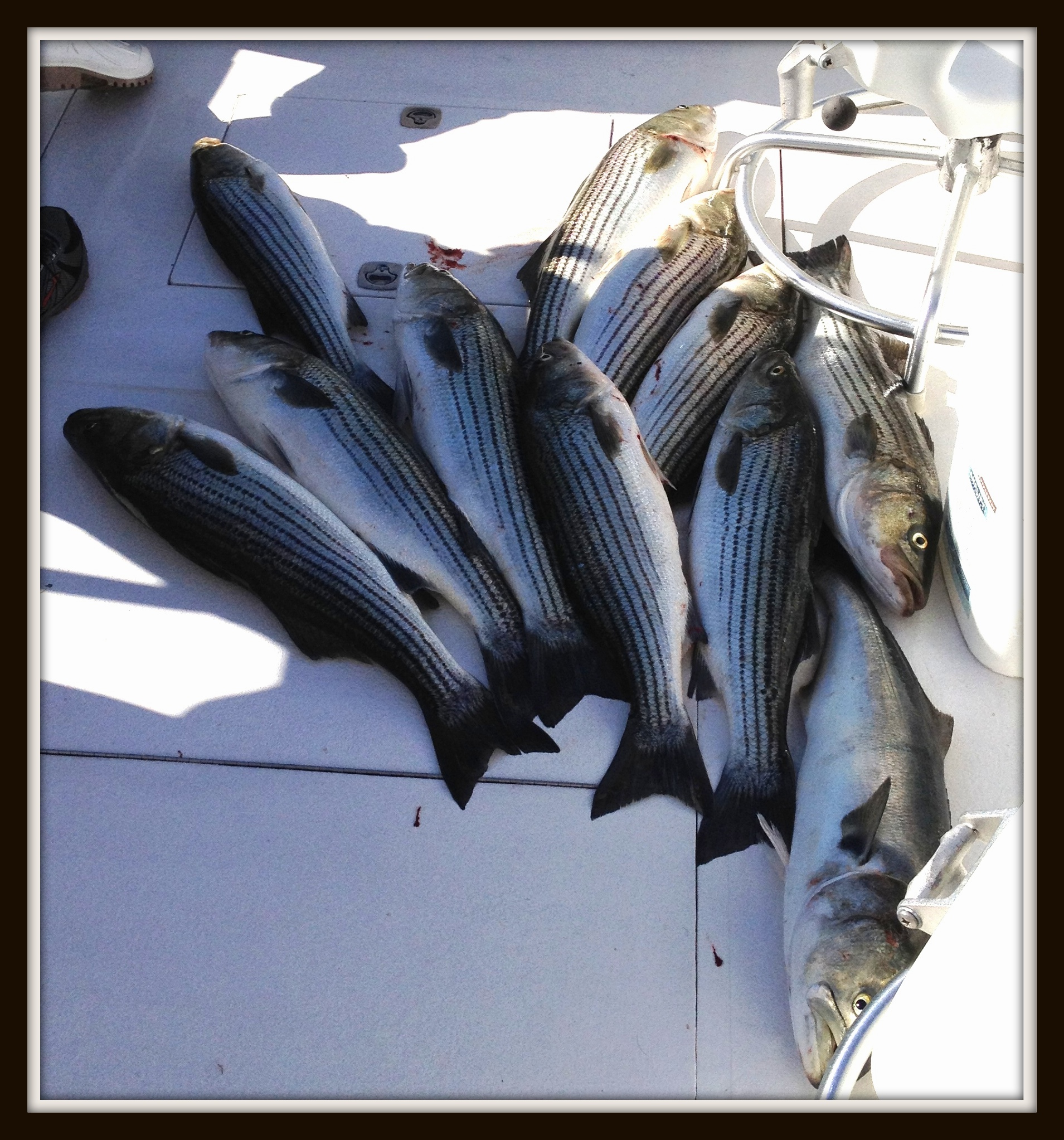
Our son-in-law went fishing out of Barnstable Harbor last Friday aboard the Lucky Lady, and, as our luck would have it, he and his friends reeled in a multitude of Stripers. He was kind enough to bring us 2 large cleaned fillets, so dinner for Father’s Day was a foregone conclusion.

Everyone offered an opinion as to how I should prepare them. After much discussion, I decided on two different methods, one Italian and the other Mexican. For the Italian preparation, Baked Oreganata style was an easy choice, since it had been so well received in the past. However, we were out of Italian Style Breadcrumbs, so I quickly mixed together my own concoction. I combined:

•    1 cup of plain breadcrumbs,
•    2 teaspoons of granulated garlic and 1/2 teaspoon of dried oregano
•    4 tablespoons of chopped fresh parsley,
•    2 tablespoons grated Parmigiano-Reggiano,
•    Kosher salt and freshly ground pepper and,
•    Enough extra virgin olive oil to blend it into a paste, which I then browned in a small sauce pan.

For the Mexican method, I reached back 20 months ago to a trip to Baja California and fishing with several friends in the Pacific, off of Cabo San Lucas, aboard  the Bob-Marlin.  On that occasion we caught Wahoo and Dorado (also known as Mahi-Mahi), which we then brought to a local restaurant that prepared them in several different styles. My favorite preparation was grilled over an open fire after marinating in a lime/cilantro combination. I decided to try and replicate that and added some minced ginger for a little kick. It was superb, but next time, perhaps, I will add a little minced jalapeño as well. For the recipe see Grilled Striped Bass in Lime Marinade.

Strawberries are in season and thanks to my friend Frank from the Finger Lakes, who sent me an article from his local newspaper on Mario Batali‘s recipe for Zabaglione, our  Father’s day dinner was concluded with a spectacular dessert, Strawberries with Zabaglione.

In General Articles on June 16, 2012 at 10:46 AM

Update form October, with a new picture.

The Literate Chef's avatarThe Literate Chef

preparation time: active – 20 minutes; passive – several hours

Ingredients:

6 oz. each of blueberries, raspberries and blackberries
10 oz. strawberries
1 tbsp. of sugar
¼ cup of sweet Marsala wine
Heavy cream to taste

Preparation:

1.    Rinse and drain the blueberries, raspberries and blackberries, place them in a mixing bowl.
2.    Hull the strawberries, rinse and drain them, slice them widthwise and add to the mixing bowl.
3.    Add the sugar and mix well.
4.    Add the Marsala and mix well.
5.    Cover the bowl with plastic wrap and let the berries macerate at room temperature for several hours prior to serving.
6.    Serve with heavy cream as desired.

Please see: Sunday Chicken Dinner – No Leftovers!

View original post

Linguine with White Clam Sauce (Linguine con Vongole)

In Clams, Pasta, Recipes, Sauces, Seafood on June 16, 2012 at 9:18 AM

Linguine with White Clam Sauce (Linguine con Vongole)

(Serves four)

4 doz. medium-sized Cherrystone or Littleneck clams, about 5 lbs.
4 tbsp. of finely chopped garlic, about 12 cloves
1/2 cup chopped fresh flat (Italian) parsley
1/2 cup of extra virgin olive oil
4 tablespoons of unsalted butter
½ cup of dry white wine
2 8 oz. bottles of Clam Juice
1 & ½ lbs. dried Linguine (Barilla, DeCecco or other premium brand)

These steps can be performed in advance of serving the meal

1.    Set a large pot (6-8 quarts) of water on the stove, cover it and bring to a boil. When it begins to boil, reduce heat, keep covered and hot.
2.    Clean and shuck the clams, reserving the juices, you should have about 3 cups. Set aside 12 clams unopened – 3 for each pasta serving.
3.    Chop the garlic.
4.    Wash and dry the parsley, but do not chop it until just before adding to the sauce, that retains its color.
5.    Heat the olive oil on medium in a large sauté pan, and add the butter.
6.    When the butter is melted, foamy and bubbling, reduce heat to medium, add the garlic and cook it stirring continuously for about 1 minute.
7.    Add the wine and return heat to high, bring to a boil, continue to boil for 3 minutes, stirring continuously
8.    Add clam juice and reserved clam liquid. We prefer our clam sauce with a lot of liquid, if you prefer it on the dry side, than add only 1 bottle or none.
9.    Bring to a boil for 3 minutes.

About 15 or 20 minutes before you are ready to serve the Linguine

1.    Bring the pasta water and clam sauce to a full boil. Add the 12 reserved unopened clams to the sauce and cover.
2.    Add kosher salt to the water and add the linguine. Cook the linguine until not quite al dente, about 7 minutes.
3.    After the pasta has been cooking for about 3 minutes, remove the cover from the sauce, add the parsley and shucked, stir well, and continue cooking uncovered.

White Clam Sauce, ready for the pasta

4.    Drain the pasta, add it to the sauce in the pan, and mix it well with tongs until al dente.
5.    Remove to a large bowl and serve, garnishing each dish with 3 clams that are still in their shells.

Hot crusty Italian Bread makes a great accompaniment, as does a good dry white wine such as Wairau River Sauvignon Blanc.

Please see Clam Shucking for the secret on opening clams.

Clam Shucking

In General Articles on June 16, 2012 at 9:15 AM

Summer is fast approaching and it is time to make one of our favorite pasta meals, Linguine with White Clam Sauce. This is a quick and easy meal to prepare, with most of the work centered on opening the clams. Fortunately, Big Mike’s best friend, my ‘Uncle’ Joe, was a master clam shucker and taught me the technique, at the many clambake/cookouts he hosted in his Long island backyard in the 1950s.

Uncle Joe moved with his family from the Bronx to Long Island in the early 50s as the potato farms in Nassau County were being sold to real estate developers and constructing tract housing for the returning WWII GIs was a booming business. We still lived in Inwood, without a car. But at least once a month, Uncle Joe drove all the way in from Franklin Square on a Saturday morning to pick up our family, drive us out to his house, and return us to our one-bedroom apartment on Sunday night.

Besides learning how to shuck clams and eat them on the half-shell, Uncle Joe taught me how to pour a beer, build a charcoal fire and grill sausages, skills that have served me well in life. He loved life and lived it to the fullest. I wish our daughters could have known him, but he died much too young. Those weekend outings to ‘the country’ were a real treat, and I remember them and Uncle Joe’s generosity with great fondness.

Dorothea, who did not learn how to shuck clams, taught me how to make a clam sauce the easy way: sauté some chopped garlic in olive oil, toss in some chopped fresh parsley, add a bottle of clam juice and a can of minced clams and voila, homemade clam sauce. It was darn good as far as I was concerned and I didn’t know any better, so that recipe sufficed until I began to experiment on my own.

At first, I merely substituted fresh clams for the canned ones, a significant improvement. Then later, after comparing notes with Tommy T, he convinced me to add butter to the olive oil to finish the sauce. Finally, after reading a few cookbooks, I decided that a little bit of dry white wine would round it out perfectly. So here it is, Chef Scar’s own Linguine with White Clam Sauce. And, if like me, you enjoy cheese with your pasta, don’t listen to the so-called purists who will admonish you for adding cheese to seafood, go ahead and liberally heap several  tablespoons of grated Pecorino-Romano, preferably Locatelli brand on your Linguine. Mangia!

The secret to opening clams is to get them ice cold so that they relax, and use a good thin-bladed clam knife, don’t try to use a kitchen knife or an oyster knife.

Pan-Seared Black Sea Bass

In Fish, Recipes, Seafood on May 22, 2012 at 8:10 PM

Pan-Seared Black Sea Bass

(Preparation and active cooking time 45 minutes – Serves 2)

Ingredients:

½ cup of canned creamed corn
½ cup of coconut milk
½ cup of clam juice
2 tsp. fresh minced ginger, 1 piece about 1inch by ½ inch, peeled
¼ tsp. curry powder
6 large shrimp, cleaned & de-veined
¾ lb. fillet of Black Sea Bass
1 Tbsp. chopped fresh tarragon
1 Tbsp. chopped fresh chives
1 & 1/2 Tbsp. Extra Virgin Olive Oil
Kosher Salt

Preparation:

1.    Pre-heat oven to 400 degrees.
2.    Remove fish and shrimp from refrigerator and bring to room temperature.
3.    While the oven is heating, mince the ginger, chop the tarragon and chives and clean & de-vein the shrimp. Also measure out all of the other ingredients and set aside.
4.    When the oven is heated, place the corn on a baking sheet and roast for 15 minutes.
5.    In the meantime, add the coconut milk and clam juice to a small 1 or 2 quart pot and slowly bring to a boil on medium-low heat. Add the minced ginger and the curry powder.
6.    When the corn is done, puree it and whisk it into the broth.
7.    Add the shrimp and let cook slowly until pink, keep warm on very low heat.
8.    Add most of the chopped tarragon and chives to the broth, reserving a little for garnish.
9.    Season both sides of the fish with Kosher Salt.
10.    Heat a heavy stainless steel sauté pan on high, add olive oil to the pan and heat on high until it shimmers.
11.    Slowly add the fish fillets, skin side down. The fish will buckle up, so push it down for a few seconds to keep it flat. Cook for 2 minutes and turn.
12.    Continue cooking for 4 more minutes, shutting the heat for the last minute. Note
13.    While the fish is cooking in step 12, spoon the shrimps and broth into bowls.
14.    Add the fish fillets when done, skin side down and sprinkle the remaining tarragon and chives over them.
15.    Serve immediately with hot, crispy French bread to soak up the broth.

Note: This cooking time is predicated on using Black Sea Bass, which is about ½ to ¾ of an inch thick. If using Striped Bass or any thicker fish, increase the cooking time accordingly.

Please see On Tour With The Literate Chef-Bermuda, Part II

On Tour with The Literate Chef – Bermuda, Part II

In General Articles on May 22, 2012 at 8:08 PM

Continued from Part I

Day Two greeted us with sunshine, a light breeze and cheerful birdsong at the complimentary Royal Palms breakfast. However, our high expectations for the day, which included a round of golf at The Mid-Ocean Club for Colin, Bernadette and Bob, a ferry ride to St. George’s and getting swizzled at the Swizzle Inn for Betty, Cathie and me, as well as dinner for all at Tom Moore’s Tavern, were to be quickly dashed by the onset of what would turn out to be a 12 hour storm.

Our first inkling of the need for flexibility was an e-mail, warning of impending thunderstorms and the recommendation that golf be postponed for two days. That ruled out the idea of a ferry ride to St. George as well. We held an emergency committee meeting in Ascots bar and over a round of Bloody Mary’s, it was decided that we would walk down to Front St., instead, do some shopping and then have lunch.

There’s Nothing I Like Better Than the Taste of a Bloody Mary in the Morning

Gifts for the grandchildren, linens for the table, and assorted dry goods having been acquired, Cathie, our Bermuda guru, after some quick research, suggested Bolero for lunch. Here is where serendipity stepped in and changed the rest of the trip.

Bermuda Harbor before the Rains Came

We arrived at Bolero Brasserie fairly well soaked, the rain having begun in earnest about 20 minutes earlier. As we were being seated, the wind out of the southwest increased in intensity, sheets of rain pounded the windows and the view of the harbor across the street was completely obscured. But, we settled in at our table, ordered several bottles of well-chilled Sancerre, and studied the fantastic menu.

The Starters included: Mouclade, (mussels steamed with leeks shallots, garlic, Vermouth, cream, a hint of curry), it sounded, looked and was delicious and The Literate Chef has placed this on his ‘to-do’ list; Posh Egg Benedict (poached egg, Parma ham, truffle Hollandaise, toasted baguette) was well received by those who ordered it; and the special that day, a small Cassoulet (which has been on The Literate Chef’s ‘to-do’ list ever since a trip to southwestern France and the Canal du Midi) that I could not resist. Suffice it to say, it was an interesting menu and deserves many more visits.

The Mains were equally interesting, but the choice here was much more daunting. Choices! Choices!! Choices!!! I opted for the Pan-Roasted Bermuda Rockfish and was not disappointed. I decided to try to replicate this at home, but since Bermuda Rockfish is presumably only available in Bermuda, I used locally caught (off of Martha’s Vineyard according to our local fishmonger) Black Sea Bass. Since it is not as thick as Bermuda Rockfish or Striped Bass, which would have been my first choice, I decided to Pan-Sear rather than Pan-Roast it. The quantity of the other ingredients was pure guess work on my part. Even if you don’t like coconut flavor, I recommend that you try Pan-Seared Black Sea Bass, as the coconut milk is substantially diluted by clam juice and pureed roasted corn.

We leisurely enjoyed our lunch, but the working people had to get back to work and the restaurant began to empty out. Being excluded from that category and as the torrents of rain were still pounding the window, we were in no hurry to leave. The table next to us seemed to be in a similar situation. One of guys there, noticing that our supply of Sancerre had mysteriously been depleted, came over generously bearing a bottle of wine and introduced himself. Dave is the Sales & Marketing Manager of Wairau River Wines of Marlborough, New Zealand (think eyebrow when pronouncing Wairau), and he came bearing a bottle of his delicious Sauvignon Blanc, which was as good, if not better than the more expensive Sancerre.

As luck would have it, when we invited Dave to join us, he sat next to Bob, a veteran Rugby player at Fordham University and the New York Athletic Club, who is anything but shy. Bob, a very quick study, offered that he had been to NZ and played in a Rugby match there in another life. As it turned out Dave is also a Rugger and not only that, but upon further discussion they discovered that they knew several players in common, despite the fact that age wise, Bob could have been Dave’s father. Degrees of latitudinal and longitudinal separation rapidly diminished, and with a common interest in Rugby and wine having been established, the afternoon took a decidedly different turn.

Laughter and stories abounded, Dave introduced us to his friend and associate, Matthew, VP of International Sales for Terlato Wines International, which markets Wairau River wines. Matthew joined us with a bottle of another wine that Terlato markets, a delicious and very seductive Two Hands Shiraz, to be exact.

With Thanks to Matthew and the Barossa Valley

As the wines were consumed and the stories continued and we learned about grape growing and wine production in New Zealand, someone mentioned The Haka, a traditional dance form of the Maori.  New Zealand teams frequently perform it both locally and internationally before a game. After much coaxing from the Americans, Dave agreed to give us a performance of The Haka. He was fantastic and it was the highlight of the day.

Meeting those Kiwis, drinking wine and telling and listening to stories was an absolute delight, and to think, it might never have happened if that storm had missed the island and we had gone on with our original plans. But there was to be an additional bonus from that dark & stormy afternoon, Dave and Matthew told us about Beau Rivage and Chef Jean-Claude, and serendipity would abide.

To Be Continued, once again…

On Tour with The Literate Chef – Bermuda, Part I

In General Articles on May 20, 2012 at 8:16 PM

With travel, as with most things in life, planning is important, but be prepared to change your plans as circumstances warrant. Flexibility is essential and serendipity can be its reward.

The Idea

The idea for a trip to Bermuda was conceived 15 months ago in a pub in lower Manhattan, when six friends were discussing their past travels and favorite vacation sites. Someone mentioned Bermuda and Bernadette stated that she had never been there. Colin, Cathie, Bob, Betty and I had each been there on more than one occasion, with Cathie having been there innumerable times.

Bernadette is probably the most organized person I know. In a moment of pure genius she suggested that if we were serious about this, each couple should kick in $200 per month to build a kitty to cover, lodging, meals, drinks, taxis, etc., and that she would volunteer as treasurer and open a bank account to hold the money. This seemed like a painless way to plan for a trip and also would signify our commitment to the idea.

The Bermuda veterans all agreed that the month of May would be the best time for a visit, and if we started contributing right then, we would have between $8,400 and $9,000 for our land costs. It was also agreed that each couple would handle their own flight arrangements.

Time inexorably moved forward, the checks were mailed, the kitty grew and in January of this year we begin to plan in detail…pick the dates, book the flights and focus in on where to stay and what to do. Cathie, the most-seasoned Bermuda traveler, volunteered to research where to stay and where to eat, while Betty volunteered to research the pubs.

The Reality

Day One arrived. Betty and my part of the trip started out from Boston’s Logan airport in the middle of a tremendous rain storm. Weather reports for Bermuda ranged from sunny, to cloudy, to rain. Such is life! But when we arrived on the island, a mere two hours later, the sun was shining and reflecting off of the ubiquitous white roofs, the ocean was cerulean reflecting the sky and a light breeze was blowing billowing white clouds overhead. It was picture perfect! Bob and Cathie, having arrived from New York 30 minutes earlier, greeted us as if they were native Bermudians and the adventure began.

Cathie’s hotel selection was outstanding; The Royal Palms exceeded our expectations. The website pictures had not lied, and the staff members were friendly, courteous and would prove to be most helpful, as weather-related circumstances would dictate a change in plans on more than one occasion.

At The Royal Palms, Hamilton Bermuda

While awaiting the arrival of Bernadette and Colin, who were expected a few hours later, we decided on lunch at Ascots, a fine restaurant attached to the hotel. Dani, our charming hostess, brought us a round of Dark & Stormys to kick off the alcohol fueling for the day.

Being surrounded by hundreds of miles of the Atlantic, fish was a natural choice and the Bermuda Fish Chowder, laced with Gosling’s Bermuda Black Rum and Outerbridge’s Sherry Peppers Sauce did not disappoint. Neither did the Grilled Spicy Snapper sandwich, nor the rum raisin ice cream, nor the second round of Dark & Stormys.

That evening, after Colin and Bernadette had arrived, it was time to begin spending our cache. Our esteemed treasurer was equipped with credit cards and cash, so off we went to our first pub, The Robin Hood. Next, looking forward to some fine English fare we set off for the Hog Penny. Once upon a time in New York City, English pubs and their fare were quite common, my first introduction to which was in the late 60’s at The Jolly Sixpence, which today, unfortunately, is but a happy memory.

Liquid refreshments at the Hog Penny Pub consisted of several pints of Boddington’s (Watney’s, which used to be a standby there 40 years ago, was nowhere in sight). My victual of choice was Steak & Kidney Pie, a difficult decision, as  my inner Brit also called out for the Bangers & Mash and the Fish & Chips. The Steak & Kidney Pie was delicious and the others, which were ordered by members of our group, also received rave reviews.

The service was outstanding as well, and our waiter, Morgan, was most helpful in providing me with a quick & easy recipe for Yorkshire Pudding, as I was trying to copy it down from the menu. But that will have to wait for a winter Sunday afternoon, when cooking a Prime Rib. Nightcaps, accompanied by live music, were enjoyed at Flanagan’s before we  headed back to the hotel and crashed for the night.

Continued

Bermuda Fish Chowder

In Fish, Recipes, Seafood, Soups on May 20, 2012 at 8:15 PM

Bermuda Fish Chowder

                     (Total Preparation Time – 3 hours, active time 45 minutes. Serves 4 as a main meal or 8 as a starter)

Ingredients:

¼ cup extra virgin olive oil
5 large cloves of garlic, chopped
1/3 cup of chopped parsley
1 medium onion, chopped
3 stalks celery, chopped
½ green bell pepper, chopped
1 28 oz. can of tomatoes, drained – tomatoes chopped, juice reserved
2 qts. Seafood Stock
½ tsp. dried thyme
½ tsp. cayenne pepper
½ tsp. Hot Hungarian Paprika
8 tbsp. molasses
1 ½ cups of reserved tomato juice
1.5 lbs. of firm white fish, such as snapper, or bass, cut into 1 inch cubes
Gosling’s Bermuda Black Rum
Outerbridge’s Sherry Peppers Sauce

Outerbridge’s Sherry Peppers Sauce & A Seriously Depleted Bottle of Rum

Preparation:

1.    To a 5qt. pot, add the olive oil and garlic.
2.    Heat on medium-low  for 3-4 minutes, do not let the garlic burn.
3.    Add the parsley and stir well.
4.    Add the onion, celery and green pepper, raise heat to medium and cook 6 minutes, stirring periodically, add the tomatoes and cook 4 minutes more.
5.    Add the seafood stock, thyme, cayenne and paprika, bring to a boil.
6.    Reduce heat to low and simmer, uncovered for 1 hour.
7.    Remove from the heat, and with a fine sieve, strain the liquid into a 3 qt. pot – discard the solids.
8.    Return the liquid to a boil; add the molasses and the reserved tomato juice.
9.    Add the fish and cook uncovered for 40 minutes on medium-low.
10.    Raise the heat to medium and cook 20 minutes more.
11.    Remove large pieces of fish and shred or chop them, then return them to the chowder.
12.    Serve chowder in soup bowls, lacing each bowl with about 1 tablespoon of Gosling’s Bermuda Black Rum and several dashes of Outerbridge’s Sherry Peppers Sauce.

Serve with toasted French bread, brushed with olive oil and a well-chilled bottle of Sancerre.

Please see On Tour With The Literate Chef – Bermuda, Part I

Saltibarsciai a la Serge

In Recipes, Soups, Vegetarian Meals on May 8, 2012 at 7:12 PM

                                Cold Lithuanian Borscht Soup from Kaunas

Saltibarsciai a la Serge

 (Preparation time 20 minutes, makes 2 quarts of soup)

Ingredients:

2 lbs. of pickled beets, coarsely chopped with about 24 oz. of their pickling marinade.
1 cucumber, peeled and chopped
4 scallions, cleaned and chopped, both white and green parts
2 tbsp. of chopped fresh dill
Fresh ground black pepper
1 quart of plain Kefir
1 & 1/4 cups of sour cream

Preparation:

1.    Combine the beets, cucumber,scallions, dill and black pepper in large bowl and mix well.
2.    Add the beet pickling marinade and the Kefir and stir well
3.    Add sour cream to thicken soup and keep stirring until the sour cream is fully mixed in.

Serve soup cold. In Lithuania it is served with sides dishes of boiled potatoes topped with dill and/or hard boiled eggs.

—————————————————————

Please See: A Visit to Lithuania

A Visit to Lithuania

In General Articles on May 8, 2012 at 7:11 PM

About four years ago I traveled to Lithuania on business. Being my first trip to Eastern Europe, I didn’t know what to expect. This former Soviet republic has a varied and rich history dating back to the middle ages. Situated as it was between Prussia and Russia; it has seen invasion, annexation and general turmoil over the centuries, with brief periods of independence and relative calm. With the collapse of the Soviet Union in 1991, Lithuania is once again an independent nation with a republican form of government.

It is the largest of the three Baltic countries, the others being Latvia, its immediate neighbor to the north and Estonia, farther north. It is bordered on the east and south by Belarus, on the south by Poland and on the west by Kaliningrad (Russia) and the Baltic Sea.

Vilnius (known as Vilna, when it was occupied by Poland), with a population of around 550,000 is the capital. The next largest city is Kaunas, with a population of about 350,000.  After changing planes in Helsinki, I flew into Vilnius where my friend Col picked me up. We drove through the city, farmland and forests for about 90 minutes to Kaunas where our office is located and where I spent the next week.

Kaunas Castle: Medieval – Teutonic

The first thing that struck me about Kaunas was the architecture, which ranges from what I would call Medieval-Teutonic to Baroque to Late-Soviet Concrete, with a touch of Byzantine thrown in, in the form of St. Michael the Archangel Basilica. These diverse architectural styles reflect Kaunas’ long and varied history.

St. Francis Xavier Baroque Church

An Example of Late Soviet Concrete

A fascinating aspect of the city is its main avenue, Laisvès, which is a pedestrian mall that connects Old Town with New Town. It is lined with shops and restaurants, many of which offer outdoor seating for the great sport of people watching.

On the porch on Laisves

Laisves

The food in Lithuania is both foreign and familiar, given its long historical relationship with Poland, Russia and Germany I recognized many of the dishes, with quite a few unique ones mixed in, such as Cepelinas, so-called because the resemble zeppelins, although these bombs are anything but lighter than air! Made with grated potatoes and meat, and served with sour cream, you won’t need to eat again for 24 hours.

The Lithuanian dish that I enjoyed the most was a cold borscht soup known as Saltibarsciai (sal-ta-bar-shy). Arriving in Kaunas midday, Col, Patrick, Serge and I went to lunch at their favorite restaurant across the street from the office. We sat in the sunny courtyard and I ordered something off the menu which seemed familiar to me, but whatever it was, it was forgettable. However, the cognoscenti: Col & Pat, both Americans living in Kaunas for the past year, and Serge, a Lithuanian national, ordered the Saltibarsciai.

I was struck by its beautiful purple hue, which in the bright sunlight of a Kaunas afternoon took on the color of a field of lavender. The next day, already feeling like a native, I too ordered the Saltibarsciai, and had it for lunch or as a first course for dinner, practically the entire week. Returning home I emailed Serge for his recipe and here it is, Saltibarsciai a la Serge.

As one of our readers wrote, he loves beets, because they taste like dirt. Although that is not an analogy I would use, I am sure that this Saltibarsciai will appeal to his taste buds. I hope that you try it and enjoy it as much as I.

Pork & Prunes – Yum or Yuck?

In General Articles on May 5, 2012 at 6:51 PM

I don’t know about you, but prunes make me smile. As a child I hated them, particularly as prune juice, which my mother felt was a sure-fire remedy for whatever ailed me. While I still have no love for prunes in their juice form, I have come to appreciate their fruity, dark sweetness, either the dry, finger-sticky kind, or the plump, juicy kind. It is the latter kind that I decided to recently experiment with. But either type will work. If using the dried type, be sure to soak them in boiled water first and then drain them, reserving a bit of liquid for the sauce.

I came across Pork Tenderloin in the local supermarket, and unlike most that you find, this one was not marinated. Pork tenderloin is usually sold vacuum packed with 2 one-pound tenderloins in the package. They are low in fat, about 10 inches long and narrow, maybe two inches wide. Because of their narrowness, they cook through in 10 to 15 minutes. The marinated type, which come in a myriad of flavors, are a great boon to mankind; merely rip open the package, throw them on the grill and 15 minutes later slice them up and dinner is ready. The un-marinated kind are a great boon as well.

As I was moving through the supermarket aisle thinking of how I was going to prepare the tenderloins, I recalled how last year I experimented with Pork Chops with Apples, Raisins and Calvados and also Pork Chops with an Apricot Mango-Chutney and Cognac. Some sort of fruit seemed like a good idea, and, I still had a bottle of Calvados at home.

When I saw a jar of prunes in liquid on the shelf, bingo, I had it! Slice the tenderloins, brown them in a fat, add the prunes and flame-off with the Calvados – Pork Medallions with Prunes and Calvados. The only hard work here, if you want to call it that, is pitting the prunes.

Hint: If using the wet prunes pit them while the medallions are browning and with a small salad as a side, dinner is truly ready in 15 minutes! If using the dried ones, soak them in advance.

Uncle Bill’s Penne a la Vodka

In Guest Chefs, Pasta on April 30, 2012 at 2:07 PM


(Preparation time 15 minutes; serves 4 as a main course or 8 as a first course)

Ingredients:

1 large onion, finely chopped
¼ lb. of butter
½ cup of Vodka
1 pint heavy whipping cream
1 & ½ cups of grated Parmesan cheese
2 dashes of ground nutmeg
¼ cup plain tomato sauce (Del Monte, Hunts or Contadina) for color
Chopped parsley or basil depending on preference and availability
1lb. Penne

Procedure:

1.    Melt the butter in a large sauté pan and add the onion. Sauté on medium-high for about 8 minutes.
2.    Raise the heat to high, add the vodka and let sit 15 seconds. Shut the heat and ignite the vodka. CAUTION: Stand back from the stove, and if you have a vent fan directly over the stove be sure to shut it before igniting the vodka.
3.    When the flame subsides, return heat to medium high and whisk in the cream.
4.    With heat remaining on medium-high, slowly whisk in the cheese, ¼ cup at a time until fully blended.
5.    Stir in two dashes of nutmeg.
6.    Slowly add the tomato sauce until the color turns a desired shade of pink.
7.    When the Penne is cooked al dente (about 11 minutes), drain it and slowly mix in with the vodka sauce, then transfer to a serving dish.
8.    Sprinkle liberally with your choice of parsley or basil.

Serve with hot crusty Italian Bread and a fine Sangiovese such as a  Chianti Riserva.

Note: if making for a larger group,  merely double each of the ingredients.

Please refer to Tommy T and Me.

Tommy T and Me

In General Articles on April 30, 2012 at 2:06 PM

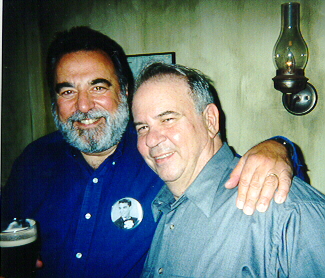
Me and Tommy T - June 2000

I met Tommy T on our first day of high school 56 years ago. We were assigned seats in alphabetical order, and as luck would have it, I sat next to him. We were from different neighborhoods, I from Inwood in Northern Manhattan and he from Highbridge in the Bronx.

Both neighborhoods, and in particular the parishes within them, Good Shepherd in my case and Sacred Heart in his, were populated predominantly by first and second generation Americans of Irish extraction. We were both second generation Americans of Italian extraction. Besides that commonality, we shared an interest in books and movies and appreciated a well-told story, particularly if it contained a humorous proclivity. One of the major pastimes in both of our neighborhoods was the imbibing of alcoholic beverages, another mutual interest of ours.

As we progressed through high school and college, Tom into an early marriage with Pat and the raising of three sons and I into military service to be followed a few years later with marriage to Betty and the raising of two daughters, our friendship grew and matured; expanding into good food, fine wine and the enjoyment of a Single Malt Scotch accompanied by a pleasant cigar.

We frequently got together for dinner, either alone, with our classmates, or with our wives and we attended our children’s weddings and welcomed his and Pat’s grandchildren into the world. This idyllic friendship lasted until Tom’s untimely death five years ago on May 10, 2007, so he never had the chance to meet our grandchildren.

In the intervening years, Betty and I became friends with Tom’s older brother Bill and his wife Kathy, who were frequent guests of Tom & Pat. This was a natural, as Bill, or Uncle Bill as he was often referred to, shared the same interest in books, movies, jokes, food, wine, single malts and cigars as did Tommy T and I, and the 3 wives all got along as well.

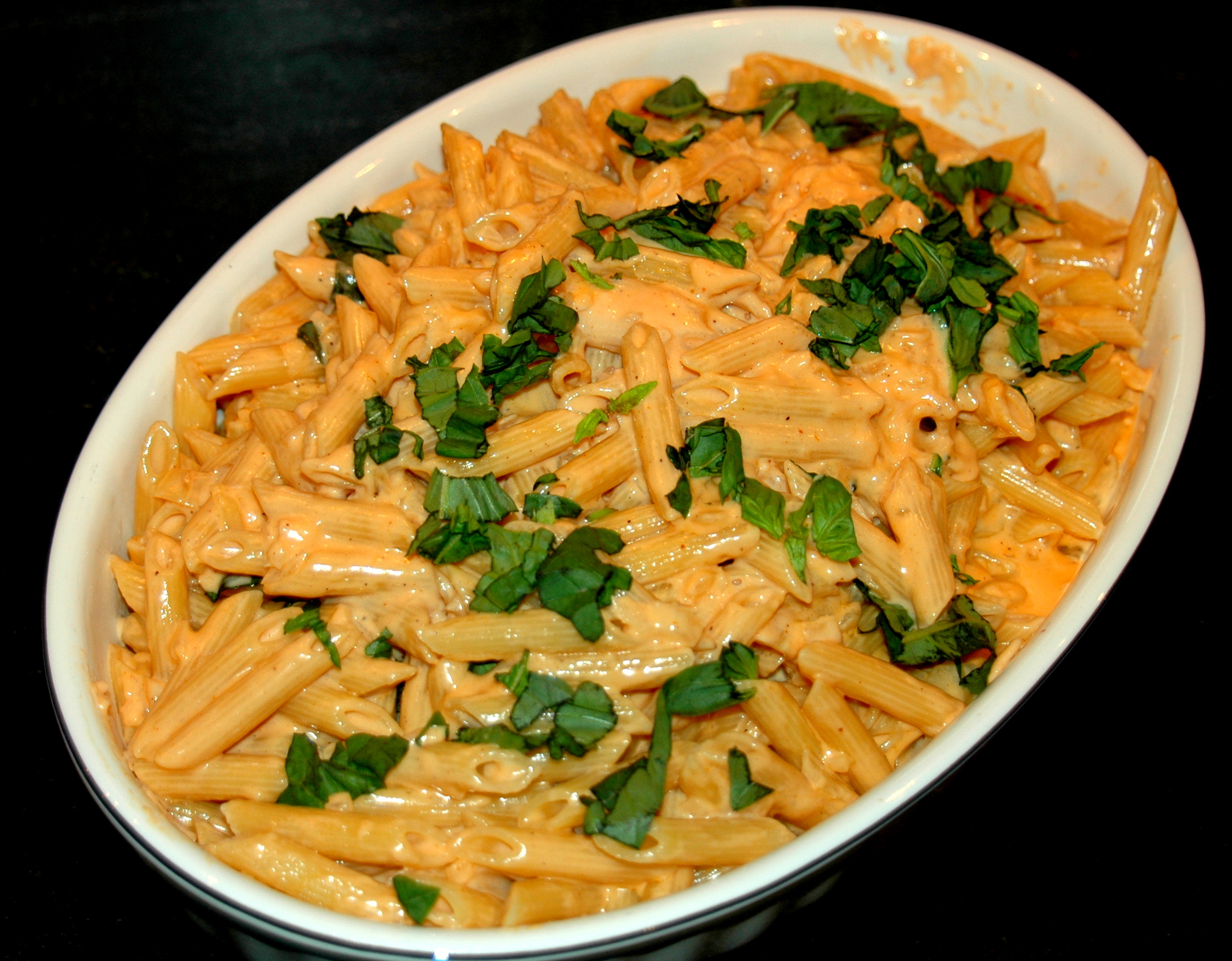
Recently Betty and I visited Bill and Kathy, and Bill prepared an excellent Penne a la Vodka as a first course for dinner. Having had this pasta dish on only one or two other occasions, I was curious to see how it was done, particularly the pink part. I watched Bill masterly prepare it and he was kind enough to write down his recipe.

This past weekend with our daughter and her family visiting, we invited my cousin Virginia and Peter to dinner to share in my adaptation of Uncle Bill’s Penne a la Vodka. Bill’s recipe calls for parsley, but having a beautiful bunch of basil on hand, I decided to substitute it for the parsley. Everyone raved about it and the next day, I asked my four–year old granddaughter if she would like to try some of Grandpa’s ‘Macaroni & Cheese’ for lunch. She did and devoured it saying ‘Grandpa, you are a good cook!’ It turns out that Uncle Bill’s Penne a la Vodka is also the perfect Mac & Cheese. Tommy T would have loved that!

Pork Medallions with Prunes and Calvados

In For Moms on the Go, Meat, Pork, Recipes on April 30, 2012 at 11:04 AM

(Preparation time 15 minutes; serves 4.)

Ingredients:

2 Tbsp. unsalted butter
Pork Tenderloin, (plain, i.e. unseasoned) about 2 lbs., sliced into 1 inch medallions – You should have about 16-18 pieces
24-30 Ready-to-Serve Prunes, drained and pitted (between 1 and 2 for each medallion). As an alternative, soak dried, pitted prunes in 1 quart of boiled water. In either case reserve about 1/4 cup of liquid to enhance the sauce. Or an even better suggestion soak them in Calvados as suggested by Jeannie.
1/2 cup Calvados
Salt and Freshly Ground pepper to taste

Procedure:

1.    In a 12 inch non-stick skillet, on high heat, melt the butter.
2.    Add the Pork Medallions, sprinkle with salt & pepper to taste and sauté for 10 minutes, turning several times to brown evenly.
3.    When browned, add the prunes and then the Calvados. Shut the heat and ignite the Calvados.

CAUTION: When igniting, stand back from the stove, and if you have a vent fan directly over the stove be sure to shut it before igniting the Calvados.

4.    Once ignited return heat to low, and with long tongs, carefully turn the medallions several times times to coat them well with the sauce, continuing cooking 2 to 3 minutes longer.
5.    Place 4 to 5 medallions on each plate, cover with an equivalent number of prunes and 2 or 3 extra, and pour the sauce over all. Serve immediately with vegetable of choice, or a small salad.

Please refer to Pork & Prunes – Yum or Yuck?

Pickled Beets

In Recipes, Vegetables on March 31, 2012 at 10:38 AM

Pickled Beets

By Betty:

Ingredients:

7 Medium size beets
Water to cover the beets
Pickling Marinade*

Preparation Step I (cooking the beets):

  1. Remove stems and roots from the beets and place in a large pot with water to cover.
  2. Cook beets for 2 hours on medium heat. Beets are done when a fork is easily inserted into the beet.
  3. Remove beets from cooking water with a slotted spoon, chill under cold water and remove skins.
  4. Reserve 1 cup of the cooking water for the marinade.
  5. Slice beets into 1/4 inch thick slices and set aside.

Preparation Step II – (making the pickling marinade).

*Ingredients for pickling marinade:

1 cup cider vinegar
1 cup beet  liquid reserved from Step I
½ cup sugar
pinch of mustard seeds
10 whole cloves
16 black peppercorns

  1. In a small saucepan combine the above ingredients and bring to a boil.
  2. Reduce heat and simmer for 3 minutes until sugar is dissolved.
  3. Pour marinade over sliced beets and refrigerate overnight.
  4. Before serving, strain the marinade through a fine sieve and pour the strained liquid over the beets.

Serve as side dish.

Please see: The Maturing Palate

The Maturing Palate

In General Articles on March 31, 2012 at 10:38 AM

As we mature, our palate does as well!  That statement is admittedly anecdotal and based solely on personal experience.  But think about it, how many foods did you as a child once eschew only to find yourself in later years enjoying, as if they were always a part of your diet?

My mature palate discoveries   have included Calves Liver, Brussel Sprouts, Broccoli Rabe, Fish and Beets! Yes, beets; that deep-red, firm and smooth vegetable which resembles nothing else in taste or texture and that, when forced upon me as a child, produced an involuntary gag reflex, appear to be good for you , as mother always claimed, and they taste good as well.

Beets, also known as beetroots, can be boiled or roasted and eaten warm, as a side dish; boiled and pickled and eaten cold, as a side dish; boiled, not pickled and either warm or cold used in a salad, particularly with goat cheese, which has a great affinity for beets. Last week, while trolling the aisles of the supermarket, I spotted a great sale on beets, a bag of 12 for $3. Being unable to resist such a bargain, I threw the bag into my shopping cart with little thought as what to do with them.

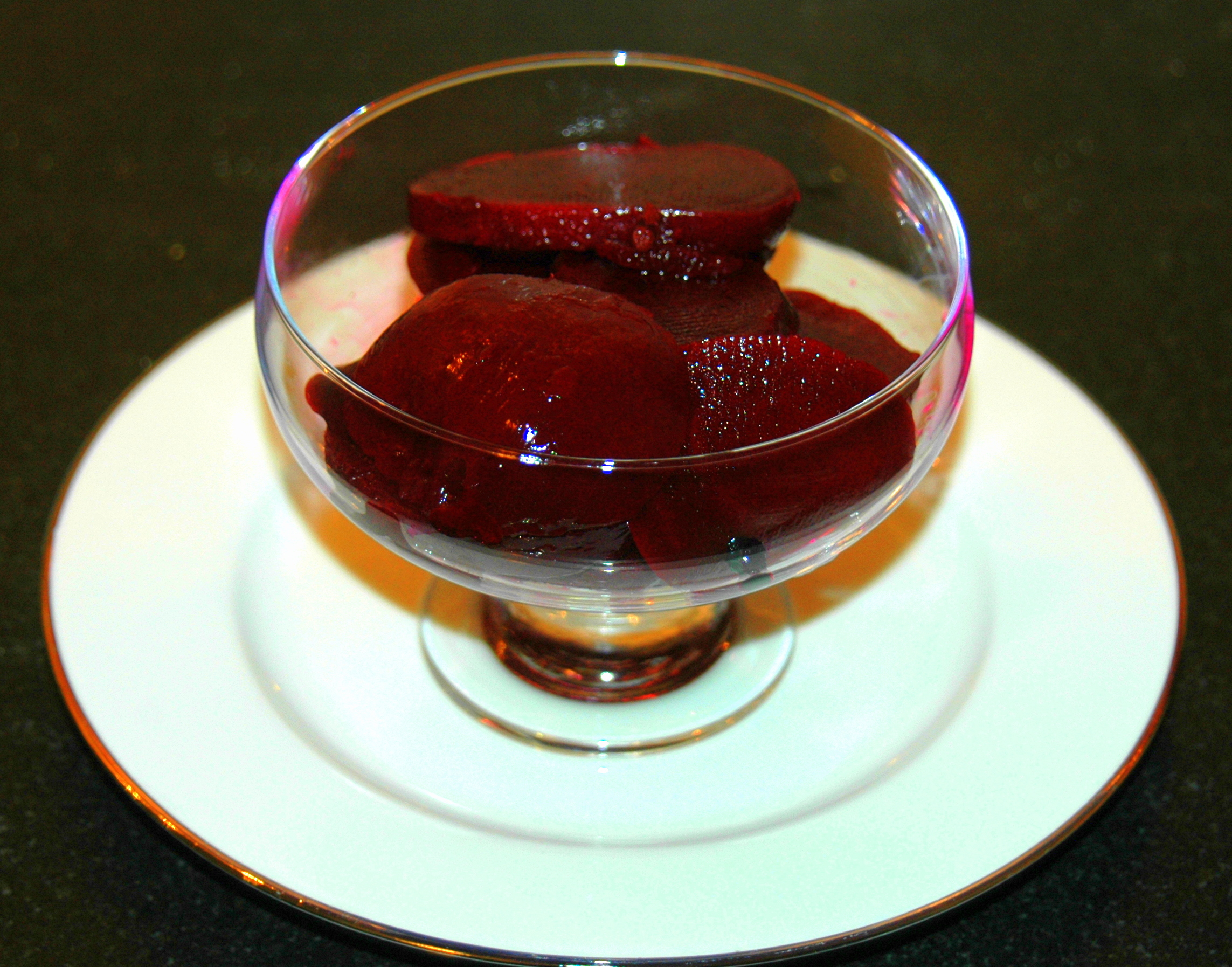
Betty, having grown up with Pickled Beets as a mainstay in her family, knew exactly what to do with them. She boiled and peeled them, then pickled half of them, setting aside the other half, which she chilled and added to salads during the week. So after eating beets for the past week in these various forms, I am on to the next discovery.

Chouriço Omelet

In Egg Dishes, Recipes on March 25, 2012 at 3:26 PM

Chouriço Omelet

Ingredients:

2 tbsps. unsalted butter
4 oz. coarsely chopped Chouriço, Chorizo or Linguiça
2 eggs, whisked with ¼ tsp. of turmeric, if desired
2 tsps. chopped fresh chives

Preparation:

1.    In a low-sided, non-stick omelet pan, melt the butter on medium heat.
2.    Add the chouriço and lightly brown for three minutes, turning frequently.
3.    When the chouriço is browned, push to the middle of the pan and slowly pour in the eggs.
4.    Shake the pan lightly to let the eggs spread out.
5.    Reduce the heat to low and let the eggs settle, raising the edges with a spatula, from time to time, to allow the liquid to run off to the sides.
6.    When most of the liquid solidifies, sprinkle with the chives, carefully fold over and let sit for 30 seconds.
7.    Serve and enjoy!

Please see: A Serendipitous Halibut Dinner